
Morgan Stanley's Bullish Case for LVMH and Kering in the Evolving Luxury Sector
The luxury sector, long celebrated for its resilience amid economic volatility, is undergoing a strategic and creative renaissance. Morgan Stanley's recent upgrades of LVMH and Kering to Overweight-with Kering now its top pick-underscore a compelling investment narrative rooted in strategic positioning, creative innovation, and valuation dynamics. Despite macroeconomic headwinds, the firm's analysis highlights a path to recovery driven by leadership changes, brand revitalization, and long-term market fundamentals.
Strategic Positioning: Creativity as a Catalyst
Morgan Stanley's bullish stance hinges on the transformative potential of creative leadership at both LVMH and Kering. For Kering, the appointment of Luca de Meo as CEO in September 2025 marks a pivotal shift. De Meo, a seasoned automotive executive, brings a disciplined approach to cost management and brand stabilization, particularly for Gucci, which has faced challenges in maintaining its aspirational appeal, according to an Investing.com article. The firm anticipates that his leadership will streamline creative transitions and restore confidence in Kering's portfolio, including Gucci and Bottega Veneta.
LVMH, meanwhile, is leveraging a "new burst of creativity" at its flagship brands. Dior and Celine are undergoing fresh creative directions, while anticipation builds around a potential new creative appointment at Fendi. These moves align with Morgan Stanley's thesis that maximalist aesthetics-characterized by bold patterns and experimental designs-are driving consumer spending, and that such trends cater to Gen-Z and aspirational buyers, who prioritize self-expression over traditional exclusivity, according to a market forecast.
Valuation Dynamics: Premiums Justified by Long-Term Growth
Valuation metrics further reinforce Morgan Stanley's optimism. Kering's shares trade at a next-twelve-months (NTM) price-to-earnings (P/E) ratio of 38.8x, a premium to the sector average but comparable to Hermes' 45x valuation. The firm argues that investors are willing to overlook Kering's high multiples due to its long-term growth potential, particularly in Asia and the U.S. Morgan StanleyMS-- raised its price target for Kering from €250 to €370-a 48% increase-reflecting confidence in its ability to outperform peers.
For LVMH, the valuation case is equally compelling. With a forward P/E of 24.8x and a price target of €820 (a 14% upside from current levels), the firm emphasizes its strong U.S. demand and the enduring appeal of the Louis Vuitton brand. LVMH's valuation appears more conservative compared to Kering's, yet Morgan Stanley highlights its structural advantages, including a diversified portfolio and robust cash flow generation.
Navigating Challenges: A Path to Recovery
The luxury sector is not without its challenges. Chinese demand, a critical driver of growth, remains subdued in 2025 due to macroeconomic uncertainties and U.S. tariff concerns. Morgan Stanley notes that 60% of surveyed Chinese consumers plan to reduce spending in the coming months. Similarly, U.S. and European markets face headwinds from high interest rates and inflation, which dampen discretionary spending.
However, the firm anticipates a gradual recovery by 2026, contingent on wealth effects in the U.S. and China materializing. The luxury market's long-term fundamentals remain intact, with a projected 7.0% CAGR from 2025 to 2033, driven by digital transformation and rising disposable incomes. Morgan Stanley also points to Kering's and LVMH's proactive strategies-such as inventory management and tariff hedging-as mitigants for near-term risks.
Conclusion: A High-Margin, Resilient Investment
Morgan Stanley's upgrades for LVMH and Kering reflect a nuanced view of the luxury sector: one that balances near-term challenges with long-term resilience. For Kering, the combination of strategic leadership and creative reinvention justifies its elevated valuation. LVMH's disciplined execution and brand strength offer a more conservative but equally attractive entry point. Both companies are well-positioned to capitalize on the sector's projected growth, making them compelling choices for investors seeking exposure to a market where exclusivity and innovation continue to command premium pricing.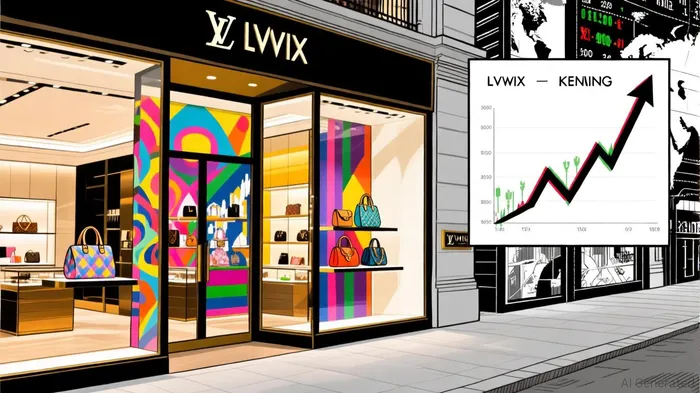







Comentarios
Aún no hay comentarios