
MoonBull as the New Institutional Favourite Amid BNB Exodus
In 2025, the cryptocurrency landscape is witnessing a seismic shift in institutional sentiment, with a notable exodus from Binance Coin (BNB) toward emerging projects like MoonBull (MOBU). This reallocation is driven by a confluence of macroeconomic catalysts, evolving regulatory frameworks, and divergent risk-return profiles between the two assets. As institutional investors recalibrate their portfolios to navigate a tightening monetary environment and seek higher-yielding opportunities, MoonBull's structured tokenomics and deflationary mechanisms are positioning it as a compelling alternative to BNB's established but increasingly contested dominance.
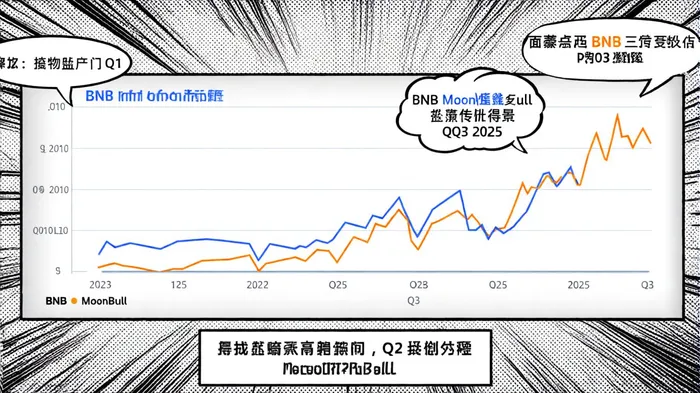
The BNBBNB-- Exodus: Institutional Fatigue or Strategic Reallocation?
BNB has long been a cornerstone of institutional crypto portfolios, buoyed by its deflationary supply model, utility within the Binance ecosystem, and strategic treasury allocations. By Q3 2025, over $1.2 billion had been allocated to BNB by publicly traded companies, including landmark investments from China Renaissance Holdings and YZi Labs, according to an Altsignals report. However, recent data reveals a subtle but significant shift: institutional investors are diversifying into projects with higher growth potential, particularly those leveraging structured incentives and community-driven governance.
MoonBull's presale, for instance, has attracted over $350,000 in Stage 5 alone, with projected ROI exceeding 9,000% from its current price of $0.00005168 to its listing price of $0.00616 - a performance profile that has driven strong retail and institutional interest in the token. This explosive potential, coupled with a 95% APY staking program and 15% referral rewards, has drawn attention from both retail and institutional actors. The contrast with BNB's more conservative appeal is stark: while BNB's Sharpe ratio of 2.5 over five years underscores its risk-adjusted returns, MoonBull's tokenomics-featuring 2% liquidity allocation, 2% holder reflections, and 1% auto-burns-create a deflationary flywheel that appeals to investors seeking compounding growth.
Macroeconomic Catalysts: Inflation, Rates, and Regulatory Tailwinds
The shift from BNB to MoonBull is not merely speculative; it is rooted in macroeconomic dynamics. Central banks' aggressive rate hikes in 2025, aimed at curbing inflation, have pressured institutional investors to prioritize assets with lower sensitivity to interest rate volatility. BNB, while resilient, faces headwinds as its value is tied to Binance's regulatory challenges and the broader altcoin market's correlation with BitcoinBTC--. In contrast, MoonBull's Ethereum-based ERC-20 model and decentralized governance structure offer a degree of regulatory clarity, particularly in jurisdictions adopting frameworks like the EU's MiCA, as noted in a CryptoToolsHub overview.
Moreover, the U.S. government's strategic reserve of digital assets, including Bitcoin and EthereumETH--, has legitimized crypto as a reserve asset class, according to a Blockchain Council report. This institutionalization has spurred demand for tokens with utility beyond speculative trading. MoonBull's integration with DeFi protocols and its focus on liquidity retention align with this trend, offering institutions a vehicle to hedge against fiat devaluation while participating in yield-generating mechanisms.
Risk-Return Dynamics: BNB's Stability vs. MoonBull's Volatility
While BNB's institutional adoption is underpinned by its role in staking, governance, and transaction fee discounts, its risk profile has become increasingly contentious. Binance's regulatory battles in the U.S. and Europe have introduced uncertainty, with some investors wary of its exposure to compliance risks. Meanwhile, MoonBull's high-ROI projections and staking rewards come with elevated volatility, a trade-off that aligns with institutions' growing appetite for alternative assets in a low-yield environment.
Data from Q3 2025 shows that 73% of institutional investors now hold altcoins, with 59% allocating over 5% of their AUM to cryptocurrencies, according to a DigiCashBlog study. This shift reflects a broader trend toward strategic allocation rather than speculative bets. MoonBull's structured 23-stage presale and transparent tokenomics provide a framework for institutional participation, mitigating some of the risks associated with memeMEME-- coins while retaining upside potential.
Regulatory Tailwinds and the Path Forward
Regulatory developments in 2025 have further tilted the scales in MoonBull's favor. The U.S. Senate's Genius Act, which regulates stablecoins, and the EU's MiCA framework have created a more predictable environment for institutional investors. While BNB's association with Binance remains a regulatory gray area, MoonBull's Ethereum foundation and automated compliance mechanisms (e.g., auto-burns and liquidity locks) position it as a more palatable option for risk-averse institutions.
Looking ahead, the interplay of macroeconomic factors-such as Fed easing in late 2025 and the anticipated passage of the Genius Act-could unlock further institutional capital inflows into MoonBull. Analysts project that MoonBull's price could surge to $0.00616 by listing, translating to a 11,800% ROI for early adopters. For institutions seeking to balance growth and stability, this represents a compelling case for reallocation.
Conclusion
The exodus from BNB to MoonBull in 2025 is not a rejection of institutional crypto adoption but a recalibration of priorities in response to macroeconomic and regulatory shifts. While BNB remains a critical reserve asset, MoonBull's innovative tokenomics and alignment with institutional-grade infrastructure make it a formidable contender for 2025's crypto cycle. As the market matures, the ability to navigate volatility while capitalizing on yield opportunities will define the next phase of institutional crypto investing.






Comentarios
Aún no hay comentarios