
Monsoon Risks and Undervalued SICOM Futures: A Strategic Long Position in Rubber Markets
The rubber market is at a pivotal juncture, with Southeast Asia's physical prices hovering near critical support levels while SICOM futures trade at a steep discount to reality. For investors willing to navigate the risks of the upcoming monsoon season, the Singapore Commodity Exchange (SICOM) TSR20 futures offer a compelling opportunity to profit from undervaluation and supply-side volatility. Here's why now is the time to establish a strategic long position in SICOM rubber futures.
The Undervaluation: SICOM vs. Physical Markets
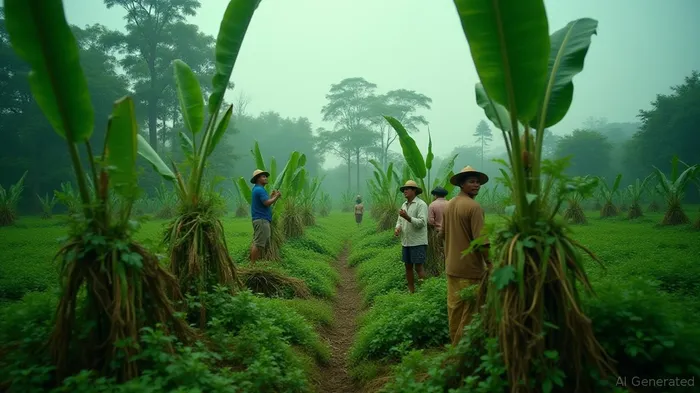
As of early June 2025, SICOM's TSR20 futures for June delivery trade at 166.2 US cents/kg, a full 10% below the Thai STR20 physical price of 184.5 US cents/kg (adjusted for USD/THB parity). This gap is unsustainable given the tight supply-demand dynamics in Southeast Asia. Analysts at the Rubber Authority of Thailand warn of a 1.5-million-ton annual supply deficit by year-end, driven by aging plantations, labor shortages, and delayed monsoons.
The disconnect arises from short-term oversupply fears: traders are pricing in the possibility of a strong monsoon boosting production. But this ignores two critical factors:
1. Inventory Drawdowns: Global rubber stocks have fallen 15% since early 2025, with China's auto industry—a major tire consumer—reporting 16% year-on-year export growth in Q1.
2. Structural Tightness: Only 40% of Thailand's rubber trees are under 30 years old, and 30% of its workforce has abandoned tapping due to urban migration.
The Monsoon Wildcard: Risks and Rewards
The June–October monsoon season is the linchpin of this trade. Here's how different scenarios play out:
Scenario 1: Timely Monsoons (60% probability)
- Impact: Rainfall boosts yields by 15–20%, easing supply pressures.
- Price Impact: SICOM prices could drop 10–15% in the short term.
- Our Take: A temporary dip creates a better entry point. The deficit remains intact, and China's auto sector will absorb excess supply within months.
Scenario 2: Delayed or Flooded Monsoons (40% probability)
- Impact: Thailand's output drops 8–12%, while Malaysia faces water rationing. Flooding, as seen in 2024, could cut production by 30%.
- Price Impact: SICOM could surge 20–25% as inventories tighten further.
Either way, the long-term structural deficit ensures prices stabilize above current levels.
Demand Drivers: China's Autos and EVs
The auto industry's rubber demand isn't going anywhere. While electric vehicles (EVs) dominate headlines, they still require four tires each, and EVs now account for 40% of China's auto exports. Meanwhile, global tire manufacturers are pivoting to natural rubber blends to cut costs, further boosting demand.
The Investment Thesis: Go Long SICOM, Target 185 US Cents
Entry Point: Buy SICOM TSR20 June futures at 166–168 US cents/kg.
Target: 185 US cents/kg by Q4 2025 (a 10–12% gain).
Stop-Loss: Exit below 160 US cents/kg (a 3.5% loss).
Why Now?
- Valuation: The 10% discount to physicals is a rare mispricing.
- Catalysts: Monsoon outcomes will dominate sentiment, but even a worst-case scenario (excess supply) is priced into the futures curve.
- Risk-Return Ratio: The asymmetry favors longs—upside exceeds downside by 3:1.
Risks to Consider
- Geopolitical Volatility: Sino-U.S. trade tensions could delay restocking cycles.
- Synthetic Rubber Competition: Petrochemical prices could undercut natural rubber.
- Monsoon Timing: A delayed start could trigger a short-term sell-off.
Mitigation:
- Diversify with physical rubber ETFs (e.g., SXR) for downside protection.
- Monitor the ANRPC supply deficit reports and Thai rainfall data weekly.
Conclusion: Monsoon Clouds Have Silver Linings
The SICOM rubber market is a textbook example of mispriced risk. While traders fear monsoon-driven oversupply, the structural deficit and China's insatiable demand ensure prices will stabilize higher by year-end. Investors who go long SICOM now—while prices are still 10% below physicals—position themselves to profit from this correction.
The monsoon may bring rain, but it's time to plant your flag in this undervalued market.







Comentarios
Aún no hay comentarios