
Monolithic Power: The AI Surge Is Priced In, But the Gap to $1,375 Is Wide
The setup here is a classic expectation arbitrage. Monolithic PowerMPWR-- has staged a powerful recovery, but the market is now asking whether that rally has already priced in the good news-or if the real story is still ahead.
The stock's year-to-date move is staggering. After a plunge of almost 40% last year, shares have rallied nearly 62% on the year to current levels. This isn't just a bounce; it's a full reversal of fortune. Yet, even after this surge, a wide dispersion in analyst targets reveals a deep uncertainty about what's next. The consensus average target sits at $1,074.58, with a high of $1,375.00 and a low of $800.00. That range implies everything from a modest 12% upside to a potential 43% pop.
The key tension lies in the gap between the stock's current price and these forecasts. With shares trading around $959, the average target implies roughly 12% upside. But the median target of $1,250 suggests a more bullish 30% climb. The stock is currently trading roughly 24% below the average analyst price target, a gap that highlights the expectation arbitrage at play. Is this a buying opportunity for those who believe the company can hit the median, or is the market's "whisper number" already closer to the high end of that range?
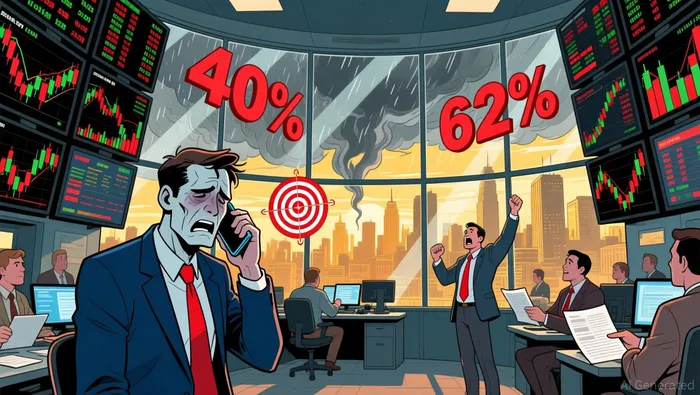
The core question is what's priced in. The massive rally from last year's lows suggests the worst-case scenario-NVIDIA demand cuts-has been digested. But the subsequent sell-off on strong Q3 earnings, despite beats, shows that high expectations can still send shares down. The expectation gap now is whether MonolithicMPWR-- can deliver growth fast enough to justify the higher end of the target spectrum, or if the stock's impressive run has left little room for error.
Earnings Reality vs. Whisper Numbers: The Q3 Beat That Didn't Move the Needle
The Q3 print delivered a classic "beat and raise" setup, but the market's reaction told a different story. Revenue came in at $737 million, a nearly 19% year-over-year jump that beat estimates by about 16%. On the surface, that's a strong beat. Yet shares fell nearly 8% the next day. This is the textbook "sell the news" dynamic, signaling that the strong growth was already priced in at a high level.
The expectation gap here was wide. The market had likely baked in even more aggressive numbers, perhaps a "whisper number" for revenue or earnings per share that the company simply didn't meet. The subsequent 12% drop in the stock since the report underscores that high expectations can override solid fundamentals. The beat was good, but not good enough to surprise the consensus.
Still, the report contained positive signals for steady-state expectations. The company's recent dividend announcement of $1.56 per share, payable in January, is a clear vote of confidence in its cash flow generation. This move suggests management sees a reliable, predictable cash flow stream, which can anchor the stock's value during periods of transition or uncertainty. It's a signal that the company believes its diversified end markets-like automotive and storage, which grew 36% and 30% respectively in Q3-are providing a stable foundation.
The bottom line is that Q3 met the bar but failed to clear it. The beat was real, but the guidance and the dividend announcement point to a company managing its growth path with care, not chasing the highest possible number. For the stock to climb toward the higher end of analyst targets, Monolithic will need to consistently exceed these elevated, already-priced-in expectations.
The Data Center Catalyst: Sandbagging or Stagnation?
The critical growth driver for the coming year is the data center platform. Bulls see a powerful catalyst, with the company's long-term revenue growth rate projected at 20%, driven by new products and market share gains. Yet bears cite a key risk: the potential failure of these data center platforms to meet growth expectations of 15-20%. This is the central expectation gap. The market has priced in strong growth, but if the actual print falls short of that range, it could trigger a guidance reset and pressure the stock.
Compounding this risk is a sign of operational stagnation. The company's non-GAAP gross margin has shown stagnation at 55.5%. For a stock trading at a premium valuation, this flatline margin is a vulnerability. It leaves little room for error if input costs rise or pricing power weakens, directly threatening the profitability needed to justify a higher price target.
The stock's current position reflects this tension. Trading at $959.09, it is still roughly 14.6% below its 52-week high of $1,123.38. This shows the rally from last year's lows has room to run. But it also highlights the stock's vulnerability to disappointment. After a 51.65% rolling annual return, the bar for positive surprises is set very high. Any sign that the data center growth is sandbagging-meeting the 15-20% target but not exceeding it-could be seen as a failure to clear the elevated expectations already priced in. The setup is clear: the stock is positioned for a catalyst, but the margin for error is thin.
Catalysts and Risks: What Could Close the Expectation Gap?
The path from here to the higher end of analyst targets hinges on a few specific catalysts and risks. The next major event is the Q4 earnings report and the accompanying guidance. Any reset below the projected long-term revenue growth rate of 20% would be a major negative, triggering a guidance reset and likely pressuring the stock. The market has priced in strong growth; meeting it may not be enough.
At the same time, investors must watch for margin expansion. The company's non-GAAP gross margin has shown stagnation at 55.5%. Stagnation could pressure the stock even if revenue grows, as it leaves little room for error and threatens the profitability needed to justify a premium valuation. A beat on revenue but a miss on margin would widen the expectation gap.
On the flip side, broader semiconductor sentiment remains a key external tailwind. The recent 4.4% share move came alongside a broader rally fueled by artificial intelligence enthusiasm at CES and changing expectations for Federal Reserve policy. This AI-driven momentum provides a supportive backdrop. If the data center story begins to accelerate, it could amplify this tailwind and help close the gap to higher targets.
The bottom line is that the expectation gap will be determined by specific triggers. The stock needs to clear two hurdles: consistently exceed the 20% growth target and show signs of margin improvement. Until then, the wide dispersion in analyst targets will persist, and the stock will remain vulnerable to any stumble in these key areas.





Comentarios
Aún no hay comentarios