
U.S. Monetary and Fiscal Policy Duopoly: Navigating Systemic Risk and Market Inefficiency
The U.S. monetary and fiscal policy duopoly has long been a cornerstone of global economic stability. However, recent developments from 2023 to 2025 reveal a growing tension between these two pillars, creating systemic risks and market inefficiencies that demand urgent attention. As the Federal Reserve tightens monetary policy to curb inflation while the federal government grapples with unsustainable fiscal deficits, the lack of coordination is amplifying vulnerabilities in both domestic and international markets.
Monetary Policy's Tightening and Its Constraints
The Federal Reserve has maintained a hawkish stance since July 2023, keeping the federal funds rate in the 5.25–5.50% range to combat inflation, which remains stubbornly above its 2% target according to the Federal Reserve report. While this approach has curbed demand-side pressures, it has also constrained economic growth and exacerbated fiscal challenges. The central bank's reluctance to cut rates-until it gains confidence in inflation's sustainability-reflects a cautious balancing act. Yet, as St. Louis Fed President Alberto Musalem noted, risks persist in the housing market and labor sector, particularly for vulnerable demographics facing elevated unemployment in his St. Louis Fed remarks.
Fiscal Policy's Unsustainable Path and Reform Efforts
Meanwhile, the U.S. fiscal trajectory is increasingly precarious. Public debt is projected to reach 106% of GDP by 2027 and 200% by 2047 under current policies, driven by persistent budget deficits and rising interest costs, according to the GAO report. The Congressional Budget Office (CBO) acknowledges a gradual recovery, forecasting GDP growth to rise from 1.5% in 2024 to 2.4% in 2025, but warns of cyclical unemployment spikes in its CBO outlook. To address this, the Penn Wharton Budget Model proposes a progressive reform bundle-simplifying the tax code, broadening the tax base with lower rates, and implementing a carbon tax-as outlined in the Penn Wharton report. These measures aim to reduce the federal deficit by 38% by 2054 and boost GDP growth by 21% through immigration-driven capital formation. However, such reforms face political and economic hurdles, including short-term revenue losses from tax simplification.
Coordination Failures and Systemic Risks
The misalignment between monetary and fiscal policies has created a "lose-lose" scenario. The Fed's high-rate environment increases borrowing costs for the government, which in turn raises fiscal deficits, creating a feedback loop that destabilizes the economy. This dynamic is compounded by global spillovers: U.S. monetary tightening has triggered capital outflows from emerging markets, exacerbating local financial instability. For instance, a 1 percentage point rise in U.S. long-term interest rates correlates with a 90–100 basis point increase in advanced and emerging market rates, tightening global financial conditions-a relationship highlighted in the Penn Wharton report.
Domestically, the lack of coordination has also hindered supply-side resilience. The Fed's focus on demand-side inflation neglects structural challenges like supply chain fragility and the rising cost of green investments described in the Federal Reserve report. Meanwhile, fiscal stimulus-such as industrial policies for semiconductors and offshore wind-risks moral hazard if not carefully evaluated, as the GAO report emphasizes.
Market Inefficiencies and Global Spillovers
Market inefficiencies are evident in the volatility of U.S. Treasury yields, which have spiked due to fiscal uncertainty. A 1 percentage point increase in U.S. long-term rates could ripple through global markets, tightening borrowing costs for other economies and destabilizing exchange rates. Additionally, the U.S. dollar's dominance amplifies these effects, as foreign central banks adjust policies to accommodate rising U.S. debt, according to the Bipartisan Policy Center. For example, the depletion of Social Security and Medicare trust funds-projected to become insolvent in coming decades-threatens investor confidence and long-term growth, a concern noted in St. Louis Fed remarks.
Pathways to Coordination and Reform
Addressing these challenges requires a rethinking of policy coordination. The 2025 One Big Beautiful Bill Act (OBBB), which raised the debt ceiling and enacted fiscal reforms, signals bipartisan efforts to stabilize the trajectory, as discussed by the Bipartisan Policy Center. However, more is needed. Strategies like green credit guidance, sector-specific support, and public investment in low-carbon infrastructure could align fiscal and monetary goals while enhancing resilience, consistent with recommendations in the Federal Reserve report.
For investors, the implications are clear: portfolios must account for both inflationary pressures and fiscal fragility. Defensive assets, such as Treasury securities and inflation-linked bonds, remain critical. At the same time, opportunities exist in sectors aligned with fiscal reforms, including clean energy and immigration-driven labor markets highlighted in the Penn Wharton report.
Conclusion
The U.S. monetary-fiscal duopoly stands at a crossroads. Without improved coordination, systemic risks and market inefficiencies will persist, undermining long-term growth. Policymakers must prioritize frameworks that align monetary and fiscal objectives, while investors should hedge against volatility and position for structural reforms. The path forward demands not just policy innovation but a reimagining of how these two pillars can work in harmony.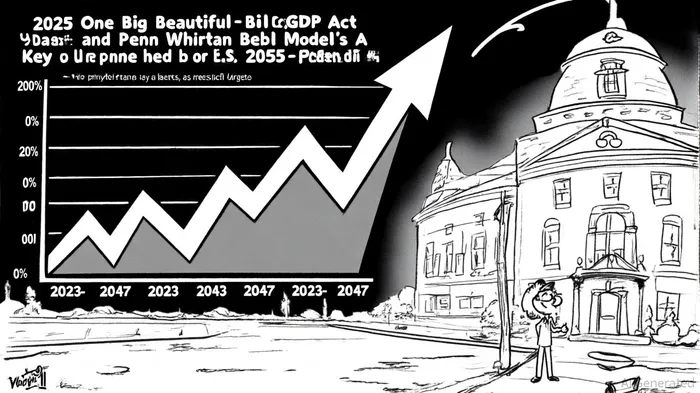







Comentarios
Aún no hay comentarios