
Monetary Crossroads and the AI Divide: Navigating Uncertainty with Defensive Plays and Tech Leaders
The U.S. economy is at a crossroads, with the Federal Reserve's “wait-and-see” approach to monetary policy and the dual impact of AI-driven labor disruption creating a volatile backdrop for investors. While inflationary pressures simmer and tariffs threaten to upend supply chains, the bifurcation between defensive sectors and AI-enabled technology leaders offers a clear path to portfolio resilience. Here's how to capitalize on structural shifts while weathering near-term volatility.
The Fed's Constrained Playbook: Rates Stuck in Neutral
The Federal Reserve's June 2025 policy statement underscores its dilemma: inflation remains elevated at 3.0% (PCE), while GDP growth is projected to slow to 1.4% this year. With unemployment holding at 4.5%, the Fed has opted to keep the federal funds rate at 4.125%—a decision reflecting its “data-dependent” mantra.
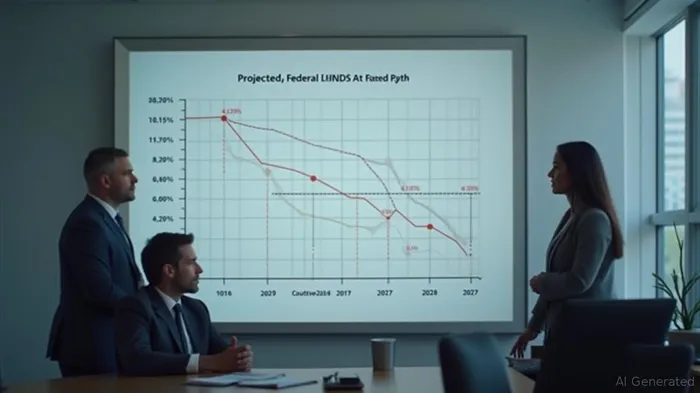
The Fed's Summary of Economic Projections (SEP) reveals a cautious outlook: inflation is expected to fall to 2.0% by 2027, but risks remain skewed toward sectors like electronics and apparel as tariff-driven inventory buffers deplete. This constrained policy environment favors defensive assets that thrive in low-growth environments.
AI's Employment Paradox: Disruption and Opportunity
While the Fed holds rates, AI adoption is reshaping labor markets. The May 2025 jobs report showed hiring slowing to 139,000, with employersEIG-- prioritizing automation over entry-level roles. Healthcare and hospitality sectors grew, but federal jobs fell due to budget cuts—a stark reminder of how AI is bifurcating employment outcomes.
For investors, this creates a clear divide:
- The Disrupted: Sectors reliant on low-wage labor (e.g., agriculture, manufacturing) face headwinds as companies replace workers with AI tools.
- The Beneficiaries: Tech leaders like NVIDIA (NVDA) and Microsoft (MSFT) are capitalizing on demand for AI infrastructure and automation.
NVIDIA's stock has surged 120% since early 2024 as hyperscalers like Microsoft and Alphabet ramp up AI-specific infrastructure. Meanwhile, Microsoft's Azure cloud platform—now integrated with generative AI tools—is driving enterprise adoption, with cloud revenue up 22% YoY in Q1 2025.
The Tariff Inflation Time Bomb: Why Defensives Matter
Tariffs are a ticking clock for consumer-facing sectors. While current inflation remains muted (CPI at 2.4%), the depletion of pre-tariff inventory in electronics and apparel could trigger price spikes by late 2025. Major retailers like Walmart and Target have already hinted at potential price hikes, but consumer staples—non-discretionary goods like food and household products—are shielded from this volatility.
Investors should overweight defensive sectors:
- Consumer Staples: Procter & Gamble (PG) and Coca-Cola (KO) offer stable dividends and inelastic demand.
- U.S. Treasuries: The 10-year yield at 3.6% provides a hedge against equity market turbulence.
Supply Chain Resilience: The New Competitive Edge
Companies with agile supply chains and AI-ready operations are outperforming peers. Automotive giants like Ford and GM are restructuring to avoid $2,000–$12,000 per-vehicle tariff costs, while Flex and Inventec are expanding U.S. manufacturing capacity to reduce geopolitical risks.
The key metric: multi-tier supplier visibility. Only 43% of firms track tier 1 suppliers, leaving most vulnerable to disruptions. Leaders like Apple (AAPL)—which is shifting iPhone production to India—are demonstrating the value of geographic diversification.
Investment Strategy: Defensive Anchors and Tech Catalysts
1. Defensive Core: Allocate 30% to consumer staples (PG, KO) and 20% to Treasuries to anchor portfolios against tariff-driven volatility.
2. Tech Growth Engine: Invest 40% in AI leaders like NVDA and MSFT, which are positioned to dominate cloud, chip, and automation markets.
3. Supply Chain Winners: Add 10% to Flex Ltd. (FLEX) and other firms accelerating reshoring and AI-driven logistics.
Avoid sectors with high tariff exposure (e.g., apparel, automotive components) until inventory pressures ease.
Conclusion: The Crossroads of Risk and Reward
The Fed's wait-and-see stance and AI's disruptive power have created a stark divide in investment outcomes. By pairing defensive staples with tech leaders, investors can navigate macroeconomic uncertainty while capitalizing on the next wave of innovation. The path forward is clear: resilience through diversification, and growth through AI readiness.
Stay agile, and let the bifurcation work for you.







Comentarios
Aún no hay comentarios