
Monad (MON) and Bitget's UEX Strategy: A High-Yield On-Chain Opportunity for 2025–2026
The cryptocurrency landscape in 2025 is witnessing a paradigm shift toward modular L1 ecosystems, with platforms like Monad (MON) and exchanges like Bitget pioneering strategies to democratize access to high-yield on-chain opportunities. Bitget's Universal Exchange (UEX) strategy, unveiled at Aus Crypto Con 2025, positions the platform as a bridge between centralized finance (CeFi) and decentralized finance (DeFi), while its dual-APR and airdrop incentives for MON underscore a calculated effort to incentivize early participation in modular L1s. This article evaluates the strategic and financial appeal of engaging with MON through Bitget's UEX framework, analyzing how these mechanisms align with broader trends in blockchain adoption.
The UEX Strategy: A Unified Ecosystem for Modular L1s
Bitget's UEX strategy, articulated by CMO Ignacio Aguirre, aims to consolidate crypto markets, tokenized stock tokens, and AI-powered trading tools into a single platform. This approach addresses the fragmentation of the digital asset space by enabling users to access multiple asset classes without switching applications. For modular L1s like MON, which prioritize scalability and interoperability, the UEX model offers a seamless on-ramp for users to engage with on-chain yields and trading rewards.
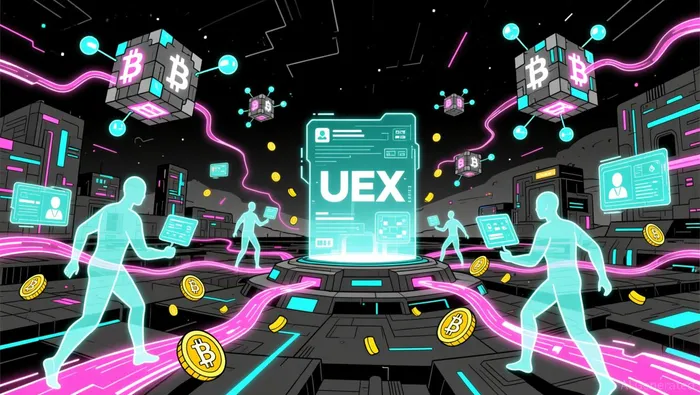
The UEX strategy is particularly aligned with modular L1s, as it emphasizes reducing the complexity of blockchain participation. By integrating projects like MON into its POS Earn lineup, Bitget simplifies access to high-yield opportunities while fostering ecosystem growth. For instance, the platform's recent 20% APR campaign for MON (November 30–December 7, 2025) exemplifies how UEX leverages modular L1s to deliver competitive returns. Such initiatives not only attract liquidity but also align with Bitget's broader mission to bridge blockchain technology with real-world financial systems.
Dual-APR and Airdrop Incentives: A Financial Magnet for MON
Bitget's dual-APR mechanism for MON combines on-chain yields with trading rewards, creating a layered incentive structure. The 20% APRAT-- on-chain Earn campaign, paired with an 800,000 MON trading reward pool (November 24–December 7, 2025), offers users a dual-income stream. This structure is further amplified by Bitget's prior 25,000,000 MON Launchpool rewards (November 25–30, 2025), which incentivized users to lock BGB or MON tokens. These campaigns reflect a strategic focus on liquidity generation and user retention, critical for modular L1s seeking to establish traction.
The financial appeal is further bolstered by the MON tokenomics outlined in the Monad Foundation whitepaper. With a total supply of 100 billion tokens, 49.4 billion MON were unlocked on Day 1, including 10.8 billion from public sales and airdrops. The remaining 50.6 billion tokens are subject to vesting schedules, ensuring long-term ecosystem sustainability. Additionally, inflationary block rewards and deflationary mechanisms (via transaction fee burning) create a balanced supply dynamic. For investors, this framework suggests a token with both utility and scarcity, enhancing the value proposition of Bitget's incentives.
Strategic Alignment: UEX and Modular L1 Ecosystems
Bitget's UEX strategy is not merely a technical integration but a strategic alignment with the ethos of modular L1s. By supporting projects like MON, which prioritize interoperability and scalability, Bitget positions itself as a catalyst for next-generation blockchain adoption. The platform's AI-powered tools, such as Onchain Signals, further enhance this alignment by providing real-time insights across multiple chains. This synergy is critical for modular L1s, which require robust infrastructure and user engagement to thrive.
Moreover, Bitget's emphasis on asset-backed yields through its POS Earn lineup underscores its commitment to making on-chain earning intuitive for both novice and experienced users. The platform's Q3 2025 report highlights its expansion to major blockchains like EthereumETH--, SolanaSOL--, and Base, reinforcing its role as a universal hub for modular L1s. For MON, this means access to a global user base and liquidity pools, accelerating its adoption curve.
The Airdrop Factor: Community-Driven Growth
The Monad Foundation's October 2025 airdrop, distributing MON to 230,500 users, including core community members, highlights the project's focus on organic growth. Bitget's UEX strategy complements this by offering airdrop-eligible rewards through its trading and staking campaigns. For instance, the 800,000 MON trading reward pool operates on a daily snapshot system, rewarding users based on net holdings. This creates a flywheel effect: airdrop recipients are incentivized to retain and trade MON, further deepening liquidity and engagement.
Conclusion: A Strategic Investment for 2025–2026
The convergence of Bitget's UEX strategy and MON's modular L1 architecture presents a compelling case for early on-chain participation. Financially, the dual-APR and airdrop incentives offer immediate returns, while the tokenomics of MON suggest long-term value retention. Strategically, Bitget's integration of modular L1s into its UEX framework aligns with the broader trend of unifying CeFi and DeFi, reducing barriers to entry for mainstream users. For investors, this represents a dual opportunity: capitalizing on high-yield mechanisms while positioning for the growth of a next-generation blockchain ecosystem.
As the 2025–2026 period unfolds, the success of Bitget's UEX and MON's modular L1 will likely hinge on sustained user engagement and ecosystem development. However, the current incentives and strategic alignment make a strong case for viewing this as a high-conviction investment opportunity.






Comentarios
Aún no hay comentarios