
Modi and Trump Aim for $500 Billion in Bilateral Trade by 2030
Generado por agente de IAWesley Park
jueves, 13 de febrero de 2025, 7:17 pm ET2 min de lectura
INDO--
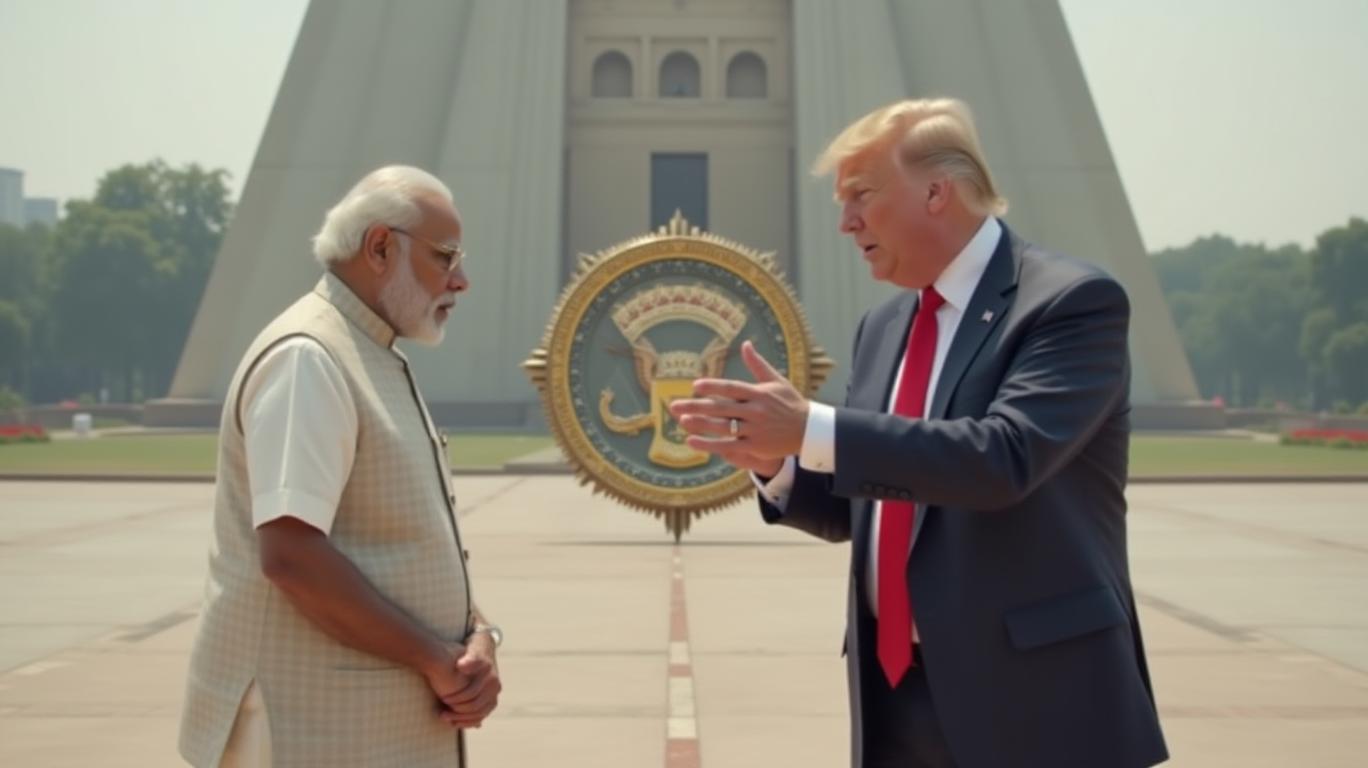
In a significant move to boost economic ties between the two nations, Indian Prime Minister Narendra Modi and US President Donald Trump have set an ambitious target of achieving $500 billion in bilateral trade by 2030. This announcement comes as the two leaders met at the White House on Thursday, marking a new chapter in the US-India trade relationship.
The current bilateral trade between the US and India stands at a record $129.2 billion in 2024, with the US being India's largest trading partner and India ranking tenth in the list of US trading partners. However, the trade deficit between the two countries has been widening, with the US importing $45.7 billion more from India than it exported there in 2024.
To address this imbalance and foster a more balanced trade relationship, both leaders have agreed to work towards reducing tariffs and non-tariff barriers. Trump has been vocal about India's penchant for tariffs, but there have been signs that India is open to cooling on levies. Earlier this month, India's finance minister slashed the import duty on motorcycles, a move benefiting American bike company Harley Davidson.
The US counts pearls, semi-precious stones, pharmaceutical products, and electrical equipment among its top imports from India. In 2023, imports of the top five products going from India to the US totaled more than $47 billion. Modi is visiting Washington this week, and the two leaders spoke on the phone on January 27, seven days after Trump's inauguration, where they discussed expanding cooperation, security in the Indo-Pacific, and the importance of India buying more US-made security equipment.
The India-US trade relationship has seen several milestones in recent years, including the initiation of strategic dialogues in 2005, the US designating India as a "Major Defense Partner" in 2016, and the signing of several vital agreements such as LEMOA, COMCASA, BECA, and GSOMIA. In 2018, India received Strategic Trade Authorization Tier 1 (STA-1) status for easier access to US military technology, and the two countries established the 2+2 Ministerial Dialogue to deepen strategic cooperation.
As the two nations work towards achieving the targeted $500 billion in bilateral trade by 2030, they will need to address several challenges and opportunities. These include reducing tariffs and non-tariff barriers, promoting investment in each other's countries, and encouraging market access for smaller players. By working together and fostering a more balanced trade relationship, the US and India can achieve this ambitious goal and strengthen their economic ties.
In conclusion, the US and India have set an ambitious target of achieving $500 billion in bilateral trade by 2030. To reach this goal, both nations must work together to reduce tariffs and non-tariff barriers, promote investment, and encourage market access. With a strong commitment to cooperation and a focus on mutual benefits, the US and India can achieve this target and strengthen their economic ties.
In a significant move to boost economic ties between the two nations, Indian Prime Minister Narendra Modi and US President Donald Trump have set an ambitious target of achieving $500 billion in bilateral trade by 2030. This announcement comes as the two leaders met at the White House on Thursday, marking a new chapter in the US-India trade relationship.
The current bilateral trade between the US and India stands at a record $129.2 billion in 2024, with the US being India's largest trading partner and India ranking tenth in the list of US trading partners. However, the trade deficit between the two countries has been widening, with the US importing $45.7 billion more from India than it exported there in 2024.
To address this imbalance and foster a more balanced trade relationship, both leaders have agreed to work towards reducing tariffs and non-tariff barriers. Trump has been vocal about India's penchant for tariffs, but there have been signs that India is open to cooling on levies. Earlier this month, India's finance minister slashed the import duty on motorcycles, a move benefiting American bike company Harley Davidson.
The US counts pearls, semi-precious stones, pharmaceutical products, and electrical equipment among its top imports from India. In 2023, imports of the top five products going from India to the US totaled more than $47 billion. Modi is visiting Washington this week, and the two leaders spoke on the phone on January 27, seven days after Trump's inauguration, where they discussed expanding cooperation, security in the Indo-Pacific, and the importance of India buying more US-made security equipment.
The India-US trade relationship has seen several milestones in recent years, including the initiation of strategic dialogues in 2005, the US designating India as a "Major Defense Partner" in 2016, and the signing of several vital agreements such as LEMOA, COMCASA, BECA, and GSOMIA. In 2018, India received Strategic Trade Authorization Tier 1 (STA-1) status for easier access to US military technology, and the two countries established the 2+2 Ministerial Dialogue to deepen strategic cooperation.
As the two nations work towards achieving the targeted $500 billion in bilateral trade by 2030, they will need to address several challenges and opportunities. These include reducing tariffs and non-tariff barriers, promoting investment in each other's countries, and encouraging market access for smaller players. By working together and fostering a more balanced trade relationship, the US and India can achieve this ambitious goal and strengthen their economic ties.
In conclusion, the US and India have set an ambitious target of achieving $500 billion in bilateral trade by 2030. To reach this goal, both nations must work together to reduce tariffs and non-tariff barriers, promote investment, and encourage market access. With a strong commitment to cooperation and a focus on mutual benefits, the US and India can achieve this target and strengthen their economic ties.

Divulgación editorial y transparencia de la IA: Ainvest News utiliza tecnología avanzada de Modelos de Lenguaje Largo (LLM) para sintetizar y analizar datos de mercado en tiempo real. Para garantizar los más altos estándares de integridad, cada artículo se somete a un riguroso proceso de verificación con participación humana.
Mientras la IA asiste en el procesamiento de datos y la redacción inicial, un miembro editorial profesional de Ainvest revisa, verifica y aprueba de forma independiente todo el contenido para garantizar su precisión y cumplimiento con los estándares editoriales de Ainvest Fintech Inc. Esta supervisión humana está diseñada para mitigar las alucinaciones de la IA y garantizar el contexto financiero.
Advertencia sobre inversiones: Este contenido se proporciona únicamente con fines informativos y no constituye asesoramiento profesional de inversión, legal o financiero. Los mercados conllevan riesgos inherentes. Se recomienda a los usuarios que realicen una investigación independiente o consulten a un asesor financiero certificado antes de tomar cualquier decisión. Ainvest Fintech Inc. se exime de toda responsabilidad por las acciones tomadas con base en esta información. ¿Encontró un error? Reportar un problema




Comentarios
Aún no hay comentarios