
T-Mobile's Rural Play: How the UScellular Acquisition Fuels Broadband Dominance and Mitigates Regulatory Risks
The $4.4 billion acquisition of UScellular by T-MobileTMUS-- is more than a telecom merger—it's a strategic move to dominate rural broadband while navigating antitrust risks with unprecedented ease under the Trump administration. By leveraging UScellular's spectrum and tower assets, T-Mobile is positioning itself to fulfill federal broadband goals, while regulatory tailwinds and competitive dynamics may make this deal a win for investors.
Rural Infrastructure: The Spectrum and Tower Advantage
UScellular's low-band spectrum (600 MHz, 700 MHz, and 850 MHz) is the crown jewel of this deal. These frequencies travel farther and penetrate obstacles better than mid- or high-band alternatives, making them ideal for rural coverage. T-Mobile plans to use this spectrum to expand its 5G Home Internet service to an additional 1 million rural households—a direct hit on the FCC's 5G Fund for America and BEAD program targets.
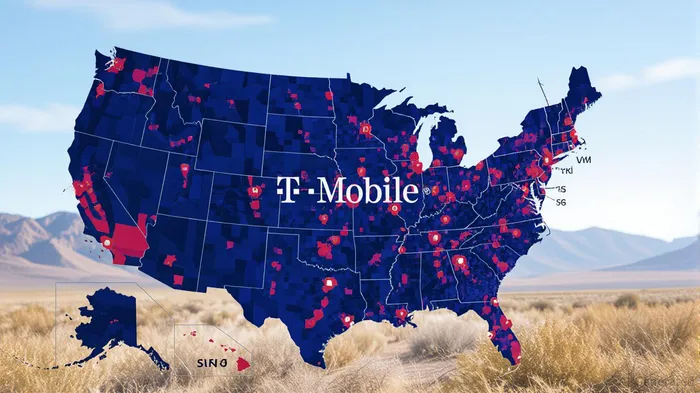
The merger also grants T-Mobile access to 2,000+ rural towers, many in areas where cable-wireless competitors like Xfinity or AT&T Fiber don't operate. These towers, supported by federal subsidies, form the backbone of T-Mobile's push to close the digital divide. Critics worry about post-merger tower closures, but T-Mobile's financial incentive to retain these assets—essential for 5G densification—should mitigate that risk.
Antitrust Mitigation: The Trump Administration's Role
The Trump-era DOJ cleared this deal without major concessions, a stark contrast to past scrutiny of telecom mergers. Why? Two factors:
1. Rural Benefits Overhaul Competition Concerns: Regulators acknowledged that T-Mobile's rural expansion via UScellular's assets could increase competition in underserved areas, offsetting fears of reduced urban choice.
2. Political Alignment: T-Mobile's abandonment of DEI programs—a concession to Trump's anti-diversity agenda—smoothed regulatory hurdles. The DOJ also prioritized structural remedies (like spectrum divestitures) over outright blocking, as seen in the HPE/Juniper tech merger case.
Why Investors Should Buy In
- Regulatory Certainty: With FCC approval nearing and antitrust risks minimized, T-Mobile can focus on execution. The merger's delayed August-September 2025 close date (due to personnel changes) adds little risk, as no major objections remain.
- Federal Funding Synergy: T-Mobile's rural expansion aligns with the $42.5 billion BEAD program, ensuring subsidies will flow to its projects.
- Cable-Wireless Competition: Xfinity and AT&T Fiber are already pressuring T-Mobile's urban pricing, but rural dominance offers a defensible niche.
Risks to Monitor
- Tower Closures: The Rural Wireless Association's push to audit UScellular's subsidy use could lead to regulatory pressure if funds were misallocated.
- Spectrum Concentration: Critics argue T-Mobile's growing spectrum hoard risks monopolizing low-band frequencies. However, the FCC's 2023 Merger Guidelines, which focus on market share thresholds (e.g., >30%), likely won't block this deal.
Investment Thesis: Buy TMO on Dip
T-Mobile's valuation already reflects merger optimism, but dips below $140 (its 52-week low) present a buying opportunity. The deal's rural focus and regulatory tailwinds position TMOTMO-- to outperform peers in 2025 and beyond. For investors, this is a long-term bet on broadband infrastructure—a sector primed for federal investment and rural growth.
Final Take: T-Mobile's acquisition of UScellular isn't just about scale—it's about owning the last mile of rural connectivity. With antitrust risks muted and federal broadband goals in its favor, this deal could cement T-Mobile's place as a 5G-era telecom titan.







Comentarios
Aún no hay comentarios