
MMG's $500 Million Zero-Coupon Convertible Bonds: A Strategic Move for Capital Efficiency and Shareholder Value
In the ever-evolving landscape of corporate finance, strategic capital structure optimization remains a cornerstone of sustainable growth. MMG Limited's recent issuance of $500 million in zero-coupon convertible bonds due 2030, as reported in a FilingReader report, exemplifies a calculated approach to balancing debt reduction, cost efficiency, and shareholder alignment. This move, executed with a 40% conversion premium and a maturity date of 8 October 2030, according to an MMG LinkedIn post, underscores the company's commitment to leveraging innovative financing tools to navigate macroeconomic headwinds while preserving equity value.
Strategic Capital Structure Optimization
MMG's decision to issue zero-coupon convertible bonds reflects a deliberate strategy to refinance existing offshore debt, according to a GMT8 Press report. By forgoing traditional interest payments-replacing them with a discount to par value-the company effectively reduces its near-term cash flow obligations. This structure allows MMG to access capital at a lower cost compared to conventional debt, particularly in a high-interest-rate environment, as noted in a Mayer Brown guide. According to MMG's MMG media release, the net proceeds of approximately $494 million will directly retire higher-cost liabilities, potentially cutting annual interest expenses by millions.
The conversion feature further enhances flexibility. With an initial conversion price of HK$8.40 per share, reported in a Futunn post, the bonds embed an option for investors to convert debt into equity if MMG's stock appreciates. This aligns investor incentives with long-term value creation, as bondholders benefit from the company's growth while mitigating immediate dilution risks. The 12-times oversubscription of the offering, noted in the LinkedIn post, suggests strong market confidence in this dual-purpose structure, which balances cost savings with growth potential.
Shareholder Value Creation and Risk Mitigation
From a shareholder perspective, the issuance presents a nuanced trade-off. While full conversion of the bonds would dilute existing equity by approximately 3.81%, according to a MarketScreener article, the refinancing of debt reduces financial leverage and stabilizes earnings. Lower interest expenses directly improve net income, potentially boosting earnings per share (EPS) over time. As noted by Mayer Brown's 2025 guide, such instruments are increasingly favored by firms seeking to avoid the volatility of equity markets while maintaining capital flexibility.
The 40% conversion premium also acts as a buffer against short-term stock price fluctuations. By setting the conversion price above the current market value, MMG ensures that bondholders are incentivized to hold the bonds unless the stock outperforms expectations. This reduces the likelihood of early conversion, preserving equity stability in the near term, as stated in MMG's media release.
Risks and Market Implications
Despite these advantages, the issuance carries risks. If MMG's stock underperforms, bondholders may retain the debt until maturity, limiting the company's ability to capitalize on equity appreciation. Additionally, the absence of coupon payments means MMG must rely entirely on operational cash flows to meet its obligations in 2030, exposing it to liquidity risks in a downturn, according to the Cbonds listing.
However, the 12-times oversubscription noted in the LinkedIn post indicates that investors perceive these risks as manageable, particularly given MMG's strong operational track record in the mining sector. The transaction also aligns with broader market trends: in 2024, convertible bonds gained traction as companies sought to hedge against macroeconomic uncertainty while avoiding the dilution of traditional equity raises, as discussed in the Mayer Brown guide.
Conclusion
MMG's $500 million zero-coupon convertible bond issuance represents a masterclass in capital structure engineering. By refinancing debt at a lower cost, reducing interest burdens, and embedding growth-aligned incentives, the company positions itself to navigate economic volatility while preserving shareholder value. The strategic use of a conversion premium and the absence of coupon payments reflect a deep understanding of market dynamics, making this issuance a benchmark for capital-efficient financing in the resource sector. 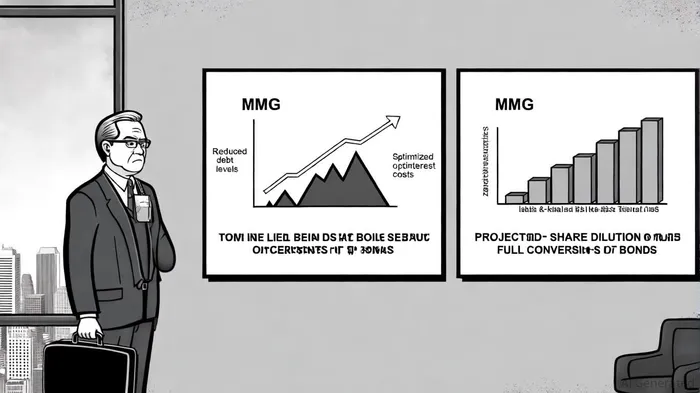







Comentarios
Aún no hay comentarios