
MIT Researchers Find Eco-driving Measures Can Significantly Reduce Vehicle Emissions
PorAinvest
jueves, 7 de agosto de 2025, 12:07 am ET1 min de lectura
AMZN--
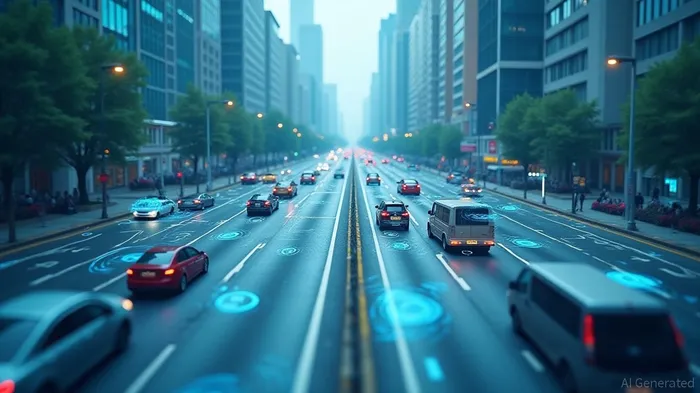
Eco-driving involves dynamically adjusting vehicle speeds to minimize stopping and excessive acceleration, thereby reducing energy consumption. The MIT researchers used a powerful AI method called deep reinforcement learning to optimize these strategies. They identified 33 factors influencing vehicle emissions, including temperature, road grade, intersection topology, and driver behavior, and simulated traffic scenarios at more than 6,000 signalized intersections.
The study revealed that full adoption of eco-driving could cut annual city-wide intersection carbon emissions by 11 to 22 percent without slowing traffic throughput or affecting safety. Even if only 10 percent of vehicles employed eco-driving, it would result in 25 to 50 percent of the total reduction in CO2 emissions. Additionally, optimizing speed limits at about 20 percent of intersections provides 70 percent of the total emission benefits.
The findings suggest that eco-driving measures can be implemented gradually while still having measurable, positive impacts on mitigating climate change and improving public health. Combining eco-driving with alternative transportation decarbonization solutions, such as hybrid and electric vehicles, could yield even greater emission reductions.
The research was funded in part by Amazon and the Utah Department of Transportation. The study highlights the potential of machine learning in optimizing traffic control measures and could inform the implementation of eco-driving technologies, which could involve vehicle dashboards or direct acceleration control through vehicle-to-infrastructure communication systems.
References:
[1] https://news.mit.edu/2025/eco-driving-measures-could-significantly-reduce-vehicle-emissions-0807
Researchers used machine learning to optimize eco-driving strategies, reducing vehicle emissions in urban areas. The study simulated over a million traffic scenarios in three cities and found that eco-driving measures could significantly reduce emissions. The findings could inform the implementation of eco-driving technologies, which could involve vehicle dashboards or direct acceleration control through vehicle-to-infrastructure communication systems.
Researchers from MIT have leveraged machine learning to develop eco-driving strategies that significantly reduce vehicle emissions in urban areas. Their study, published in Transportation Research Part C: Emerging Technologies, simulated over a million traffic scenarios in three major U.S. cities—Atlanta, San Francisco, and Los Angeles—and found that eco-driving measures could substantially lower emissions.Eco-driving involves dynamically adjusting vehicle speeds to minimize stopping and excessive acceleration, thereby reducing energy consumption. The MIT researchers used a powerful AI method called deep reinforcement learning to optimize these strategies. They identified 33 factors influencing vehicle emissions, including temperature, road grade, intersection topology, and driver behavior, and simulated traffic scenarios at more than 6,000 signalized intersections.
The study revealed that full adoption of eco-driving could cut annual city-wide intersection carbon emissions by 11 to 22 percent without slowing traffic throughput or affecting safety. Even if only 10 percent of vehicles employed eco-driving, it would result in 25 to 50 percent of the total reduction in CO2 emissions. Additionally, optimizing speed limits at about 20 percent of intersections provides 70 percent of the total emission benefits.
The findings suggest that eco-driving measures can be implemented gradually while still having measurable, positive impacts on mitigating climate change and improving public health. Combining eco-driving with alternative transportation decarbonization solutions, such as hybrid and electric vehicles, could yield even greater emission reductions.
The research was funded in part by Amazon and the Utah Department of Transportation. The study highlights the potential of machine learning in optimizing traffic control measures and could inform the implementation of eco-driving technologies, which could involve vehicle dashboards or direct acceleration control through vehicle-to-infrastructure communication systems.
References:
[1] https://news.mit.edu/2025/eco-driving-measures-could-significantly-reduce-vehicle-emissions-0807
Divulgación editorial y transparencia de la IA: Ainvest News utiliza tecnología avanzada de Modelos de Lenguaje Largo (LLM) para sintetizar y analizar datos de mercado en tiempo real. Para garantizar los más altos estándares de integridad, cada artículo se somete a un riguroso proceso de verificación con participación humana.
Mientras la IA asiste en el procesamiento de datos y la redacción inicial, un miembro editorial profesional de Ainvest revisa, verifica y aprueba de forma independiente todo el contenido para garantizar su precisión y cumplimiento con los estándares editoriales de Ainvest Fintech Inc. Esta supervisión humana está diseñada para mitigar las alucinaciones de la IA y garantizar el contexto financiero.
Advertencia sobre inversiones: Este contenido se proporciona únicamente con fines informativos y no constituye asesoramiento profesional de inversión, legal o financiero. Los mercados conllevan riesgos inherentes. Se recomienda a los usuarios que realicen una investigación independiente o consulten a un asesor financiero certificado antes de tomar cualquier decisión. Ainvest Fintech Inc. se exime de toda responsabilidad por las acciones tomadas con base en esta información. ¿Encontró un error? Reportar un problema


SOBRE NOSOTROS
Nuestra historiaAutores de noticiasBase de conocimientosPolítica de privacidadTérmino de usoDescargo de responsabilidad de corretaje de tercerosTérminos de uso de AIMEDivulgaciones de riesgos de AInvest AICarrerasCONTÁCTENOS
Email: support@ainvest.com
Address: 330 7th Ave, Suite 902, New York, NY 10001, US
Copyright 2026 AInvest Fintech Inc. All rights reserved.


Comentarios
Aún no hay comentarios