
From Minnesota to the Nation: The Weaponization of Fraud Allegations in Federal-State Relations
The administration's actions represent a systemic pivot from a trust-based federalism to a verification-driven model. This is no longer about isolated probes; it is a deliberate, nationwide restructuring of how Washington allocates funds. The catalyst was a viral video alleging fraud in Minnesota, but the response has been to freeze over from three major programs for five blue states. The move, targeting California, Colorado, Illinois, Minnesota, and New York, is framed as a defense of taxpayer dollars but functions as a political lever.
The pattern is clear: fraud allegations are used to justify suspending payments, creating a precedent for leverage. This began with a pause in all grant funding to Minnesota by the Small Business Administration in late December, . It was followed by threats to withhold SNAP food aid funding from Democratic states unless they provided detailed beneficiary information. The latest freeze is the most expansive, signaling a shift from targeted punishment to a universal requirement.
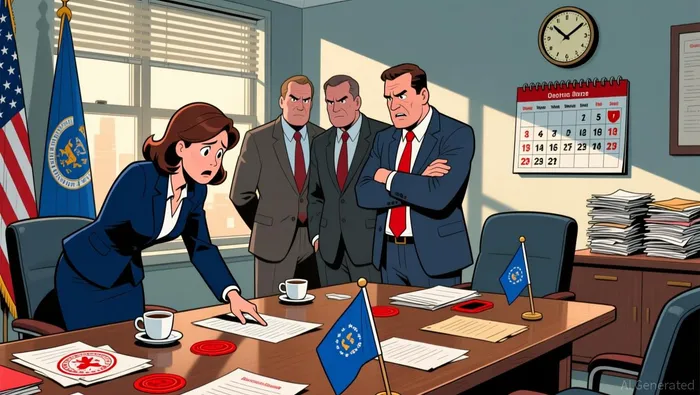
The new rule is the nationwide activation of a "defend the spend" system. As HHS officials declared, all states will now need to provide justification, receipt or photo evidence before payments are made. This is a fundamental change in the federal-state relationship. The onus is no longer on the federal government to trust state administration; it is on the states to prove legitimacy. The requirement for extensive documentation-attendance records, licensing reports, inspection data-transforms every payment into a bureaucratic hurdle.
The bottom line is a structural shift. The administration is using fraud as a justification to impose a verification regime that applies to all states, but with heightened scrutiny for those it deems non-compliant. This creates a new federalism where trust is replaced by constant proof, and funding is a conditional privilege, not a guaranteed entitlement.
The Political Engine: Fraud as a Tool Against Blue States
The freeze on federal funds to Minnesota is not a policy decision born of bureaucratic diligence. It is a political maneuver, a calculated use of a long-running fraud investigation as a catalyst to force broader changes in how federal social spending is administered. The immediate spark was a viral video, but the administration's response reveals a strategic intent to weaponize the issue.
The catalyst was a single YouTube video posted last week by right-wing influencer Nick Shirley. In it, he visited a handful of child care centers in Minneapolis, operated by Somali Americans, and questioned whether children were present. His claims were made without evidence, but they captured the attention of the White House and Republican lawmakers. The administration seized on this, with President calling Minnesota a "hub of fraudulent money laundering activity" and freezing federal grants and loans for small businesses and child care centers. This action was then expanded to freeze child care assistance funding to all states until they can prove funds are being spent legitimately.
This move amplified an existing, multi-year fraud investigation. Federal prosecutors have been probing a range of schemes in Minnesota for years, with the most prominent being a defrauded out of taxpayer dollars. More recently, the scope has broadened dramatically, , including housing and autism services. The administration's framing of the crackdown as necessary to protect taxpayer dollars aligns with these serious allegations. However, the timing and focus-centered on a video about daycares and a community that is a key Democratic constituency-suggest a political calculus.
The administration's actions have been framed as a necessary crackdown on fraud. Yet critics see a different picture. They argue the move is political retaliation targeting Democratic states and communities, using the fraud narrative to punish them. Governor Tim of Minnesota, a Democrat, has called the federal effort political, suggesting Republican lawmakers have an interest in keeping the scandal alive. The scale of the freeze is staggering, with the Department of Health and HHS pausing over in social services and child care funding for a handful of states, including California, Colorado, Illinois, and New York. This sweeping action, justified by concerns over benefits going to non-citizens, appears designed to create a crisis that demands a political solution.
The bottom line is that fraud allegations have become a political engine. The viral video provided the ignition, but the administration's response-freezing billions in funds and demanding sweeping new rules for all states-shows a clear intent to use the issue to force a broader policy shift. Whether this is a genuine effort to combat fraud or a strategic political attack, the immediate consequence is a severe disruption to social services for tens of thousands of children and families.
The Economic and Operational Fallout
The administration's freeze on federal child care funding and its subsequent rule changes are not merely bureaucratic adjustments; they are a direct threat to the operational viability of a critical sector. The immediate risk is a cascade of closures. Child care providers operate on razor-thin margins, with . This makes them exceptionally vulnerable. As the National Child Care Association director stated, most providers won't be able to survive more than a month without these payments. Missing a single payroll is often the final blow for these small businesses, . child care infrastructure.
The operational risk is acute and immediate. A delay of even one month in receiving subsidized payments could force widespread closures. This would trigger a severe domino effect, disrupting the workforce and affecting millions of families. The sector is already grappling with a workforce shortage and a child care crisis. Adding a funding freeze compounds these existing pressures, threatening to destabilize an already fragile system that is essential for labor market participation.
The administration's rule changes, aimed at reducing fraud risk, introduce a new layer of operational chaos for compliant providers. The move to restore attendance-based billing and no longer require upfront payments fundamentally alters the cash flow model that many providers have adapted to. This shift from enrollment-based to verified attendance billing creates administrative burdens and increases the risk of revenue shortfalls, especially for centers serving children with irregular schedules. Advocates warn these changes introduce "chaos and confusion" by rolling back provisions designed to make the system more stable and affordable.
The bottom line is a policy that risks punishing the entire sector for the actions of a few. Withholding funds from compliant providers while introducing complex new billing rules does not fix fraud; it destabilizes an essential service. The fallout would be felt across the broader economy, as the closure of child care centers directly impacts the ability of parents to work, exacerbating existing labor shortages and undermining economic productivity.
Forward Scenarios: The Integrity of the Safety Net
The administration's freeze on federal childcare funding has created a high-stakes test for the political economy of social programs. The ultimate impact will hinge on three potential paths forward, each with distinct consequences for program integrity and the broader safety net.
The Stability Scenario is the most orderly, but burdensome, outcome. In this path, states comply with the new demands, providing the extensive documentation-justification, receipts, and photo evidence-required before funds are released. The administration's "defend the spend" system becomes a permanent, if onerous, oversight tool. While this could satisfy the administration's stated goal of ensuring funds are used legitimately, it would impose a massive administrative cost on state agencies and the thousands of small, labor-intensive childcare providers who rely on this money. As one national association director notes, , and centers operate paycheck to paycheck. The long-term effect would be a system where program integrity is maintained through bureaucratic friction, potentially deterring some providers and increasing costs for families.
The Escalation Scenario is the more disruptive, politically charged path. The administration could expand the freeze to other major safety net programs, targeting SNAP food aid and unemployment insurance nationwide. This would be a direct extension of the strategy already applied to Minnesota, where the administration has threatened to withhold SNAP food aid funding from Democratic states. Such a move would trigger broad economic disruption, as the National Child Care Association warns of a domino effect that could force parents out of the workforce. This scenario would test the resilience of the entire federal safety net, with the potential to cause widespread operational chaos and significant political fallout.
The Retreat Scenario is the least likely but most politically palatable outcome. It would be triggered by a wave of legal challenges from states and advocacy groups, combined with the operational chaos already visible in the childcare sector. Minnesota's attorney general has already said he is "exploring all our legal options" to block the freeze. If courts rule the freeze unlawful or if the economic damage becomes undeniable, the administration may be forced to clarify the rules or reverse the freeze entirely. This would preserve the status quo but likely at the cost of political credibility, as the administration would be seen as backing down from its tough stance on fraud.
The bottom line is that the freeze is a political gambit with high stakes. The Stability path would institutionalize a costly verification regime. The Escalation path risks systemic economic damage. The Retreat path would be a political retreat. The chosen path will define the future of federal oversight for social programs.







Comentarios
Aún no hay comentarios