
Mining in Mendoza: Copper Booms vs. Political and Environmental Risks
Policy Shifts and Economic Potential
Mendoza's 2025 legislative package, which includes a 3% royalties cap on mineral value and a 15% allocation of royalties to the Environmental Compensation Fund, signals a commitment to regulatory clarity and sustainable development. These measures align with national reforms under Milei's administration, which seeks to unlock Argentina's vast copper reserves by amending the Glacier Law-a move that could expand mining access to high-altitude Andean regions. The RIGI (Large Investment Incentive Regime) program, offering 40-year legal stability and tax incentives, has already attracted major players like Glencore and BHPBHP--, with projects such as PSJ Cobre Mendocino and the Malargüe Mining District advancing rapidly.
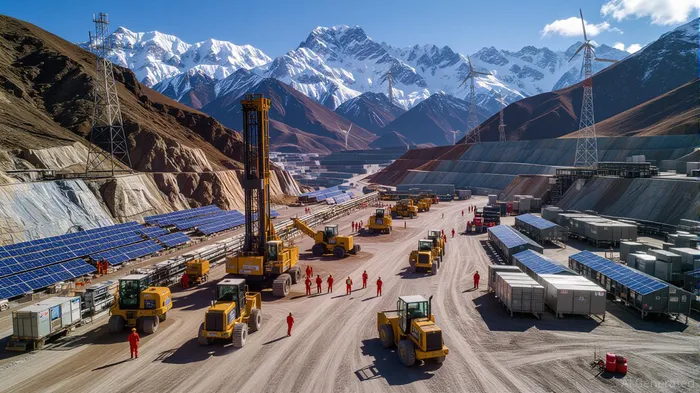
The economic stakes are high. According to reports, Argentina aims to produce over one million tons of copper annually by 2035, positioning itself as a top-five global producer. Mendoza's governor, Alfredo Cornejo, envisions a future where copper mining coexists with viticulture, leveraging the province's structural advantages, including transparent governance and proximity to Pacific export routes. Projects like PSJ Cobre Mendocino, projected to generate USD 1.4 billion in fiscal impact, underscore the potential for economic diversification and infrastructure development.
Environmental and Social Risks
Despite these ambitions, environmental risks loom large. CONICET scientists have raised alarms about the San Jorge Cobre Mendocino project, citing deficiencies in its environmental impact report, including outdated data on water resources and biodiversity. The Mendoza River basin, a critical water source for agriculture and communities, faces potential threats from mining activities, exacerbating concerns over water security in a region already grappling with climate stressors.
The national policy shift transferring glacier boundary determination from federal to provincial authorities has further intensified debates. While proponents argue this streamlines operations, critics warn it weakens environmental oversight and could enable mining encroachment on protected areas. The Mendoza government's emphasis on modern technologies, such as automation and real-time monitoring, to mitigate environmental impacts may not fully address these concerns.
Political and Economic Uncertainties
Argentina's history of macroeconomic instability remains a wildcard. Despite Milei's fiscal austerity measures, and a 54% peso devaluation, which have stabilized inflation to 2.1% as of September 2025, long-term investors must contend with currency devaluation risks and the country's high-risk investment profile. Infrastructure gaps-particularly in transportation and energy-also pose hurdles, with San Juan province introducing compensation programs to incentivize mining firms to fund essential projects.
Political continuity, however, offers some reassurance. According to economic outlooks, the government party's strong mandate post-2025 legislative elections and Milei's structural reforms have created a more predictable policy environment. The RIGI program's fixed tax rates and unrestricted foreign exchange access further enhance Argentina's appeal as a mining jurisdiction.
Institutional Investment Viability
Financial institutions remain cautiously optimistic. Reports from the Payne Institute highlight that Argentina's copper projects, including Vicuña and Los Azules, could attract USD 20 billion in investments, elevating the country to a top-10 global producer. However, Deloitte's economic outlook cautions that Argentina's 41% inflation rate and historical defaults could deter risk-averse investors.
The PSJ Cobre Mendocino project, now approved by the Mendoza Chamber of Deputies, exemplifies the delicate balance between growth and sustainability. While it incorporates IFC-aligned ESG standards and public participation mechanisms, its success will depend on sustained regulatory discipline and community trust.
Conclusion
Mendoza's copper boom represents a pivotal moment for Argentina's mining sector, offering a strategic opportunity to capitalize on the global energy transition's demand for critical minerals. Yet, the interplay of environmental risks, political uncertainties, and infrastructure challenges demands a nuanced approach. For institutional investors, the key lies in aligning with projects that prioritize transparency, technological innovation, and stakeholder engagement-while hedging against Argentina's volatile macroeconomic landscape. As Mendoza navigates this complex terrain, the province's ability to reconcile mining expansion with sustainability will ultimately determine its role in the global copper supply chain.





Comentarios
Aún no hay comentarios