
Millennials and Gen Zers: The Credit Score Conundrum
Generado por agente de IACyrus Cole
lunes, 24 de marzo de 2025, 7:41 pm ET1 min de lectura
LPRO--
The latest report from Open LendingLPRO-- and TransUnionTRU-- sheds light on a growing concern among Millennials and Gen Zers: their credit scores. Despite the economic optimism reflected in recent data, these younger generations are experiencing a phenomenon dubbed the "vibecession," where they feel pessimistic about their financial futures. This sentiment is reflected in their credit scores, which lag behind the national average. However, the report also reveals a silver lining: Millennials and Gen Zers are poised to improve their credit scores more quickly than older generations.
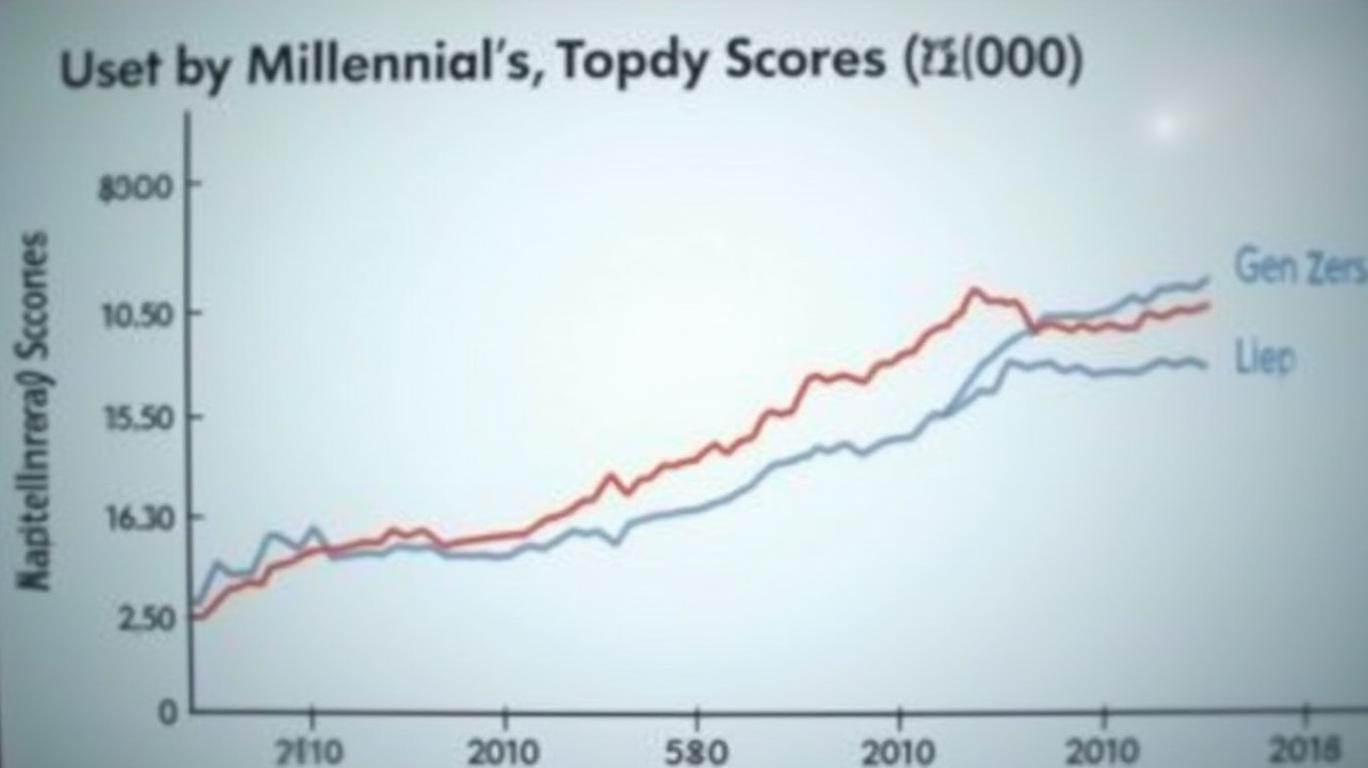
The average credit score in the U.S. was 715 in 2024, according to Experian. Millennials averaged 690, and Gen Zers came in at 680. These scores are considered "good," but they fall short of the "excellent" range, which starts at 740. The qualifying credit score for most conventional home loans is 620, according to Rocket Mortgage, so while Millennials and Gen Zers are not yet in the "excellent" range, they are on the right track.
The report by Open Lending and TransUnion shows that 30% of millennial and Gen Z thin-file consumers moved up credit tiers within two years, compared to just 22% of older generations. This suggests that with the right financial management and access to credit, younger generations have the potential to improve their credit scores and achieve long-term financial stability.
So, what can financial institutions do to support Millennials and Gen Zers in improving their credit scores? The report suggests several strategies, including comprehensive data analysis, offering automotive loans as a milestone, loyalty programs and incentives, educational resources and financial literacy, and risk-based pricing and default insurance.
By implementing these strategies, financial institutions can better support Millennials and Gen Zers in improving their credit scores, fostering long-term customer loyalty, and contributing to broader economic inclusion. The report by Open Lending and TransUnion is a valuable resource for financial institutions looking to better understand the credit potential of Millennials and Gen Zers and how to support them in achieving long-term financial stability.
TRU--
The latest report from Open LendingLPRO-- and TransUnionTRU-- sheds light on a growing concern among Millennials and Gen Zers: their credit scores. Despite the economic optimism reflected in recent data, these younger generations are experiencing a phenomenon dubbed the "vibecession," where they feel pessimistic about their financial futures. This sentiment is reflected in their credit scores, which lag behind the national average. However, the report also reveals a silver lining: Millennials and Gen Zers are poised to improve their credit scores more quickly than older generations.
The average credit score in the U.S. was 715 in 2024, according to Experian. Millennials averaged 690, and Gen Zers came in at 680. These scores are considered "good," but they fall short of the "excellent" range, which starts at 740. The qualifying credit score for most conventional home loans is 620, according to Rocket Mortgage, so while Millennials and Gen Zers are not yet in the "excellent" range, they are on the right track.
The report by Open Lending and TransUnion shows that 30% of millennial and Gen Z thin-file consumers moved up credit tiers within two years, compared to just 22% of older generations. This suggests that with the right financial management and access to credit, younger generations have the potential to improve their credit scores and achieve long-term financial stability.
So, what can financial institutions do to support Millennials and Gen Zers in improving their credit scores? The report suggests several strategies, including comprehensive data analysis, offering automotive loans as a milestone, loyalty programs and incentives, educational resources and financial literacy, and risk-based pricing and default insurance.
By implementing these strategies, financial institutions can better support Millennials and Gen Zers in improving their credit scores, fostering long-term customer loyalty, and contributing to broader economic inclusion. The report by Open Lending and TransUnion is a valuable resource for financial institutions looking to better understand the credit potential of Millennials and Gen Zers and how to support them in achieving long-term financial stability.

Divulgación editorial y transparencia de la IA: Ainvest News utiliza tecnología avanzada de Modelos de Lenguaje Largo (LLM) para sintetizar y analizar datos de mercado en tiempo real. Para garantizar los más altos estándares de integridad, cada artículo se somete a un riguroso proceso de verificación con participación humana.
Mientras la IA asiste en el procesamiento de datos y la redacción inicial, un miembro editorial profesional de Ainvest revisa, verifica y aprueba de forma independiente todo el contenido para garantizar su precisión y cumplimiento con los estándares editoriales de Ainvest Fintech Inc. Esta supervisión humana está diseñada para mitigar las alucinaciones de la IA y garantizar el contexto financiero.
Advertencia sobre inversiones: Este contenido se proporciona únicamente con fines informativos y no constituye asesoramiento profesional de inversión, legal o financiero. Los mercados conllevan riesgos inherentes. Se recomienda a los usuarios que realicen una investigación independiente o consulten a un asesor financiero certificado antes de tomar cualquier decisión. Ainvest Fintech Inc. se exime de toda responsabilidad por las acciones tomadas con base en esta información. ¿Encontró un error? Reportar un problema




Comentarios
Aún no hay comentarios