
Military Deployable Infrastructure Market Set to Reach $1.29 Billion by 2039, Driven by Modular Infrastructure, Climate Resilience, AI Integration, and Autonomous Deployment.
PorAinvest
miércoles, 27 de agosto de 2025, 5:46 am ET1 min de lectura
AIR--
Evolving warfare strategies, increasing rapid deployment capabilities, and increasing joint operations are the primary drivers behind this market expansion. The integration of advanced technologies such as AI and autonomous systems is also playing a pivotal role in shaping the future of military deployable infrastructure. For instance, passive radar technology, which can detect and track targets without emitting signals, is becoming increasingly important for covert surveillance and threat detection [1].
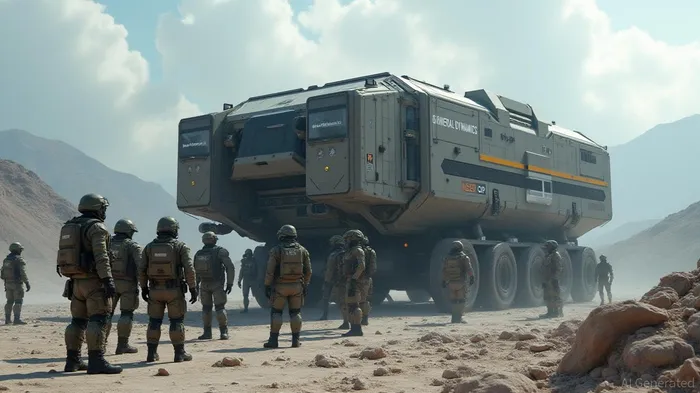
Major players in the market include General Dynamics, Rheinmetall, and AAR Corp. These companies are focusing on developing energy-efficient solutions, enhancing mobility, and integrating AI to meet the growing demands of the military. For example, General Dynamics has been working on modular construction technologies and renewable energy solutions, while AAR Corp is focusing on advanced communication systems and smart logistics [1].
However, the market's outlook is being affected by rapid changes in trade relations and tariffs globally. The report notes that the impact of tariffs, particularly between the US and other countries, is likely to raise costs for expeditionary military bases and have a broader effect on the global economy and trade [1]. Defense contractors are stockpiling essential materials and working with allied nations to diversify supply chains in response to these challenges.
In conclusion, the military deployable infrastructure market is experiencing robust growth, driven by technological advancements and evolving security concerns. Despite the challenges posed by trade tensions, the market is expected to continue its upward trajectory, supported by the integration of AI and autonomous deployment technologies.
References:
[1] https://finance.yahoo.com/news/military-deployable-infrastructure-global-industry-094100749.html
GD--
The military deployable infrastructure market is expected to reach $1.29 billion by 2039, driven by modular infrastructure, climate resilience, AI integration, and autonomous deployment. The market will grow from $0.95 billion in 2024 to $1.01 billion in 2025, and then to $1.29 billion in 2029, with a CAGR of 6.3%. The growth is attributed to evolving warfare strategies, increasing rapid deployment capabilities, and increasing joint operations. Major players include General Dynamics, Rheinmetall, and AAR Corp.
The military deployable infrastructure market is poised for significant growth, expected to reach $1.29 billion by 2029, according to a recent report [1]. This growth is driven by several key trends, including modular infrastructure, climate resilience, AI integration, and autonomous deployment. The market is anticipated to grow from $0.95 billion in 2024 to $1.01 billion in 2025, with a compound annual growth rate (CAGR) of 6.3%.Evolving warfare strategies, increasing rapid deployment capabilities, and increasing joint operations are the primary drivers behind this market expansion. The integration of advanced technologies such as AI and autonomous systems is also playing a pivotal role in shaping the future of military deployable infrastructure. For instance, passive radar technology, which can detect and track targets without emitting signals, is becoming increasingly important for covert surveillance and threat detection [1].
Major players in the market include General Dynamics, Rheinmetall, and AAR Corp. These companies are focusing on developing energy-efficient solutions, enhancing mobility, and integrating AI to meet the growing demands of the military. For example, General Dynamics has been working on modular construction technologies and renewable energy solutions, while AAR Corp is focusing on advanced communication systems and smart logistics [1].
However, the market's outlook is being affected by rapid changes in trade relations and tariffs globally. The report notes that the impact of tariffs, particularly between the US and other countries, is likely to raise costs for expeditionary military bases and have a broader effect on the global economy and trade [1]. Defense contractors are stockpiling essential materials and working with allied nations to diversify supply chains in response to these challenges.
In conclusion, the military deployable infrastructure market is experiencing robust growth, driven by technological advancements and evolving security concerns. Despite the challenges posed by trade tensions, the market is expected to continue its upward trajectory, supported by the integration of AI and autonomous deployment technologies.
References:
[1] https://finance.yahoo.com/news/military-deployable-infrastructure-global-industry-094100749.html
Divulgación editorial y transparencia de la IA: Ainvest News utiliza tecnología avanzada de Modelos de Lenguaje Largo (LLM) para sintetizar y analizar datos de mercado en tiempo real. Para garantizar los más altos estándares de integridad, cada artículo se somete a un riguroso proceso de verificación con participación humana.
Mientras la IA asiste en el procesamiento de datos y la redacción inicial, un miembro editorial profesional de Ainvest revisa, verifica y aprueba de forma independiente todo el contenido para garantizar su precisión y cumplimiento con los estándares editoriales de Ainvest Fintech Inc. Esta supervisión humana está diseñada para mitigar las alucinaciones de la IA y garantizar el contexto financiero.
Advertencia sobre inversiones: Este contenido se proporciona únicamente con fines informativos y no constituye asesoramiento profesional de inversión, legal o financiero. Los mercados conllevan riesgos inherentes. Se recomienda a los usuarios que realicen una investigación independiente o consulten a un asesor financiero certificado antes de tomar cualquier decisión. Ainvest Fintech Inc. se exime de toda responsabilidad por las acciones tomadas con base en esta información. ¿Encontró un error? Reportar un problema


SOBRE NOSOTROS
Nuestra historiaAutores de noticiasBase de conocimientosPolítica de privacidadTérmino de usoDescargo de responsabilidad de corretaje de tercerosTérminos de uso de AIMEDivulgaciones de riesgos de AInvest AICarrerasCONTÁCTENOS
Email: support@ainvest.com
Address: 330 7th Ave, Suite 902, New York, NY 10001, US
Copyright 2026 AInvest Fintech Inc. All rights reserved.


Comentarios
Aún no hay comentarios