
US military boosts fighter jets in Middle East ahead of possible weeks-long Iran campaign – Financial Times
US military boosts fighter jets in Middle East ahead of possible weeks-long Iran campaign – Financial Times
US Military Boosts Fighter Jets in Middle East Ahead of Possible Weeks-Long Iran Campaign
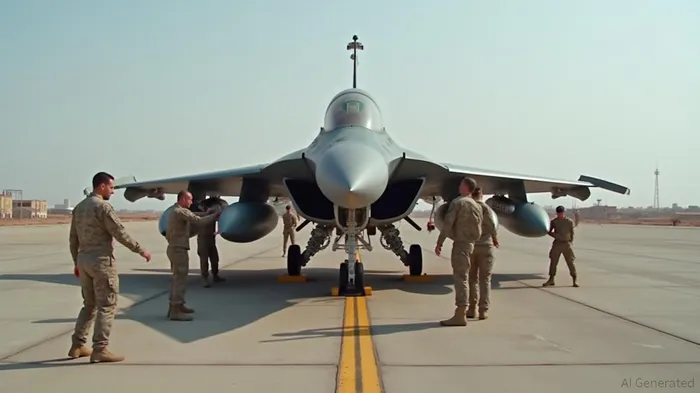
The United States has significantly increased its military presence in the Middle East, positioning assets to potentially sustain a prolonged campaign against Iran. This buildup includes two aircraft carriers—the USS Gerald R. Ford and USS Abraham Lincoln—alongside guided-missile destroyers, fighter jets, and air defense systems, according to satellite imagery and defense analysts. The deployment mirrors the scale of pre-2003 Iraq War mobilizations and exceeds recent operations, such as the 2025 strikes on Iran's nuclear facilities.
The USS Abraham Lincoln, located off Oman's coast, operates with three destroyers and 90 aircraft, including F-35 fighters, while the Ford, the world's largest warship, is en route to the region. Combined with eight destroyers, three littoral combat ships, and refueling tankers, the force structure suggests readiness for an extended air campaign. Dozens of transport and refueling aircraft have also been repositioned to Europe and the Middle East, enabling sustained operations.
Defense experts note the deployment's strategic depth. Justin Crump of Sibylline Risk Intelligence stated the posture allows for "about 800 sorties per day," sufficient to neutralize Iranian responses. However, the financial cost remains a concern. A similar Caribbean buildup in 2025 cost nearly $3 billion over five months, raising questions about the sustainability of this larger effort.
Diplomatic talks between the U.S. and Iran, mediated by Oman, continue amid heightened tensions. Iran has responded with naval drills in the Strait of Hormuz, a critical oil transit chokepoint, while U.S. Central Command has emphasized its readiness to defend allies and partners.
For investors, the prolonged military presence underscores regional instability risks, particularly for oil markets and global trade. While the U.S. maintains it seeks a diplomatic resolution, the sheer scale of deployed forces suggests a high threshold for de-escalation. As former Pentagon official Dana Stroul noted, "It is not a question of military readiness, but a political decision".
[^NUMBER citations correspond to source materials provided.]




Comentarios
Aún no hay comentarios