
Midwest Freight Network Shifts: Unlocking Agricultural Logistics Opportunities in the 2025 Corn Harvest Season
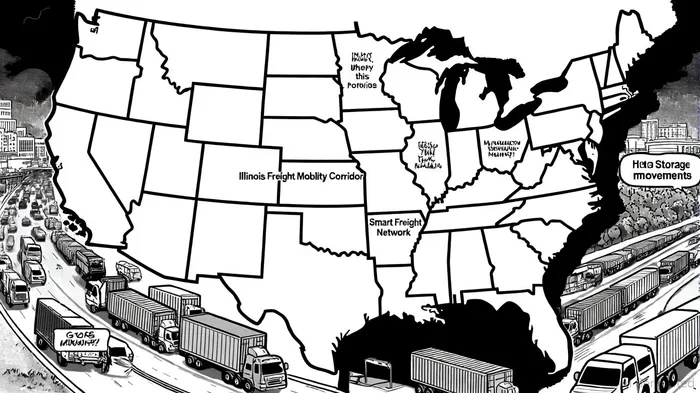
The 2025 corn harvest season in the U.S. Midwest is reshaping agricultural logistics infrastructure, creating a surge of near-term investment opportunities. With nearly 80% of U.S. corn production concentrated in a nine-state region, the compressed harvest window has intensified demand for freight services, driving premium rates for shippers and consistent backhaul opportunities for truckers along critical corridors like I-80 and I-35 [1]. This seasonal urgency, combined with a broader freight infrastructure renaissance, is positioning the Midwest as a focal point for capital deployment in logistics.
Freight Demand and Infrastructure Renaissance
The Midwest's corn harvest season is a high-stakes logistical event. According to a report by Truckstop.com, the concentration of production in states like Illinois and Iowa has created a “compressed timeframe for grain movement,” with farmers and processors racing to transport crops to elevators, processing facilities, and export terminals [1]. This dynamic has led to a 20–30% spike in spot market rates for grain haulers, while truckers benefit from backhaul opportunities that offset empty miles [1].
Simultaneously, the region is undergoing a freight infrastructure transformation. Projects like the Illinois Freight Mobility Corridor and the Ohio Smart Freight Network are modernizing rail, road, and intermodal systems. For instance, Illinois' $496 million Chain of Rocks Bridge replacement on I-70 includes dual lanes and improved interchanges, reducing congestion and enhancing throughput for grain trucks [1]. Similarly, Ohio's $3.2 billion Smart Freight Network integrates AI traffic management and dedicated freight lanes, cutting transit times by 15–20% for agricultural shipments [2]. These upgrades are not only easing bottlenecks but also reducing reliance on coastal ports by expanding inland freight capacity [2].
Capital Flows and Storage Innovations
Investment in agricultural logistics infrastructure is accelerating, driven by both public and private capital. The U.S. Department of Agriculture (USDA) and Minnesota recently awarded $9.5 million to 11 projects under the Resilient Food Systems Infrastructure (RFSI) Program, targeting the “missing middle” of the supply chain. For example, Green Acres Milling in Albert Lea received $1.5 million to build an oat processing facility, addressing a critical gap in value-added infrastructure [2]. Meanwhile, Sno Pac Foods in Caledonia secured $1.57 million for a cold storage facility, enhancing regional capacity to handle perishable and processed agricultural goods [2].
A new capital orchestrator initiative, backed by the Walton Family Foundation and The Rockefeller Foundation, is further aligning investments with regenerative agriculture goals. This effort involves 20 leading organizations designing a financial platform to deploy capital more strategically, prioritizing projects that improve storage, processing, and transportation efficiency [2].
Quantifying Efficiency Gains
The impact of these projects is already evident in 2025. Rail transport, a backbone of grain logistics, has seen improved efficiency: origin dwell times for major carriers like BNSF and Union PacificUNP-- now average under 20 hours, up from 4,500 unfulfilled railcar orders in 2023 to just 1,610 by May 2025 [3]. Barge traffic on the Lower Mississippi River also surged, with 859,206 tons of grain moved in the week ending May 31—a 42% increase from 2024—highlighting the cost-effectiveness of inland waterways [3].
However, trucking remains a mixed bag. While rail and barge systems benefit from infrastructure upgrades, the sector faces persistent challenges: labor shortages, regional disparities in diesel prices, and deferred road maintenance in key production areas like Missouri and North Dakota [3]. These pain points create opportunities for investors in trucking fleets, logistics software, and last-mile solutions.
Challenges and Strategic Opportunities
Despite the optimism, risks linger. Labor shortages and uneven truck availability could disrupt grain movement, particularly in rural areas [4]. Additionally, the USDA's forecast of a record 16.7 billion bushel corn crop—coupled with on-farm storage capacity of 13.63 billion bushels—highlights the need for expanded off-farm storage [3]. Innovative solutions like FCSAmerica's flexible leasing programs are helping farmers access storage without capital outlays, but further investment in infrastructure is critical [3].
For investors, the Midwest's freight network shifts present a dual opportunity: capitalizing on immediate demand for transport services while funding long-term infrastructure upgrades. The Illinois Competitive Freight Program, for instance, allocates funds to modernize intermodal hubs and reduce truck dwell times at rail yards [4]. Similarly, Ohio's Transport Ohio State Freight Plan emphasizes economic competitiveness through targeted policy and infrastructure investments [5].
Conclusion
The 2025 corn harvest season underscores the Midwest's pivotal role in U.S. agriculture and its evolving logistics landscape. As infrastructure projects reduce bottlenecks and storage innovations address supply chain gaps, the region is becoming a magnet for capital seeking high-impact, near-term returns. For investors, the key lies in balancing short-term freight demand with strategic infrastructure development—ensuring that the Midwest's agricultural heartland remains a powerhouse for decades to come.





Comentarios
Aún no hay comentarios