
Middle Eastern Sovereign Wealth Funds: Reshaping Global Markets Through Strategic Asset Allocation
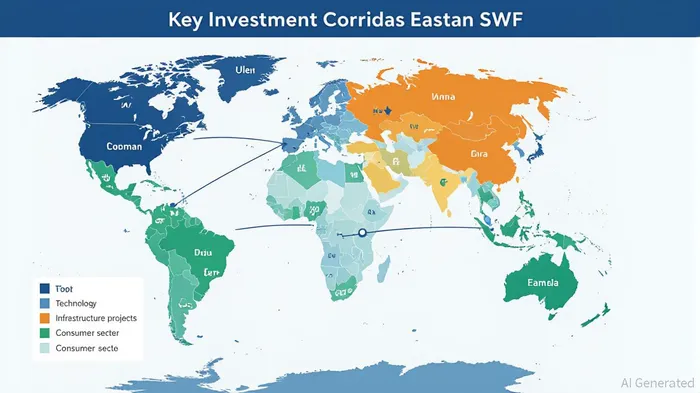
The global economic landscape is undergoing a quiet but profound transformation, driven by the strategic asset allocation of Middle Eastern sovereign wealth funds (SWFs). As these funds pivot away from traditional hydrocarbon-centric portfolios, their investments in technology, infrastructure, and consumer sectors are not only diversifying their own economies but also reshaping global supply chains, innovation ecosystems, and market dynamics. This shift reflects a calculated, long-term vision to position the Middle East as a pivotal player in the post-oil era, leveraging capital as a tool for geopolitical influence and economic resilience.
Strategic Asset Allocation: A Blueprint for Diversification
Middle Eastern SWFs, including entities like the Public Investment Fund (PIF) of Saudi Arabia and the Abu Dhabi Investment Authority (ADIA), have adopted asset allocation frameworks that prioritize long-term value creation over short-term gains. According to a report by the World Economic Forum, these funds have increasingly directed capital toward sectors aligned with global megatrends such as artificial intelligence (AI), renewable energy, and digital infrastructure [1]. For instance, investments in AI startups and data centers are not merely speculative but part of a broader strategy to anchor the region in the Fourth Industrial Revolution.
A key feature of this approach is its "stealth" nature. Unlike high-profile acquisitions that dominate headlines, many SWF investments are made through minority stakes, joint ventures, or private equity vehicles, allowing them to exert influence without overt visibility. This strategy minimizes political friction while enabling access to cutting-edge technologies and markets. For example, ADIA's recent foray into green hydrogen projects in Australia and Chile underscores a focus on securing future energy infrastructure without disrupting existing geopolitical alliances [2].
Technology: Anchoring Innovation Hubs
The SWFs' technology investments are particularly transformative. By targeting innovation clusters in North America, Europe, and Asia, these funds are effectively "outsourcing" R&D to global tech leaders while ensuring their own economies benefit from spillover effects. A case in point is Saudi Arabia's PIF, which has funneled billions into U.S. and European AI firms, positioning the Kingdom as a hub for ethical AI governance and data privacy frameworks [1]. Such moves are not just about financial returns; they are about embedding Middle Eastern institutions into the architecture of future technologies.
Moreover, SWFs are capitalizing on the AI revolution by investing in infrastructure that supports machine learning and cloud computing. As stated by a Bloomberg analysis, the demand for high-capacity data centers is projected to grow exponentially, and early entrants—backed by SWF capital—are securing a first-mover advantage [2]. This aligns with the broader trend of "digital decoupling," where nations and regions build redundant systems to mitigate risks from geopolitical fragmentation [3].
Infrastructure: Building Global Connectivity
Infrastructure remains a cornerstone of SWF strategy, with a focus on projects that enhance global connectivity and address supply chain vulnerabilities. Middle Eastern funds have been particularly active in Southeast Asia and Africa, where they are financing ports, railways, and renewable energy grids. These investments are often structured as public-private partnerships, reducing risk while ensuring alignment with host nations' development goals.
For example, the PIF's participation in India's solar energy expansion has not only bolstered its own clean energy credentials but also created a strategic foothold in a market projected to become the world's third-largest economy by 2040 [1]. Similarly, ADIA's investments in African logistics hubs are part of a broader effort to diversify trade routes and reduce dependency on traditional corridors like the Suez Canal.
Consumer Sector: Capturing Emerging Markets
The consumer sector has emerged as a critical battleground for SWFs, driven by the growing purchasing power of middle-class populations in Asia and Africa. Investments in retail, entertainment, and services are often made in collaboration with local partners, ensuring cultural relevance and regulatory compliance. A report by Reuters highlights how Qatari and Emirati funds have acquired stakes in regional e-commerce platforms and streaming services, capitalizing on the shift to digital consumption [3].
These investments also serve a dual purpose: they generate revenue while fostering soft power. By backing local brands and cultural projects, SWFs are subtly reshaping global perceptions of the Middle East, positioning it as a partner in growth rather than a source of instability.
Economic Power Shifts: The Bigger Picture
The cumulative impact of these investments is a reconfiguration of global economic power. As SWFs amass influence in technology and infrastructure, they are no longer passive investors but active architects of the global economy. This shift is particularly evident in the rise of "capital-centric" geopolitics, where financial clout translates into diplomatic and strategic leverage.
Data from the World Economic Forum indicates that Middle Eastern SWFs now hold over $1.2 trillion in global assets, with a significant portion allocated to non-oil sectors [1]. This diversification not only insulates their home economies from commodity price volatility but also positions them to benefit from the next wave of global growth.
Conclusion
The strategic asset allocation of Middle Eastern SWFs represents more than a financial strategy—it is a masterclass in long-term economic planning. By investing in the technologies, infrastructure, and consumer ecosystems that will define the 21st century, these funds are not only securing their own futures but also reshaping the contours of global capitalism. As the world grapples with fragmentation and uncertainty, the Middle East's SWFs stand out as exemplars of how capital, when deployed with foresight and discipline, can become a force for stability and innovation.







Comentarios
Aún no hay comentarios