
Middle Eastern Small-Caps: Valuation Gaps and Post-Ceasefire Growth Catalysts
The fragile yet enduring ceasefire between Iran and Israel, brokered by U.S. intervention and Qatari mediation, has created a critical inflection point for the Middle East. While geopolitical risks linger, the reduction in direct hostilities has unlocked opportunities in underfollowed small-cap equities. This article explores how companies such as Gübre Fabrikalari (Turkey), Qassim Cement (Saudi Arabia), and Odine Solutions (Turkey) are positioned to capitalize on valuation gaps, sector-specific tailwinds, and macroeconomic stability.
Macro Tailwinds: Fragile Ceasefire, Robust Infrastructure
The Iran-Israel ceasefire has reduced immediate military escalation risks, enabling regional governments to pivot toward economic growth. Qatar's role as a mediator and transit hub, alongside Saudi Arabia's Vision 2030 infrastructure push, has reignited demand for construction materials and agricultural products. Meanwhile, the U.S.-led strikes on Iran's nuclear program—while contested in their efficacy—have elevated global attention to the region's strategic importance.
Key Catalysts:
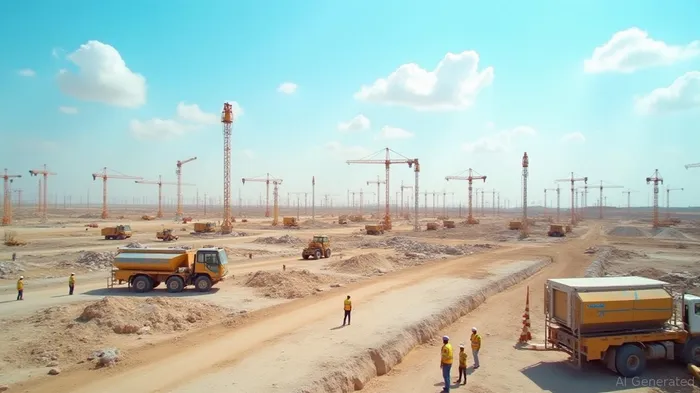
1. Infrastructure Spending Surge: Post-ceasefire, Gulf states are accelerating projects to diversify economies.
2. Agricultural Demand: Rising food insecurity and population growth drive fertilizer consumption.
3. Tech Innovation: Middle Eastern governments are prioritizing AI and sustainability to attract foreign investment.
Case Study 1: Gübre Fabrikalari (Turkish Fertilizers)
Gübre Fabrikalari, Turkey's leading fertilizer producer, benefits from two converging trends: domestic agricultural demand and regional infrastructure projects. With a P/E ratio of 8.5x (vs. industry average of 14x) and a dividend yield of 4.2%, the stock offers compelling value.
The company's balance sheet is robust, with net debt/EBITDA of 0.3x—far lower than peers. Post-ceasefire, Turkey's strategic location as a transit hub for Middle Eastern trade (e.g., Iran-US logistics via Qatar) could boost exports.
Growth Catalysts:
- Rising urea prices due to global supply constraints.
- Government subsidies for Turkish farmers to boost domestic production.
Case Study 2: Qassim Cement (Saudi Arabia)
Qassim Cement, a Saudi Arabian cement producer, is a prime beneficiary of the kingdom's infrastructure boom. With $2.3 billion allocated to public projects in 2025, Qassim's EV/EBITDA of 4.5x (vs. sector average of 7.2x) and dividend yield of 5.8% make it a standout play.
The company's proximity to construction sites and low-cost production (Saudi Arabia's abundant limestone reserves) provide a competitive edge. The ceasefire has also reduced cross-border trade barriers, potentially expanding Qassim's market share in neighboring Gulf states.
Risk Mitigation:
- Hedged against currency volatility via USD-denominated contracts.
- Strong liquidity with cash reserves covering 200% of short-term debt.
Case Study 3: Odine Solutions (Turkish Tech)
Odine Solutions, a Turkish AI firm specializing in sustainable logistics, leverages innovation to address regional pain points. Its AI-driven software optimizes supply chains for energy and agricultural firms, aligning with Turkey's push to become a tech hub.
With a market cap of $120M and R&D spend of 15% of revenue, Odine trades at a P/S ratio of 2.1x, well below global peers like Palantir (P/S 6.3x). The company's 20% YoY revenue growth and strategic partnerships with Gulf-based firms highlight its scalability.
Growth Catalysts:
- Expansion into UAE's logistics sector post-ceasefire.
- EU funding for sustainability projects under the Green Deal.
The Underfollowed Advantage
These small-caps remain underfollowed due to their niche focus and regional operations, but this creates an opportunity for investors. Key attributes include:
- Strong Balance Sheets: Low leverage and high cash reserves.
- Dividend Discipline: Steady payouts despite macro volatility.
- Low Valuations: Pricing discounts versus global peers.
Risks and Conclusion
Geopolitical risks persist, particularly Gaza's unresolved conflict and Iran's nuclear ambitions. However, the ceasefire's durability—and the resulting shift toward economic stability—supports a value-oriented investment thesis.
Investment Recommendation:
- Overweight: Gübre Fabrikalari, Qassim Cement, Odine Solutions.
- Hold: Larger-cap regional stocks with higher valuation multiples.
The Middle East's post-ceasefire environment is a laboratory for small-cap outperformance. Investors who act now can capture the confluence of undervalued assets, infrastructure tailwinds, and innovation-driven growth.
Data as of June 2025. Past performance is not indicative of future results. Conduct due diligence before investing.







Comentarios
Aún no hay comentarios