
Middle East Geopolitical Stability and Its Impact on Global Markets
The Gaza ceasefire agreement, brokered by U.S. President Donald Trump and finalized in early October 2025, marks a pivotal development in the two-year conflict between Israel and Hamas. This deal, which includes an immediate halt to hostilities, the release of hostages and prisoners, and a partial Israeli troop withdrawal, has already triggered a reassessment of geopolitical risk in global markets. For investors, the implications are multifaceted, spanning energy prices, currency dynamics, and long-term regional stability.
Geopolitical Risk and Market Sentiment
The ceasefire has significantly reduced short-term volatility in the Middle East, a region that has long been a source of market anxiety. According to an Invezz analysis, the agreement could trim geopolitical risk in oil markets by 1-2%, as eased tensions in Gaza lower the likelihood of spillover conflicts or disruptions to critical shipping lanes. This aligns with broader market trends: the S&P 500 and Nasdaq have shown resilience in recent weeks, with analysts attributing part of this strength to the gradual absorption of positive geopolitical news, according to an InvestorsHangout piece.
However, optimism must be tempered with caution. While the ceasefire addresses immediate humanitarian and security concerns, it leaves unresolved issues such as Hamas' disarmament and the long-term governance of Gaza, as detailed in a Washington Post report. As noted by a senior Hamas official, the deal is framed as the "end of the war," but analysts warn that lasting peace remains uncertain, as reported in AP live updates. This duality-short-term relief versus long-term fragility-creates a nuanced environment for investors.
Energy Markets and Commodity Prices
The energy sector is poised to benefit most directly from the ceasefire. Reduced hostilities in Gaza and the Red Sea could curb Houthi attacks on shipping lanes, which had previously disrupted global supply chains; the Invezz analysis also notes this effect. Additionally, the agreement raises the possibility of a renewed nuclear deal with Iran, which could further stabilize oil markets by easing sanctions-related supply constraints, according to the same Invezz assessment.
Oil prices have already responded to the news, with Brent crude dropping 1.5% in the week following the ceasefire announcement. Data from Invezz suggests that this trend could continue, with prices potentially falling another 1-2% as confidence in regional stability grows. For energy investors, this presents both risks and opportunities: while lower prices may pressure upstream producers, they could also boost demand and benefit downstream sectors like refining and transportation.
The U.S. Dollar and Commodity Cycles
The ceasefire's indirect impact on the U.S. dollar is another critical factor. A stronger dollar, which had been bolstered by geopolitical uncertainty and inflationary pressures, may weaken as tensions ease. The Invezz analysis states that reduced demand for the dollar as a safe-haven asset could lead to a modest depreciation against major currencies, affecting dollar-denominated commodities like gold and copper. This dynamic is particularly relevant for investors in emerging markets, where a weaker dollar could ease debt burdens and stimulate growth.
Long-Term Investment Considerations
While the immediate market response is positive, investors must also consider the broader implications of the ceasefire. The agreement's success hinges on its implementation: if Hamas fails to fully disarm or if Israel delays its troop withdrawal, tensions could resurface, reigniting volatility, as noted in the Washington Post report. Furthermore, the humanitarian aid influx into Gaza-170,000 metric tons of supplies, as reported by NPR-highlights the region's ongoing fragility.
For long-term investors, the ceasefire represents a potential inflection point. A durable peace could catalyze foreign direct investment in the Middle East, particularly in infrastructure and technology sectors. Conversely, a breakdown in the agreement could lead to renewed hostilities, with cascading effects on global markets.
Conclusion
The Gaza ceasefire agreement is a landmark development with tangible implications for global markets. While it reduces immediate geopolitical risks and supports a more favorable investment climate, its long-term success depends on the resolution of deeper structural issues. Investors should adopt a balanced approach, capitalizing on near-term opportunities in energy and commodities while hedging against potential reversals. As the situation evolves, continuous monitoring of diplomatic developments and regional stability will remain essential.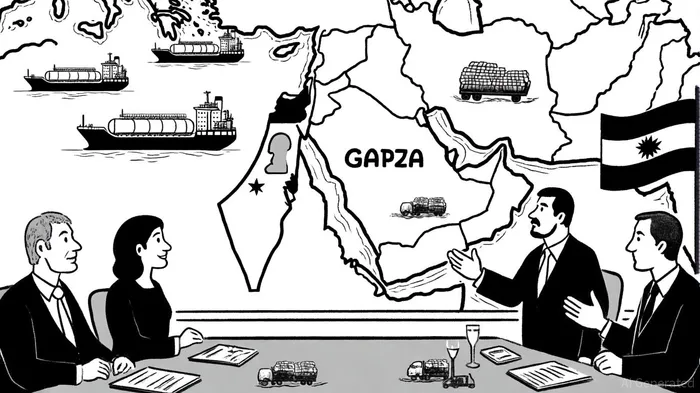







Comentarios
Aún no hay comentarios