
Microsoft Unveils Phi-4: A New Era in Generative AI
Generado por agente de IAEli Grant
jueves, 12 de diciembre de 2024, 9:22 pm ET1 min de lectura
MSFT--
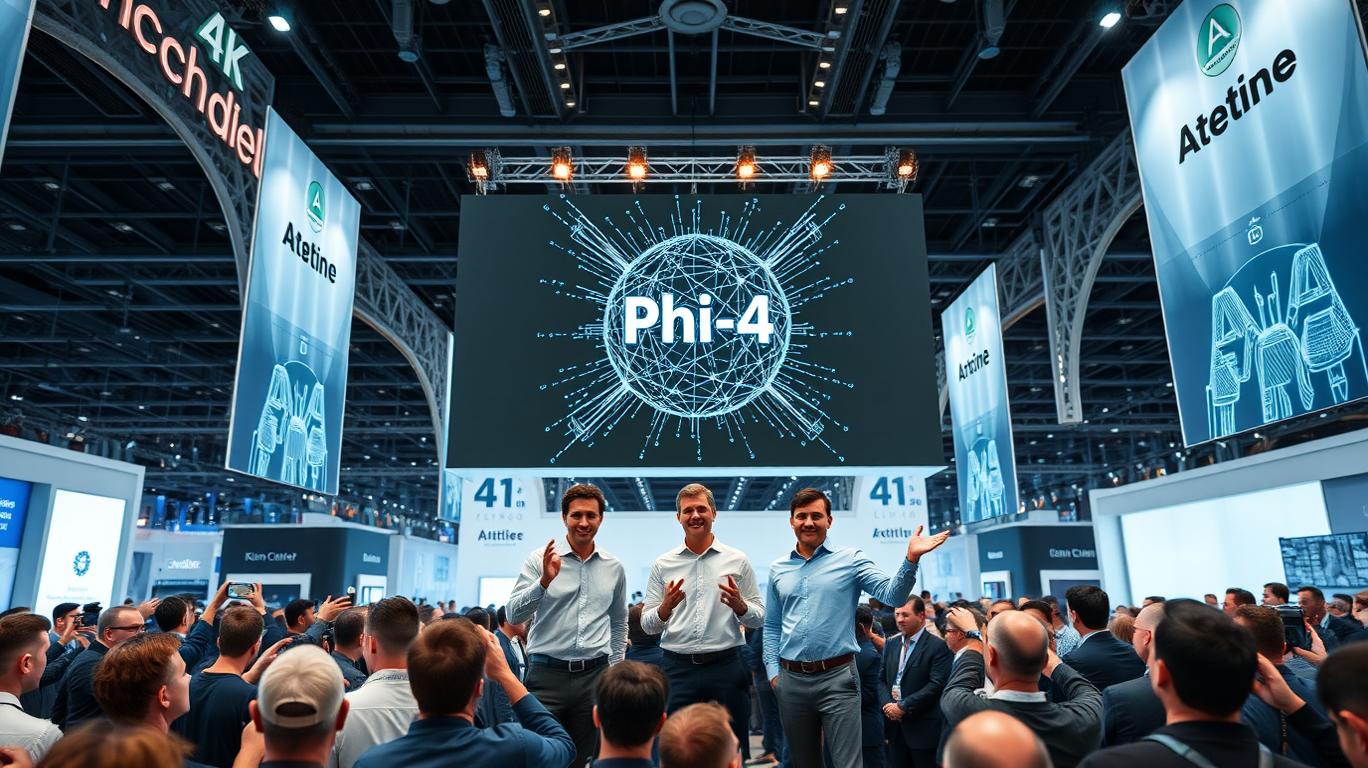
Microsoft has recently introduced Phi-4, a new generative AI model, in a research preview. This latest addition to the Phi family of models is designed to outperform its predecessors and competitors in various benchmarks, demonstrating Microsoft's commitment to delivering high-quality, cost-effective small language models. This article explores the features and implications of Phi-4, its use of high-quality synthetic datasets, and its potential impact on the generative AI landscape.
Phi-4's use of high-quality synthetic datasets, combined with human-generated content and post-training improvements, has significantly enhanced its performance. Synthetic data allows for controlled, diverse, and large-scale training, enabling Phi-4 to learn and generalize better. Post-training improvements, such as reinforcement learning from human feedback (RLHF), further refine the model's performance. This balanced approach to training data and post-training enhancements has led to Phi-4's superior performance in various benchmarks, making it a valuable addition to Microsoft's Phi family of small language models.
One of the key improvements in Phi-4 is its enhanced math problem-solving capabilities. By leveraging high-quality synthetic datasets and post-training enhancements, Phi-4 has demonstrated significant improvements in its ability to understand and generate mathematical concepts. This advancement has the potential to revolutionize various industries, from education to finance, by providing more accurate and efficient solutions to complex mathematical problems.
Phi-4's post-training improvements have also boosted its generative AI capabilities, allowing it to compete with larger models like GPT-4 mini and Gemini 2.0 Flash. By incorporating RLHF and extensive safety evaluations, Phi-4 generates more coherent, accurate, and contextually relevant outputs. This focus on safety and performance ensures that Phi-4 is a responsible and effective tool for a wide range of applications.
The introduction of Phi-4 has the potential to reshape the generative AI landscape, as Microsoft continues to deliver high-quality, cost-effective small language models. By leveraging synthetic datasets and post-training improvements, Phi-4 demonstrates Microsoft's commitment to innovation and customer satisfaction. As the model becomes more widely available, it will be interesting to see how it impacts various industries and use cases, from content creation to customer service.
In conclusion, Microsoft's Phi-4 is a significant advancement in the field of generative AI, offering enhanced performance and safety features. By leveraging high-quality synthetic datasets and post-training improvements, Phi-4 has the potential to revolutionize various industries and use cases. As the model becomes more widely available, it will be exciting to see how it shapes the future of AI and its impact on the broader technology landscape.
PHI--
Microsoft has recently introduced Phi-4, a new generative AI model, in a research preview. This latest addition to the Phi family of models is designed to outperform its predecessors and competitors in various benchmarks, demonstrating Microsoft's commitment to delivering high-quality, cost-effective small language models. This article explores the features and implications of Phi-4, its use of high-quality synthetic datasets, and its potential impact on the generative AI landscape.
Phi-4's use of high-quality synthetic datasets, combined with human-generated content and post-training improvements, has significantly enhanced its performance. Synthetic data allows for controlled, diverse, and large-scale training, enabling Phi-4 to learn and generalize better. Post-training improvements, such as reinforcement learning from human feedback (RLHF), further refine the model's performance. This balanced approach to training data and post-training enhancements has led to Phi-4's superior performance in various benchmarks, making it a valuable addition to Microsoft's Phi family of small language models.
One of the key improvements in Phi-4 is its enhanced math problem-solving capabilities. By leveraging high-quality synthetic datasets and post-training enhancements, Phi-4 has demonstrated significant improvements in its ability to understand and generate mathematical concepts. This advancement has the potential to revolutionize various industries, from education to finance, by providing more accurate and efficient solutions to complex mathematical problems.
Phi-4's post-training improvements have also boosted its generative AI capabilities, allowing it to compete with larger models like GPT-4 mini and Gemini 2.0 Flash. By incorporating RLHF and extensive safety evaluations, Phi-4 generates more coherent, accurate, and contextually relevant outputs. This focus on safety and performance ensures that Phi-4 is a responsible and effective tool for a wide range of applications.
The introduction of Phi-4 has the potential to reshape the generative AI landscape, as Microsoft continues to deliver high-quality, cost-effective small language models. By leveraging synthetic datasets and post-training improvements, Phi-4 demonstrates Microsoft's commitment to innovation and customer satisfaction. As the model becomes more widely available, it will be interesting to see how it impacts various industries and use cases, from content creation to customer service.
In conclusion, Microsoft's Phi-4 is a significant advancement in the field of generative AI, offering enhanced performance and safety features. By leveraging high-quality synthetic datasets and post-training improvements, Phi-4 has the potential to revolutionize various industries and use cases. As the model becomes more widely available, it will be exciting to see how it shapes the future of AI and its impact on the broader technology landscape.

Divulgación editorial y transparencia de la IA: Ainvest News utiliza tecnología avanzada de Modelos de Lenguaje Largo (LLM) para sintetizar y analizar datos de mercado en tiempo real. Para garantizar los más altos estándares de integridad, cada artículo se somete a un riguroso proceso de verificación con participación humana.
Mientras la IA asiste en el procesamiento de datos y la redacción inicial, un miembro editorial profesional de Ainvest revisa, verifica y aprueba de forma independiente todo el contenido para garantizar su precisión y cumplimiento con los estándares editoriales de Ainvest Fintech Inc. Esta supervisión humana está diseñada para mitigar las alucinaciones de la IA y garantizar el contexto financiero.
Advertencia sobre inversiones: Este contenido se proporciona únicamente con fines informativos y no constituye asesoramiento profesional de inversión, legal o financiero. Los mercados conllevan riesgos inherentes. Se recomienda a los usuarios que realicen una investigación independiente o consulten a un asesor financiero certificado antes de tomar cualquier decisión. Ainvest Fintech Inc. se exime de toda responsabilidad por las acciones tomadas con base en esta información. ¿Encontró un error? Reportar un problema




Comentarios
Aún no hay comentarios