
Microsoft and Tesla: The AI and Energy Infrastructure Plays for a Decade
The investment case for MicrosoftMSFT-- and TeslaTSLA-- isn't about their current products, but about their roles as foundational builders for two of the next decade's dominant technological paradigms. Both companies are engineering the essential infrastructure layers-compute for artificial intelligence and energy/mobility for autonomous transportation-positioning them at the steep, exponential phase of their respective S-curves.
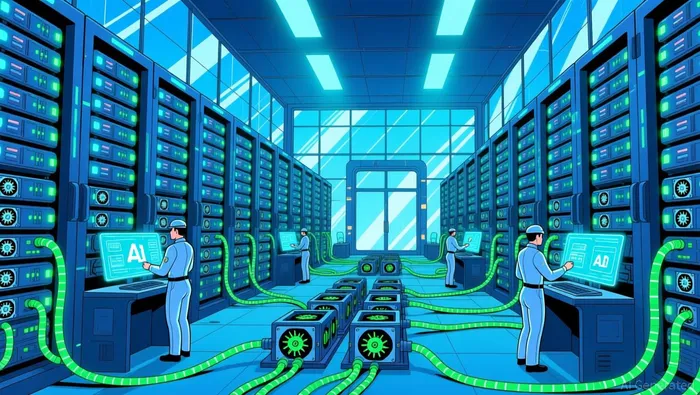
Microsoft is constructing the planet-scale compute rails for the AI revolution. Its latest move is the unveiling of a new Azure AI datacenter in Atlanta, part of a network that connects to its first Fairwater site in Wisconsin. This isn't just another cloud facility; it's the world's first planet-scale AI superfactory. The Fairwater architecture is a radical departure from traditional datacenters, using a single flat network to integrate hundreds of thousands of the latest GPUs into a unified supercomputer. This design is built to meet unprecedented demand for AI compute and maximize performance by packing density and minimizing latency. The company has also deployed a dedicated AI WAN backbone to create an elastic system for dynamic workload allocation. This is deep tech infrastructure: a multi-year engineering feat that redefines how we build and operate the fundamental hardware layer for the next generation of intelligent systems.
Tesla, meanwhile, is building the integrated energy and mobility platform that could become the infrastructure for autonomous transportation. Its vision extends far beyond electric vehicles. The company's robotaxi business is projected to account for nearly 90% of its enterprise value and earnings by 2029. This integrated system-combining its vehicle fleet, energy storage, and AI-driven autonomy software-aims to create a fundamental layer for on-demand, self-driving mobility and distributed energy management. It represents a paradigm shift from selling products to operating a scalable, networked service platform.
Both companies exemplify the deep tech model. They are not chasing short-term profits from incremental upgrades. Instead, they are investing in revolutionary scientific and engineering principles, often requiring years of R&D before commercialization. As defined by the deep tech paradigm, these ventures are built on revolutionary scientific discoveries and advanced engineering principles, aiming to reinvent entire industries. Microsoft is laying the compute foundation for the AI age, while Tesla is constructing the energy and mobility backbone for the autonomous future. Their success will be measured not by quarterly margins, but by their ability to scale these foundational layers to meet the exponential adoption of the paradigms they are enabling.
Exponential Adoption Drivers and Technological S-Curves
The true measure of a deep tech play is not its current revenue, but the trajectory of adoption for the paradigm it enables. Both Microsoft and Tesla are positioned at the inflection point where their foundational infrastructure is beginning to scale, driven by specific technological innovations that promise exponential growth.
For Microsoft, the Fairwater architecture is the key to unlocking the next wave of AI compute. Its core innovation is a single flat network that can integrate hundreds of thousands of GPUs into a unified supercomputer. This design directly attacks the physical limits of traditional datacenters, where the speed of light becomes a bottleneck. By maximizing compute density and minimizing latency, Fairwater is built to meet "unprecedented demand for AI compute" and push the frontiers of model intelligence. This isn't just incremental scaling; it's a re-engineering of the fundamental hardware layer to support the exponential growth of AI training workloads. The company is already moving beyond this first generation, with its Future AI Infrastructure team co-designing the next generation of hardware, including networking and memory systems, to prepare for the next wave of AI demands. This forward-looking engineering ensures the infrastructure can keep pace with the accelerating adoption curve.
Tesla's growth driver is even more explicit and future-focused. The company's projected value is overwhelmingly tied to its robotaxi business. According to ARK's analysis, nearly 90% of Tesla's enterprise value and earnings will be attributed to the robotaxi business in 2029. This projection implies a massive, exponential adoption of autonomous ride-hailing. The model suggests a potential $2,600 per share valuation by 2029, a figure that hinges entirely on the successful deployment and scaling of a self-driving fleet. This is the ultimate S-curve play: Tesla is building the integrated platform-vehicles, energy, and AI software-today to capture the vast majority of value when autonomous mobility reaches critical mass in the late 2020s.
Together, these drivers illustrate the deep tech thesis in action. Microsoft is engineering the compute rails for an AI-driven world, with Fairwater representing the first step on a multi-year scaling journey. Tesla is constructing the energy and mobility platform for an autonomous future, with its robotaxi projections signaling the massive adoption that will define its next decade. Both companies are investing in the infrastructure layers that will enable the next paradigm, positioning them at the steep, exponential part of their respective S-curves.
Financial Case and Valuation in a Maturing Phase
The financial story for deep tech infrastructure plays is one of immense future potential shadowing a present phase of intense competition and high cost. The valuation math shifts from pure hype to a calculation of adoption speed and margin durability as these companies move from early innovation into scaling.
For Nvidia, the financial engine is undeniable but facing a critical test. The company has grown its data center business from a $15 billion annual revenue base to a run rate near $200 billion in just a few years, driving its market cap to $4.6 trillion. Yet, this dominance is now under pressure. Nvidia currently trades near its cheapest valuation in three years, a signal that the market is pricing in the inevitable erosion of its first-mover moat. Competition from AMD and Broadcom is emerging, challenging Nvidia's grip on the AI chip market. The financial implication is clear: the exponential growth phase is maturing, and future returns will depend on Nvidia's ability to evolve from a chip designer into a multifaceted platform, as its Future AI Infrastructure team is already attempting.
SpaceX's development illustrates the brutal cost of building the next-generation infrastructure layer. The company's ambitious Starship project has incurred a project cost of at least US$5 billion and has faced significant technical setbacks, with five failures in its first eleven launches. This is the financial reality of deep tech: massive, sustained capital expenditure is required to iterate toward a breakthrough. The valuation for such ventures is a bet on eventual success, not current profitability. SpaceX's journey is a classic example of the steep investment curve before the exponential payoff.
Tesla's financial case is the most explicitly long-term. The company's current value is still tied to its vehicle business, but its future is projected to be entirely different. ARK's model projects that nearly 90% of Tesla's enterprise value and earnings will be attributed to the robotaxi business in 2029. This projection translates to a potential $2,600 per share valuation by 2029. This isn't a near-term earnings target; it's a valuation anchored to the adoption curve of autonomous mobility. It underscores the deep tech thesis: today's investments in vehicles, energy, and AI software are building the rails for a paradigm that will define the company's value a decade from now.
The bottom line is that valuations for these infrastructure plays now reflect their stage on the S-curve. Nvidia's price action shows the market weighing its dominance against rising competition. SpaceX's burn rate highlights the cost of the build-out. Tesla's model illustrates the massive potential that justifies the current investment, but also the long runway ahead. For investors, the financial case is about patience and conviction in the underlying technological paradigm.
Catalysts, Risks, and What to Watch for a Decade Hold
The decade-long thesis for Microsoft and Tesla hinges on a single, critical question: can they translate their ambitious engineering into commercial, scalable products? The path forward is paved with specific catalysts that could accelerate adoption and shadowed by the ever-present risk of technological execution.
For Microsoft, the near-term catalyst is the successful deployment and scaling of its Fairwater AI superfactory. The unveiling of the Atlanta site is a tangible step, but the real test is in the integration of its next-generation hardware. The company is already co-designing the next generation of infrastructure, including networking and memory systems, to prepare for the next wave of AI demands Future AI Infrastructure team co-designing the next generation of hardware. The key watchpoint is the adoption of its next-generation GB300 GPUs within this new architecture. If Microsoft can demonstrate that this integrated system-combining the single flat network, dedicated AI WAN backbone, and advanced hardware-can efficiently train frontier models at scale, it will validate its planet-scale compute vision and likely accelerate adoption from its massive cloud customer base.
For Tesla, the catalyst is the progression from pilot programs to a scaled, profitable robotaxi network. The company's projected value is overwhelmingly tied to this future business, with ARK's model suggesting nearly 90% of Tesla's enterprise value and earnings will be attributed to the robotaxi business in 2029. Investors must monitor the tangible steps toward that future: the expansion of autonomous driving software capabilities, the deployment of a larger robotaxi fleet, and the eventual monetization of that network. Simultaneously, the integration of its energy storage and solar infrastructure is a critical, parallel catalyst. This integrated platform is designed to create a fundamental layer for distributed energy management, which is essential for powering a fleet of autonomous vehicles and supporting the broader energy transition.
The overarching risk for both companies is technological execution. Deep tech ventures are built on revolutionary scientific discoveries and advanced engineering principles, often requiring years of rigorous R&D before commercialization built on revolutionary scientific discoveries and advanced engineering principles. Microsoft's Fairwater architecture is a radical departure from traditional datacenters, while Tesla's robotaxi vision demands flawless integration of hardware, software, and energy systems. Any significant delay, technical setback, or failure to meet performance targets in these core engineering efforts would derail the exponential adoption curve and the decade-long thesis. The financial case for these infrastructure plays is a bet on flawless execution at the frontier of physics and engineering.





Comentarios
Aún no hay comentarios