
Microsoft Probes DeepSeek Data: A Potential AI IP Theft?
Generado por agente de IANathaniel Stone
jueves, 30 de enero de 2025, 7:52 am ET2 min de lectura
MATH--
Microsoft and OpenAI are investigating whether a group linked to the Chinese AI startup DeepSeek accessed OpenAI's data using the company's application programming interface (API) without authorization. The probe comes after DeepSeek launched its R1 AI model, which claims to match or exceed leading models in areas like reasoning, math, and general knowledge while consuming considerably fewer resources. The announcement led to a collective market loss of nearly $1 trillion for U.S. tech and AI stocks, as investors reacted to concerns that DeepSeek's advancements could threaten the dominance of U.S. firms in the AI sector.
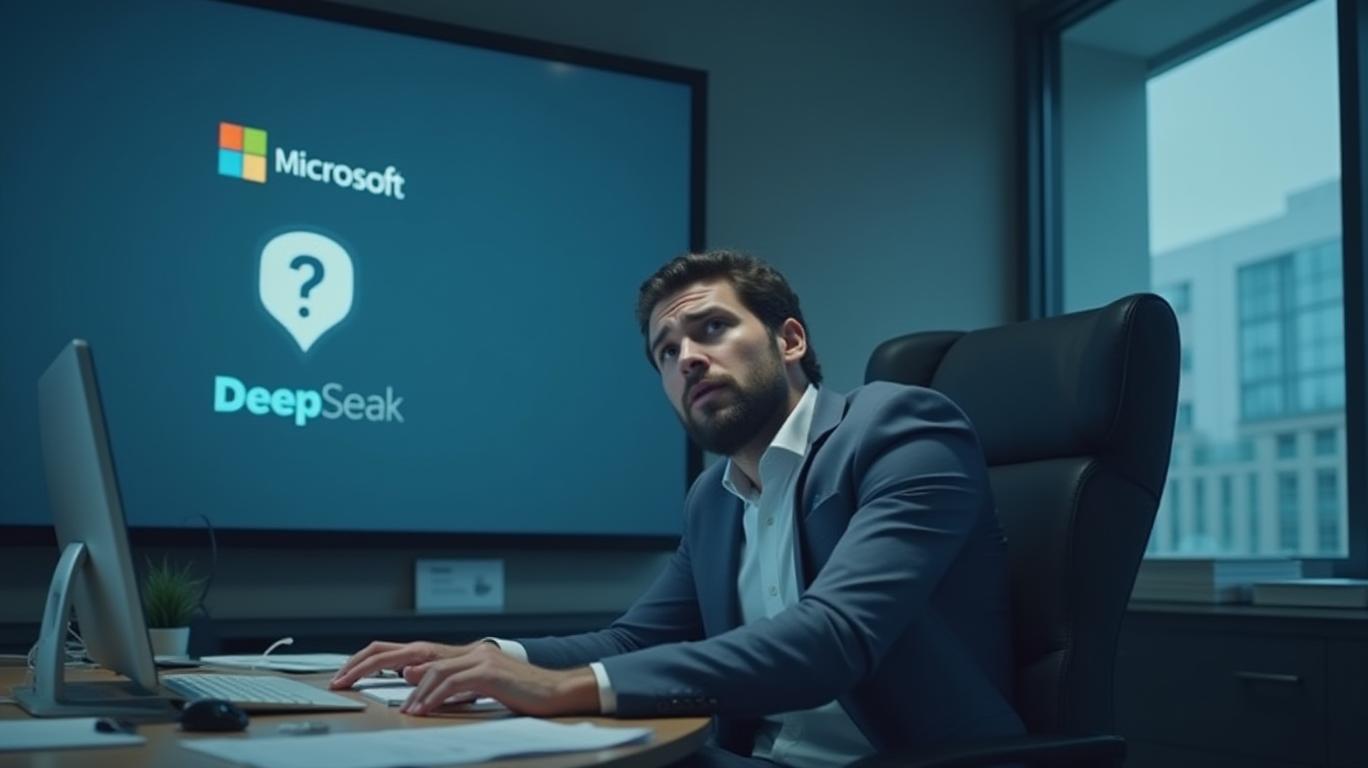
Microsoft's security team observed a group believed to have ties to DeepSeek extracting a large volume of data from OpenAI's API. The API allows developers to integrate OpenAI's proprietary models into their applications for a fee and retrieve some data. However, the excessive data retrieval noticed by Microsoft researchers violated OpenAI's terms and conditions and signaled an attempt to bypass OpenAI's restrictions.
David Sacks, the U.S. government's AI advisor, stated there was strong evidence that DeepSeek used OpenAI-generated content to train its model through a process called distillation. This method allows one AI system to learn from another by analyzing its outputs. Sacks did not provide specific details on the evidence, though.
AI Czar David Sacks says American companies will learn efficiency techniques from China's DeepSeek AI model, but big AI data centers are still needed and scaling the biggest data centers is still an advantage pic.twitter.com/SuSlhGKO3J
— Tsarathustra (@tsarnick) January 28, 2025
OpenAI acknowledged general concerns about Chinese companies attempting to distill U.S. AI models but didn't specifically address DeepSeek. "We know PRC-based companies — and others — are constantly trying to distill the models of leading US AI companies," an OpenAI spokesperson told Bloomberg, referring to the People's Republic of China.
The investigation centers on possible violations of OpenAI's terms of service or potential circumvention of data access restrictions and highlights growing tensions around AI technology competition between the U.S. and China. Meanwhile, the U.S. Navy banned its members from using DeepSeek out of fear the Chinese government could exploit sensitive data.
If the investigation confirms that DeepSeek illicitly accessed OpenAI's data, there could be significant legal and regulatory implications for both companies, as well as broader implications for future collaborations and partnerships in the AI industry. OpenAI could face liability for failing to adequately protect its data, while DeepSeek could face copyright infringement, misappropriation of trade secrets, or even criminal charges. The broader AI industry may also feel the effects, with potential changes in future collaborations and partnerships.
In conclusion, the alleged data extraction by DeepSeek from OpenAI's API has the potential to significantly impact the competitive landscape of the AI sector, particularly in relation to OpenAI's market position and other major players like Google, Meta, and Nvidia. The incident highlights the importance of protecting intellectual property and maintaining a level playing field in the AI industry. As the investigation unfolds, both companies and the broader AI community will be watching closely to see how this situation develops.
MSFT--
Microsoft and OpenAI are investigating whether a group linked to the Chinese AI startup DeepSeek accessed OpenAI's data using the company's application programming interface (API) without authorization. The probe comes after DeepSeek launched its R1 AI model, which claims to match or exceed leading models in areas like reasoning, math, and general knowledge while consuming considerably fewer resources. The announcement led to a collective market loss of nearly $1 trillion for U.S. tech and AI stocks, as investors reacted to concerns that DeepSeek's advancements could threaten the dominance of U.S. firms in the AI sector.
Microsoft's security team observed a group believed to have ties to DeepSeek extracting a large volume of data from OpenAI's API. The API allows developers to integrate OpenAI's proprietary models into their applications for a fee and retrieve some data. However, the excessive data retrieval noticed by Microsoft researchers violated OpenAI's terms and conditions and signaled an attempt to bypass OpenAI's restrictions.
David Sacks, the U.S. government's AI advisor, stated there was strong evidence that DeepSeek used OpenAI-generated content to train its model through a process called distillation. This method allows one AI system to learn from another by analyzing its outputs. Sacks did not provide specific details on the evidence, though.
AI Czar David Sacks says American companies will learn efficiency techniques from China's DeepSeek AI model, but big AI data centers are still needed and scaling the biggest data centers is still an advantage pic.twitter.com/SuSlhGKO3J
— Tsarathustra (@tsarnick) January 28, 2025
OpenAI acknowledged general concerns about Chinese companies attempting to distill U.S. AI models but didn't specifically address DeepSeek. "We know PRC-based companies — and others — are constantly trying to distill the models of leading US AI companies," an OpenAI spokesperson told Bloomberg, referring to the People's Republic of China.
The investigation centers on possible violations of OpenAI's terms of service or potential circumvention of data access restrictions and highlights growing tensions around AI technology competition between the U.S. and China. Meanwhile, the U.S. Navy banned its members from using DeepSeek out of fear the Chinese government could exploit sensitive data.
If the investigation confirms that DeepSeek illicitly accessed OpenAI's data, there could be significant legal and regulatory implications for both companies, as well as broader implications for future collaborations and partnerships in the AI industry. OpenAI could face liability for failing to adequately protect its data, while DeepSeek could face copyright infringement, misappropriation of trade secrets, or even criminal charges. The broader AI industry may also feel the effects, with potential changes in future collaborations and partnerships.
In conclusion, the alleged data extraction by DeepSeek from OpenAI's API has the potential to significantly impact the competitive landscape of the AI sector, particularly in relation to OpenAI's market position and other major players like Google, Meta, and Nvidia. The incident highlights the importance of protecting intellectual property and maintaining a level playing field in the AI industry. As the investigation unfolds, both companies and the broader AI community will be watching closely to see how this situation develops.

Divulgación editorial y transparencia de la IA: Ainvest News utiliza tecnología avanzada de Modelos de Lenguaje Largo (LLM) para sintetizar y analizar datos de mercado en tiempo real. Para garantizar los más altos estándares de integridad, cada artículo se somete a un riguroso proceso de verificación con participación humana.
Mientras la IA asiste en el procesamiento de datos y la redacción inicial, un miembro editorial profesional de Ainvest revisa, verifica y aprueba de forma independiente todo el contenido para garantizar su precisión y cumplimiento con los estándares editoriales de Ainvest Fintech Inc. Esta supervisión humana está diseñada para mitigar las alucinaciones de la IA y garantizar el contexto financiero.
Advertencia sobre inversiones: Este contenido se proporciona únicamente con fines informativos y no constituye asesoramiento profesional de inversión, legal o financiero. Los mercados conllevan riesgos inherentes. Se recomienda a los usuarios que realicen una investigación independiente o consulten a un asesor financiero certificado antes de tomar cualquier decisión. Ainvest Fintech Inc. se exime de toda responsabilidad por las acciones tomadas con base en esta información. ¿Encontró un error? Reportar un problema




Comentarios
Aún no hay comentarios