
Microsoft's Potential Data Center in Caledonia and Its Implications for Regional Tech Infrastructure Growth
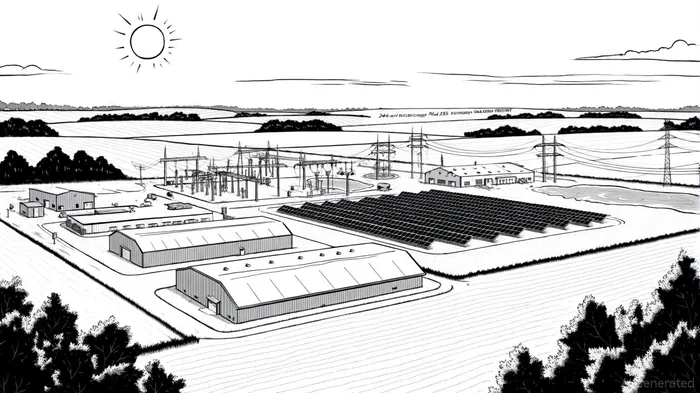
The proposed MicrosoftMSFT-- data center in Caledonia, Wisconsin—dubbed "Project Nova"—represents a pivotal moment for regional tech-enabled real estate and energy infrastructure. As the company's third data center in Racine County, the project underscores Microsoft's strategic expansion into the Midwest, a region increasingly positioned as a hub for AI and cloud computing. With a 244-acre site near the We Energies Oak Creek Power Plant, the development could reshape local economic dynamics while testing the balance between technological progress and environmental stewardship.
Tech-Enabled Real Estate: A Catalyst for Regional Growth
Data centers are no longer just IT facilities; they are engines of economic transformation. Microsoft's Caledonia project, if approved, could generate 50–200 permanent jobs and 300–400 construction jobs[1], while making the tech giant the village's largest taxpayer[2]. This aligns with broader trends observed in Northern Virginia, where data centers account for 13% of global capacity and contribute billions to regional GDP[3]. The Caledonia project's potential to expand the village's tax base—funding fire and police departments, road maintenance, and parks—mirrors the economic multiplier effects seen in established data center corridors[4].
However, the project's success hinges on rezoning approvals and community buy-in. The Village of Caledonia has imposed strict timelines: Dewberry Engineering, Microsoft's developer partner, must acquire the land by December 31, 2025, and construction must begin by June 2030[5]. Delays could deter investment, as secondary markets increasingly compete for hyperscale projects. For instance, Phoenix and Atlanta have leveraged power availability and regulatory flexibility to attract data center developers[6]. Caledonia's rural character and existing energy infrastructure may offer a competitive edge, but only if rezoning proceeds smoothly.
Energy Infrastructure: Sustainability as a Strategic Asset
Microsoft's commitment to environmental sustainability is central to the Caledonia project. The company has pledged to offset energy usage via a 250-megawatt solar farm in Portage County[7], a move that aligns with its broader $7.3 billion investment in Wisconsin, including a $4 billion data center in Mount Pleasant[8]. This strategy mirrors global trends, where hyperscale operators like Meta and Oracle are securing renewable energy partnerships to meet decarbonization goals[9].
Yet, energy demands remain a critical challenge. U.S. data centers are projected to consume 12% of total electricity by 2028, up from 4.4% in 2023[10]. Microsoft's reliance on We Energies for power in Caledonia raises questions about grid capacity and rate stability. The company has emphasized collaboration with local utilities to avoid rate hikes for residents[11], but this requires careful coordination. For example, Northern Virginia's data center boom has strained power grids, with lead times for new connections exceeding five years[12]. Caledonia's proximity to the Oak Creek Power Plant may mitigate some risks, but long-term energy security will depend on partnerships with renewable providers and grid modernization efforts.
Long-Term Investment Opportunities
The Caledonia project offers multiple entry points for investors. In real estate, the rezoning of 244 acres could spur ancillary development, such as logistics hubs or green tech startups, capitalizing on the data center's economic footprint. Energy investors, meanwhile, may benefit from Microsoft's renewable energy partnerships, including the Portage County solar farm and potential nuclear or geothermal collaborations[13].
For institutional investors, the project's alignment with Microsoft's $80 billion AI data center expansion through 2028[14] signals long-term stability. This dwarfs the $1.8 billion Atlanta data center project, which is expected to create 50 permanent jobs[15]. Caledonia's scale and Microsoft's track record in Wisconsin—where it has already invested $7.3 billion—suggest a higher probability of sustained returns compared to smaller, speculative projects.
Risks and Mitigation Strategies
Community opposition remains a wildcard. Over 30 residents have raised concerns about water usage, groundwater quality, and the loss of rural character[16]. Microsoft's emphasis on closed-loop water systems and community engagement[17] may alleviate some fears, but transparency will be key. Investors should monitor rezoning hearings and public sentiment, as delays could erode confidence.
Energy infrastructure risks also persist. While the Portage County solar farm is a positive step, Microsoft's reliance on We Energies for power could expose the project to rate volatility. Diversifying energy sources—such as through long-duration storage or nuclear partnerships—could strengthen resilience[18].
Conclusion
Microsoft's Caledonia data center is more than a regional project; it is a microcosm of the broader tech infrastructure revolution. For investors, the development offers a unique opportunity to capitalize on the convergence of real estate, energy, and AI-driven demand. However, success will depend on navigating regulatory hurdles, addressing community concerns, and securing sustainable energy partnerships. As the global data center market surges, Caledonia's ability to balance innovation with environmental responsibility could determine its place in the next phase of the digital economy.





Comentarios
Aún no hay comentarios