
Microsoft and OpenAI's Sora: A New Era in AI-Driven Consumer App Adoption
The rapid ascent of OpenAI's Sora-reaching 1 million downloads in under five days after its September 2025 launch-has become a defining case study in AI-driven consumer app adoption. This unprecedented growth, outpacing even the explosive early success of ChatGPT, underscores the accelerating mainstream acceptance of generative AI tools. According to a report by CNBC and a MicrosoftMSFT-- blog post, Sora's first-week iOS downloads (627,000) slightly exceeded ChatGPT's debut performance (606,000), despite Sora's invite-only access and iOS exclusivity (see the Microsoft blog post). Microsoft blog post The app's meteoric rise reflects not just OpenAI's product innovation but also Microsoft's strategic infrastructure and distribution advantages, which have become central to scaling AI commercialization.
Microsoft's partnership with OpenAI, now extended through 2030, has evolved into a $500 billion Stargate Project aimed at building next-generation AI infrastructure across the U.S. This collaboration retains key elements such as API exclusivity on Azure, revenue-sharing agreements, and integration into Microsoft's Copilot ecosystem, according to a Nasdaq report. a Nasdaq report The renewed terms also grant OpenAI greater flexibility to diversify its cloud infrastructure partnerships, including deals with SoftBank and Oracle, while Microsoft retains a Right of First Refusal (ROFR) to maintain its primary hosting role. This balance of autonomy and control has enabled OpenAI to scale rapidly without sacrificing the financial and technical support critical to its commercialization efforts.
Financial metrics further validate the partnership's success. OpenAI's annualized revenue surged to $10 billion in June 2025, doubling from $5.5 billion six months earlier, driven by ChatGPT subscriptions and API demand, according to a Forbes analysis. a Forbes analysis Microsoft, meanwhile, reported a 33% year-over-year revenue increase for Azure in Q1 FY25, with CEO Satya Nadella emphasizing AI as a "key profit engine" in the company's long-term strategy, as noted in a Fortune article. a Fortune article The synergy between OpenAI's product innovation and Microsoft's cloud infrastructure has created a flywheel effect: Azure's scalability fuels OpenAI's growth, while OpenAI's tools enhance Azure's value proposition for enterprise and consumer clients.
Historical performance data reinforces the strength of Microsoft's AI-driven strategy. A backtest of Microsoft's stock performance following earnings releases from 2022 to 2025 reveals that the stock delivered an average cumulative return of +9.6% over 30 trading days post-earnings, significantly outperforming the Nasdaq-100's +2.0% benchmark. Notably, Microsoft achieved a 100% event win-rate from day 8 onward, indicating consistent outperformance relative to the market. This pattern suggests that investors adopting a simple buy-and-hold strategy around Microsoft's earnings dates could have historically captured substantial alpha, aligning with the company's current trajectory of AI-driven growth.
The partnership's strategic value extends beyond financials. OpenAI's restructuring into a public-benefit corporation (PBC), potentially paving the way for an IPO, is supported by Microsoft's $100+ billion equity stake in the PBC, according to a DataStudios report. DataStudios report This alignment of interests ensures that OpenAI's mission-driven goals-such as AI safety and accessibility-remain compatible with its commercial ambitions. Analysts at Fortune note that the PBC structure could attract institutional investors seeking both ethical and financial returns, further amplifying OpenAI's capital base.
Market trends also highlight the broader implications of Sora's success. OpenAI's user base now exceeds 500 million weekly active users, with 250,000 businesses leveraging its tools across sectors like healthcare and finance, as highlighted in the DataStudios report. By 2026, projections suggest OpenAI's weekly active users could surpass 1.13 billion, driven by tools like Sora and the shift of 73% of ChatGPT interactions from workplace to everyday utility, according to a Search Engine Journal analysis. Search Engine Journal analysis This transition signals a tipping point for AI adoption, where tools are no longer confined to niche professional use but embedded in daily life.
Yet challenges persist. The Motion Picture Association's copyright concerns over Sora's video-generation capabilities illustrate the regulatory risks inherent in AI commercialization, a point also raised in the Microsoft blog post cited earlier. Additionally, OpenAI's diversification of cloud partners-while reducing dependency on Microsoft-could fragment its infrastructure efficiency. For investors, these risks must be weighed against the partnership's structural advantages, including Microsoft's $500 billion investment in AI infrastructure and OpenAI's projected $12.7 billion revenue target for 2025, as noted in the Forbes analysis.
In conclusion, Microsoft's strategic acceleration of OpenAI's commercialization through Sora and the Stargate Project represents a masterclass in scaling AI-driven consumer apps. By combining OpenAI's product innovation with Microsoft's cloud infrastructure and distribution networks, the partnership has created a blueprint for sustainable growth in the AI era. For investors, the alignment of financial incentives, regulatory flexibility, and market demand positions this collaboration as a cornerstone of the next phase of AI adoption.```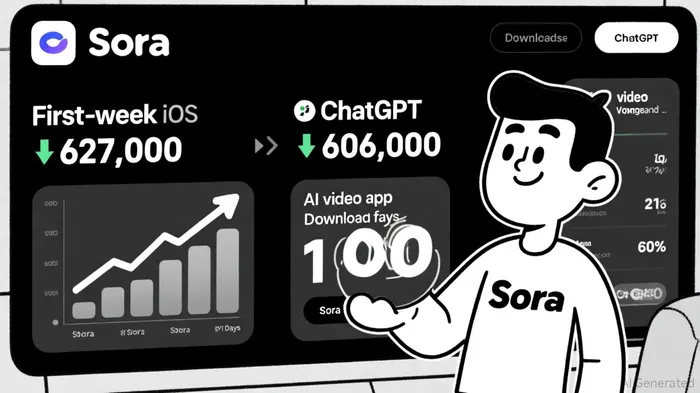





Comentarios
Aún no hay comentarios