
Microsoft's Competitive Edge in Enterprise Software: Post-EU Approval Analysis
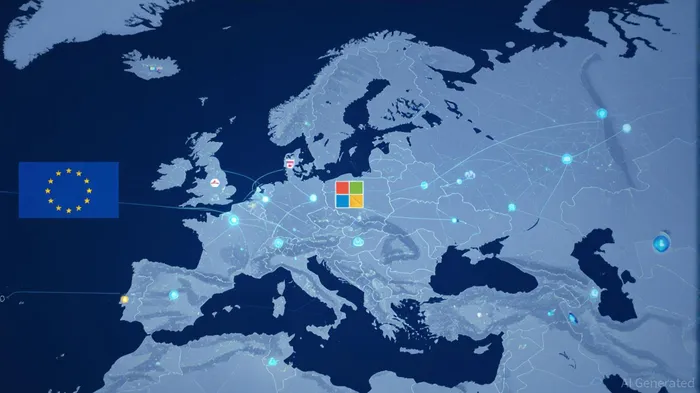
In the evolving landscape of enterprise software, Microsoft's strategic recalibration under EU regulatory scrutiny has positioned it as a case study in balancing compliance with market dominance. The European Union's 2025 regulatory interventions—ranging from product unbundling to data sovereignty mandates—have forced MicrosoftMSFT-- to reengineer its cloud and licensing strategies. Yet, these changes are not merely compliance burdens; they represent a calculated pivot to secure long-term SaaS (Software-as-a-Service) leadership in a region critical to global digital innovation.
Regulatory Compliance and Data Sovereignty: A Dual-Edged Sword
The EU's antitrust actions against Microsoft's bundling of Microsoft Teams with Office 365 have compelled the company to unbundle its collaboration tool globally by April 2024. This move, initially framed as a response to Slack's 2020 complaint, has broader implications. By offering Teams as a standalone product and adjusting pricing models, Microsoft has accepted a short-term revenue trade-off to avoid potential fines and align with EU competition law[1]. However, this strategy also opens new revenue streams: organizations now pay separately for Teams, creating a tiered pricing structure that could enhance profitability over time[3].
Simultaneously, Microsoft's commitment to data sovereignty—ensuring European cloud data remains within EU borders—addresses the EU Data Act and GDPR requirements[2]. By June 2025, the company announced strict governance for remote access by engineers, customer-controlled encryption, and real-time logging[3]. These measures not only mitigate regulatory risks but also appeal to enterprises prioritizing compliance in an era of heightened data privacy concerns.
Strategic Adjustments: From Licensing to Infrastructure
Microsoft's adjustments to its Enterprise Agreements (EAs) and Cloud Solution Provider (CSP) programs reflect a nuanced approach to regulatory complexity. Region-specific licensing terms for EU customers, while increasing contract complexity, allow Microsoft to tailor offerings to local demands[1]. This flexibility could strengthen customer retention by addressing unique EU market needs, such as localized data residency requirements.
Moreover, Microsoft's pledge to expand European cloud and AI infrastructure by 40% over two years[2] underscores its long-term vision. By investing in local partnerships and infrastructure, the company is fostering a diversified cloud ecosystem that aligns with the EU's push for digital sovereignty. This strategy not only reduces dependency on cross-border data flows but also positions Microsoft as a trusted partner for European enterprises wary of U.S.-centric cloud providers.
Long-Term SaaS Dominance: Navigating the Gatekeeper Role
Designated as a “gatekeeper” under the EU's Digital Markets Act (DMA), Microsoft now faces obligations to ensure non-discriminatory licensing for European cloud providers[3]. While this could dilute its pricing power, it also creates opportunities to deepen market penetration. By offering fairer terms to competitors, Microsoft is fostering an ecosystem where its platforms remain central, even as rivals integrate with its services. This mirrors its approach to interoperability, where Teams' standalone model encourages third-party collaboration tools to coexist within the Microsoft ecosystem[3].
The company's investments in transparency—such as simplifying contract terms and avoiding non-transparent clauses—further reinforce trust[1]. For investors, this signals a shift from aggressive market capture to sustainable growth, where regulatory alignment becomes a competitive advantage rather than a constraint.
Conclusion: A Model for Resilient SaaS Leadership
Microsoft's post-EU approval strategy exemplifies how regulatory risk mitigation can drive long-term market dominance. By embracing unbundling, data sovereignty, and infrastructure localization, the company is not only complying with EU demands but also redefining its value proposition in the SaaS era. For investors, this represents a compelling narrative: a tech giant leveraging regulatory pressures to solidify its position in a market where compliance and innovation are increasingly intertwined.





Comentarios
Aún no hay comentarios