
Microsoft's 50th Anniversary Protests: The Fallout
Generado por agente de IAWesley Park
lunes, 7 de abril de 2025, 10:41 pm ET2 min de lectura
MSFT--
Ladies and gentlemen, buckleBKE-- up! We're diving headfirst into the chaos that erupted at Microsoft's 50th anniversary celebration. This isn't just any corporate event; it's a storm of controversy that's shaking the tech giant to its core. Let's break it down, step by step, and see what this means for Microsoft's future.
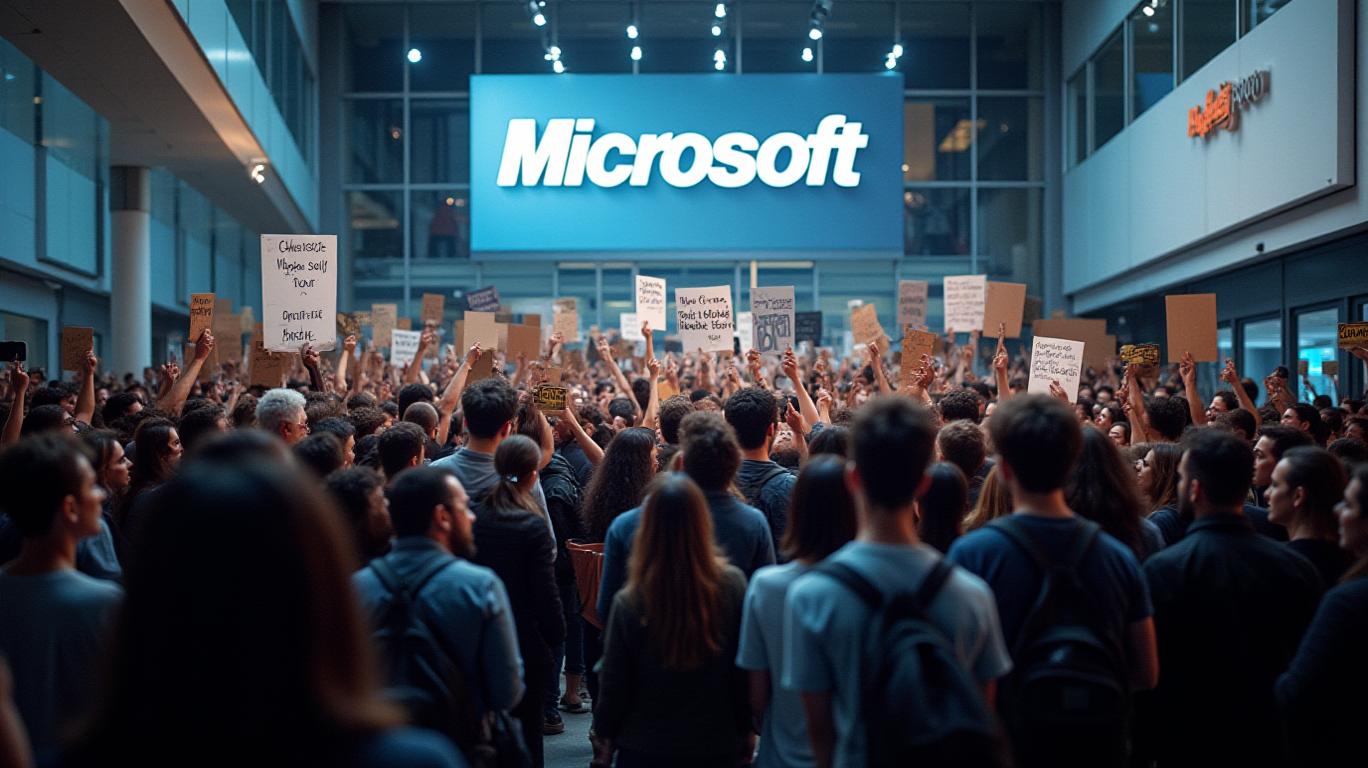
The Protests: A Wake-Up Call for Microsoft
On April 8, 2025, Microsoft's 50th anniversary celebration was supposed to be a triumphant moment. Instead, it turned into a public relations nightmare. Two employees, Ibtihal Aboussad and Vaniya Agrawal, disrupted the event to protest Microsoft's involvement in supplying AI technology to the Israeli military. Aboussad, a software engineer, shouted, "Mustafa, shame on you," as she walked towards the stage, accusing MicrosoftMSFT-- of powering genocide in Palestine. Agrawal, another software engineer, interrupted CEO Satya Nadella's speech with a similar protest.
The Fallout: Fired and Resigned
Microsoft's response? They fired Aboussad and expedited Agrawal's resignation. The company's spokesperson stated that they provide "many avenues for all voices to be heard," but only if it doesn't cause a business disruption. This is a slap in the face to employees who dared to speak out against what they see as unethical practices.
The Risks: Financial and Operational
Microsoft's involvement in military AI is a ticking time bomb. The financial and operational risks are enormous. Employee dissent, reputational damage, legal and compliance risks, market and customer backlash, operational disruptions, and strategic partnership risks are all on the table. Let's break it down:
- Employee Dissent and Internal Morale Risks: Aboussad's email highlighted the silencing, intimidation, harassment, and doxxing of Arab, Palestinian, and Muslim employees. This internal unrest could lead to high turnover, difficulty attracting talent, and reduced productivity.
- Reputational Damage: The public protests and media coverage have drawn global attention to Microsoft's role in military AI. This could alienate customers, partners, and investors who oppose military AI applications.
- Legal and Compliance Risks: The AP investigation revealed Microsoft’s AI was used in Israeli military programs, including a 2023 airstrike that killed three children and a grandmother. Legal action or regulatory penalties could follow if Microsoft is found complicit in war crimes.
- Market and Customer Backlash: Protests and media coverage may deter clients from partnering with Microsoft. Governments or NGOs opposing Israel’s policies might shift to competitors like Google or Amazon.
- Operational Disruptions: The protests at Microsoft’s anniversary event caused immediate disruptions, requiring security intervention and public statements from executives.
- Strategic Partnership Risks: Microsoft’s partnerships with defense contractors and the Department of Defense are part of a broader industry trend. If public backlash grows, Microsoft may face pressure to abandon such partnerships, risking revenue and technological leadership in military AI.
The Future: Strategic Decisions and Partnerships
Microsoft needs to act fast to mitigate these risks. Here are some strategic decisions they could make:
1. Restrict Military AI Sales: Implement stricter ethical guidelines to prevent misuse, potentially limiting contracts with controversial clients like the Israeli military.
2. Enhance Transparency and Oversight: Audit AI projects for compliance with human rights standards, as demanded by employees like Aboussad.
3. Address Internal Dissent: Create formal channels for ethical concerns to reduce employee turnover and improve morale.
4. Rebrand Ethical Commitments: Launch campaigns emphasizing AI’s "good" uses (e.g., healthcare, climate) to counter negative perceptions.
5. Diversify Partnerships: Focus on non-military sectors (e.g., healthcare, education) to reduce dependency on defense contracts while maintaining competitiveness in AI innovation.
The Bottom Line: Microsoft's Crossroads
Microsoft is at a crossroads. They can either continue down the path of military AI partnerships, risking their reputation and financial stability, or they can pivot towards ethical AI practices, regaining the trust of their employees, customers, and investors. The choice is clear: Microsoft needs to act now to save its future.
So, what's your move, Microsoft? The world is watching, and the clock is ticking. Don't let this controversy define your legacy. Take control, make the right decisions, and show the world that you're committed to ethical AI practices. The future of Microsoft depends on it.
Ladies and gentlemen, buckleBKE-- up! We're diving headfirst into the chaos that erupted at Microsoft's 50th anniversary celebration. This isn't just any corporate event; it's a storm of controversy that's shaking the tech giant to its core. Let's break it down, step by step, and see what this means for Microsoft's future.
The Protests: A Wake-Up Call for Microsoft
On April 8, 2025, Microsoft's 50th anniversary celebration was supposed to be a triumphant moment. Instead, it turned into a public relations nightmare. Two employees, Ibtihal Aboussad and Vaniya Agrawal, disrupted the event to protest Microsoft's involvement in supplying AI technology to the Israeli military. Aboussad, a software engineer, shouted, "Mustafa, shame on you," as she walked towards the stage, accusing MicrosoftMSFT-- of powering genocide in Palestine. Agrawal, another software engineer, interrupted CEO Satya Nadella's speech with a similar protest.
The Fallout: Fired and Resigned
Microsoft's response? They fired Aboussad and expedited Agrawal's resignation. The company's spokesperson stated that they provide "many avenues for all voices to be heard," but only if it doesn't cause a business disruption. This is a slap in the face to employees who dared to speak out against what they see as unethical practices.
The Risks: Financial and Operational
Microsoft's involvement in military AI is a ticking time bomb. The financial and operational risks are enormous. Employee dissent, reputational damage, legal and compliance risks, market and customer backlash, operational disruptions, and strategic partnership risks are all on the table. Let's break it down:
- Employee Dissent and Internal Morale Risks: Aboussad's email highlighted the silencing, intimidation, harassment, and doxxing of Arab, Palestinian, and Muslim employees. This internal unrest could lead to high turnover, difficulty attracting talent, and reduced productivity.
- Reputational Damage: The public protests and media coverage have drawn global attention to Microsoft's role in military AI. This could alienate customers, partners, and investors who oppose military AI applications.
- Legal and Compliance Risks: The AP investigation revealed Microsoft’s AI was used in Israeli military programs, including a 2023 airstrike that killed three children and a grandmother. Legal action or regulatory penalties could follow if Microsoft is found complicit in war crimes.
- Market and Customer Backlash: Protests and media coverage may deter clients from partnering with Microsoft. Governments or NGOs opposing Israel’s policies might shift to competitors like Google or Amazon.
- Operational Disruptions: The protests at Microsoft’s anniversary event caused immediate disruptions, requiring security intervention and public statements from executives.
- Strategic Partnership Risks: Microsoft’s partnerships with defense contractors and the Department of Defense are part of a broader industry trend. If public backlash grows, Microsoft may face pressure to abandon such partnerships, risking revenue and technological leadership in military AI.
The Future: Strategic Decisions and Partnerships
Microsoft needs to act fast to mitigate these risks. Here are some strategic decisions they could make:
1. Restrict Military AI Sales: Implement stricter ethical guidelines to prevent misuse, potentially limiting contracts with controversial clients like the Israeli military.
2. Enhance Transparency and Oversight: Audit AI projects for compliance with human rights standards, as demanded by employees like Aboussad.
3. Address Internal Dissent: Create formal channels for ethical concerns to reduce employee turnover and improve morale.
4. Rebrand Ethical Commitments: Launch campaigns emphasizing AI’s "good" uses (e.g., healthcare, climate) to counter negative perceptions.
5. Diversify Partnerships: Focus on non-military sectors (e.g., healthcare, education) to reduce dependency on defense contracts while maintaining competitiveness in AI innovation.
The Bottom Line: Microsoft's Crossroads
Microsoft is at a crossroads. They can either continue down the path of military AI partnerships, risking their reputation and financial stability, or they can pivot towards ethical AI practices, regaining the trust of their employees, customers, and investors. The choice is clear: Microsoft needs to act now to save its future.
So, what's your move, Microsoft? The world is watching, and the clock is ticking. Don't let this controversy define your legacy. Take control, make the right decisions, and show the world that you're committed to ethical AI practices. The future of Microsoft depends on it.

Divulgación editorial y transparencia de la IA: Ainvest News utiliza tecnología avanzada de Modelos de Lenguaje Largo (LLM) para sintetizar y analizar datos de mercado en tiempo real. Para garantizar los más altos estándares de integridad, cada artículo se somete a un riguroso proceso de verificación con participación humana.
Mientras la IA asiste en el procesamiento de datos y la redacción inicial, un miembro editorial profesional de Ainvest revisa, verifica y aprueba de forma independiente todo el contenido para garantizar su precisión y cumplimiento con los estándares editoriales de Ainvest Fintech Inc. Esta supervisión humana está diseñada para mitigar las alucinaciones de la IA y garantizar el contexto financiero.
Advertencia sobre inversiones: Este contenido se proporciona únicamente con fines informativos y no constituye asesoramiento profesional de inversión, legal o financiero. Los mercados conllevan riesgos inherentes. Se recomienda a los usuarios que realicen una investigación independiente o consulten a un asesor financiero certificado antes de tomar cualquier decisión. Ainvest Fintech Inc. se exime de toda responsabilidad por las acciones tomadas con base en esta información. ¿Encontró un error? Reportar un problema




Comentarios
Aún no hay comentarios