
Microsoft at 50: Key Milestones, Market Dominance, and Flops
PorAinvest
lunes, 31 de marzo de 2025, 5:31 am ET2 min de lectura
ICP--
Key Achievements
Microsoft Office: Launched in 1989, Microsoft Office became the go-to software suite for home and business users worldwide. The suite, which includes Word, PowerPoint, and Excel, was pivotal in establishing Microsoft as a dominant player in the software market. In 2011, Microsoft transitioned to Office 365, a cloud-based version that allowed users to pick and choose products regardless of their operating system. As of December 2024, Office 365 has 86.3 million consumer subscribers.
Windows Operating System: Microsoft's flagship operating system, Windows, has maintained a significant market share. As of February 2025, it runs on 70.5% of the world's desktop computers, far ahead of Apple's macOS (15.8%). This dominance has contributed to Microsoft's market position and drawn regulatory scrutiny.
Cloud Computing and AI: Microsoft has been proactive in investing in cloud computing and artificial intelligence (AI). Its cloud-computing arm, Azure, has a market share of 21%, trailing only Amazon Web Services (AWS) at 30%. Microsoft has also made substantial investments in AI, earmarking $80 billion between July 2024 and July 2025, and has partnered with OpenAI, the creator of ChatGPT.
Challenges and Setbacks
Internet Explorer: Microsoft's web browser, Internet Explorer, peaked at 95% market share in the early 2000s but was eventually retired in 2022. Security issues and the rise of competitors like Google Chrome and Firefox led to its decline.
Kin: The Kin, Microsoft's social networking phone, was pulled from shelves after only three months in 2010 due to poor sales. This is one of several failed products that have marked Microsoft's history, including the Zune music player and early versions of Skype.
Mobile Miss: Microsoft missed the shift to smartphones and mobile computing under the leadership of Steve Ballmer, who focused more on sales than innovation. However, the company has since pivoted under Satya Nadella, who has championed a "mobile-first, cloud-first" strategy.
Looking Ahead
Microsoft's future prospects are promising, driven by its strong position in cloud computing and AI. The company is also expanding its reach in gaming with the Xbox console and its acquisition of Activision Blizzard. However, it faces competition from other tech giants and must navigate regulatory challenges due to its market dominance.
In conclusion, Microsoft's 50-year journey is a testament to its ability to innovate and adapt in the fast-paced tech industry. As it looks to the future, the company's success will depend on its ability to continue driving innovation and staying ahead of the curve in emerging technologies.
MSFT--
Microsoft turns 50 on April 4. The company was founded by Bill Gates and Paul Allen in 1975 and today is one of the Big Tech titans. Microsoft Office was launched in 1989 and hit shelves in 1990, becoming the go-to home computer software worldwide. Office 365 was released in 2011, allowing consumers to pick and choose products, regardless of operating system. Microsoft's web browser, Internet Explorer, peaked at 95% market share in the early 2000s but was eventually retired in 2022. The company has also had flops, including the Kin, a social networking phone that was pulled from shelves after only three months.
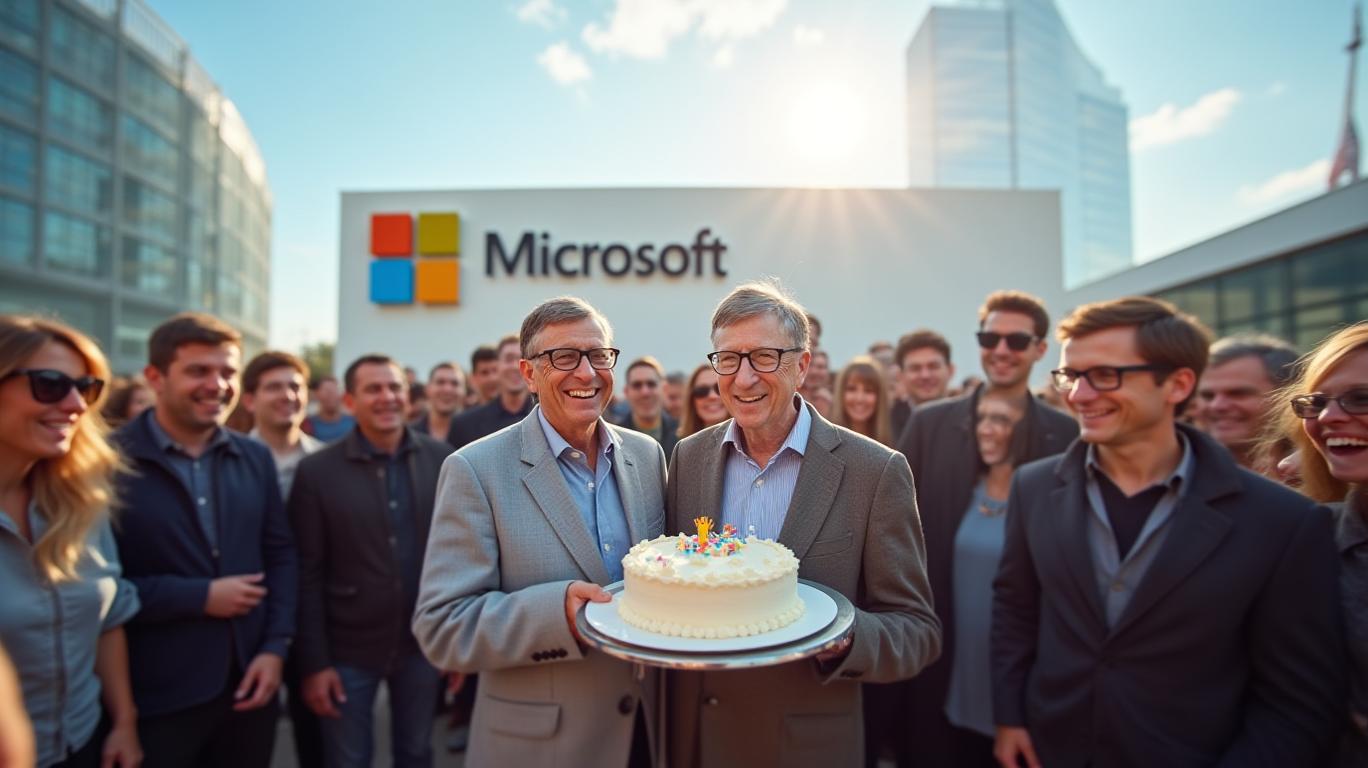
Microsoft, founded by Bill Gates and Paul Allen in 1975, celebrates its 50th anniversary on April 4. The company has evolved from a small software startup to one of the world's largest technology conglomerates, with a market capitalization of approximately $2.9 trillion as of the end of March 2025. Microsoft's journey has been marked by significant milestones and setbacks, reflecting the dynamic landscape of the tech industry.Key Achievements
Microsoft Office: Launched in 1989, Microsoft Office became the go-to software suite for home and business users worldwide. The suite, which includes Word, PowerPoint, and Excel, was pivotal in establishing Microsoft as a dominant player in the software market. In 2011, Microsoft transitioned to Office 365, a cloud-based version that allowed users to pick and choose products regardless of their operating system. As of December 2024, Office 365 has 86.3 million consumer subscribers.
Windows Operating System: Microsoft's flagship operating system, Windows, has maintained a significant market share. As of February 2025, it runs on 70.5% of the world's desktop computers, far ahead of Apple's macOS (15.8%). This dominance has contributed to Microsoft's market position and drawn regulatory scrutiny.
Cloud Computing and AI: Microsoft has been proactive in investing in cloud computing and artificial intelligence (AI). Its cloud-computing arm, Azure, has a market share of 21%, trailing only Amazon Web Services (AWS) at 30%. Microsoft has also made substantial investments in AI, earmarking $80 billion between July 2024 and July 2025, and has partnered with OpenAI, the creator of ChatGPT.
Challenges and Setbacks
Internet Explorer: Microsoft's web browser, Internet Explorer, peaked at 95% market share in the early 2000s but was eventually retired in 2022. Security issues and the rise of competitors like Google Chrome and Firefox led to its decline.
Kin: The Kin, Microsoft's social networking phone, was pulled from shelves after only three months in 2010 due to poor sales. This is one of several failed products that have marked Microsoft's history, including the Zune music player and early versions of Skype.
Mobile Miss: Microsoft missed the shift to smartphones and mobile computing under the leadership of Steve Ballmer, who focused more on sales than innovation. However, the company has since pivoted under Satya Nadella, who has championed a "mobile-first, cloud-first" strategy.
Looking Ahead
Microsoft's future prospects are promising, driven by its strong position in cloud computing and AI. The company is also expanding its reach in gaming with the Xbox console and its acquisition of Activision Blizzard. However, it faces competition from other tech giants and must navigate regulatory challenges due to its market dominance.
In conclusion, Microsoft's 50-year journey is a testament to its ability to innovate and adapt in the fast-paced tech industry. As it looks to the future, the company's success will depend on its ability to continue driving innovation and staying ahead of the curve in emerging technologies.
Divulgación editorial y transparencia de la IA: Ainvest News utiliza tecnología avanzada de Modelos de Lenguaje Largo (LLM) para sintetizar y analizar datos de mercado en tiempo real. Para garantizar los más altos estándares de integridad, cada artículo se somete a un riguroso proceso de verificación con participación humana.
Mientras la IA asiste en el procesamiento de datos y la redacción inicial, un miembro editorial profesional de Ainvest revisa, verifica y aprueba de forma independiente todo el contenido para garantizar su precisión y cumplimiento con los estándares editoriales de Ainvest Fintech Inc. Esta supervisión humana está diseñada para mitigar las alucinaciones de la IA y garantizar el contexto financiero.
Advertencia sobre inversiones: Este contenido se proporciona únicamente con fines informativos y no constituye asesoramiento profesional de inversión, legal o financiero. Los mercados conllevan riesgos inherentes. Se recomienda a los usuarios que realicen una investigación independiente o consulten a un asesor financiero certificado antes de tomar cualquier decisión. Ainvest Fintech Inc. se exime de toda responsabilidad por las acciones tomadas con base en esta información. ¿Encontró un error? Reportar un problema




Comentarios
Aún no hay comentarios