
Microsoft's $400M Swiss AI Gambit: A Blueprint for Regulatory Resilience and Market Dominance
In a bold move that redefines the calculus of AI infrastructure, MicrosoftMSFT-- has unveiled a $400 million investment in Switzerland—a strategic pivot to dominate AI-driven markets while fortifying its position against regulatory headwinds. Announced on June 1, 2025, this initiative is less an incremental upgrade than a masterstroke to lock in control over Europe's most data-sensitive industries. By supercharging its Swiss data centers, prioritizing regulatory compliance, and embedding itself in the region's AI ecosystem, Microsoft has set a template for how tech giants can turn regulatory constraints into competitive advantages.
The Infrastructure Edge: Localized AI at Scale
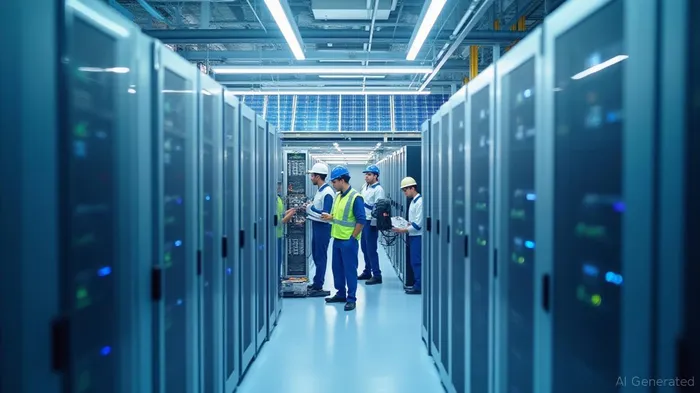
The heart of this investment lies in upgrading four data centers near Zurich and Geneva with advanced AI hardware, including state-of-the-art GPUs. This move directly addresses the explosive demand for Azure OpenAI services, which have surged 400% since mid-2023 among Swiss enterprises. The infrastructure is not merely about speed or capacity but sovereignty—ensuring Swiss healthcare providers like Luzerner Kantonsspital and financial titans like UBS can process data within national borders, a non-negotiable for industries governed by stringent regulations.
Regulatory Resilience as a Weapon
Switzerland's reputation as a global hub for finance and healthcare innovation is matched only by its insistence on data localization laws. Microsoft's play here is brilliant: it transforms compliance from a cost center into a moat. By guaranteeing that AI workloads—from medical imaging analysis to algorithmic trading—remain within Swiss data centers, Microsoft neutralizes a key vulnerability for competitors. While rivals scramble to meet fragmented EU regulations, Microsoft's localized infrastructure becomes a defensible asset, locking in long-term contracts with enterprises that cannot afford regulatory missteps.
The OpenAI Synergy: A Two-Pronged Offensive
This investment also amplifies Microsoft's exclusive partnership with OpenAI, the engine behind Azure OpenAI's growth. By positioning Switzerland as a compute hub for OpenAI models, Microsoft secures a geographically diversified backbone for its AI platform. This redundancy is critical in a world where geopolitical tensions could disrupt cross-border data flows. Meanwhile, the $400M outlay signals to developers and enterprises that Switzerland isn't just a compliance zone but a launchpad for next-gen AI applications—from climate modeling for international agencies to AI-driven drug discovery.
Workforce Reskilling: Turning Talent into Traction
Microsoft isn't just building infrastructure; it's building a constituency. Programs like AI-Fitness.ch and partnerships with Swiss universities aim to train one million residents in AI literacy by 2027. This isn't charity—it's strategic. A workforce fluent in Azure AI tools ensures a steady pipeline of talent to fuel startups and enterprises using Microsoft's platforms. The AI Tech Accelerator, with its CHF 30M war chest, further cements Microsoft's ecosystem dominance by funding startups that will depend on its infrastructure.
Why Wall Street is Betting Big
Analysts have long praised Microsoft's cloud dominance, but this move crystallizes its AI playbook. By addressing both regulatory risks and the scalability of AI adoption, Microsoft is positioning itself as the only firm capable of delivering enterprise-grade AI at a global scale. With carbon-neutral operations and a 2030 net-zero pledge, it also aligns with ESG mandates that are now non-negotiable for institutional investors.
The Bottom Line: A Risk-Adjusted Bull Run
Microsoft's Swiss bet isn't just about Switzerland—it's about proving that compliance can be a growth engine. In an era where data localization laws are proliferating, Microsoft's model—localized infrastructure, sovereign partnerships, and workforce control—offers a replicable template for other regions. For investors, this is a call to double down on Microsoft's stock, which now sits at the intersection of AI adoption, regulatory safety, and geopolitical stability. The $400M isn't just capital expenditure—it's a down payment on decades of AI hegemony.
Act now. The future of AI is local. And Microsoft just claimed the best real estate.





Comentarios
Aún no hay comentarios