
Micron (MU): Capitalizing on the AI-Driven Memory Gold Rush
The global memory chip supply crunch has transformed from a temporary disruption into a structural inflection point, driven by the insatiable demand for AI infrastructure. As artificial intelligence models grow in complexity and scale, the need for high-bandwidth memory (HBM) and advanced server memory has created a perfect storm of scarcity and pricing power. Micron TechnologyMU-- (MU) is uniquely positioned to benefit from this paradigm shift, leveraging its operational agility, strategic investments, and dominant market share in HBM to outperform peers and deliver long-term value to investors.
The AI-Driven Memory Shortage: A Structural Tailwind
The memory chip shortage in late 2025 is no longer a cyclical blip but a sustained imbalance caused by AI's exponential growth. According to a report by IDC, demand for HBM and next-generation server memory has surged as hyperscalers and cloud providers race to build out AI data centers. This has pushed DRAM prices to triple year-over-year, with prices expected to remain elevated through 2027. The reallocation of wafer capacity toward HBM by manufacturers like Samsung, SK Hynix, and MicronMU-- has left consumer electronics and PC markets scrambling for supply, inflating memory costs to 18% of a new PC's bill of materials-a stark increase from 2024.
The economic ripple effects are profound. Low-end smartphone and PC manufacturers, constrained by thin margins, face potential market share erosion, while high-end players like Apple and Samsung leverage long-term contracts to secure supply. The PC market, already pressured by rising costs, is bracing for 15–20% price hikes in 2026. Meanwhile, the AI PC segment-requiring 16GB or 32GB of RAM- risks either price surges or performance downgrades due to memory shortages. Analysts warn that the shortage could persist until 2027, as new fabrication facilities take years to come online.
Micron's Strategic Resilience: HBM Dominance and Capital Efficiency
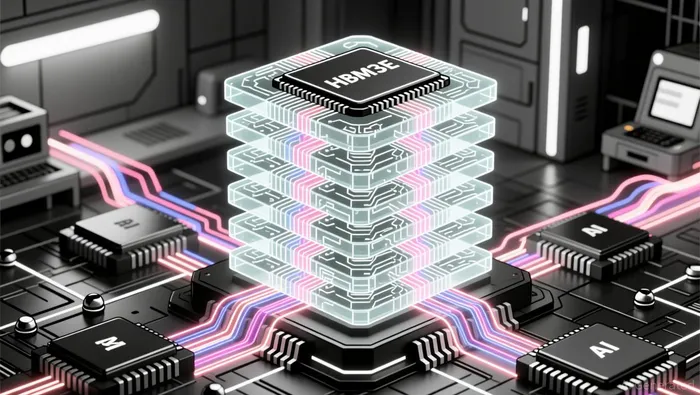
Micron has emerged as a key beneficiary of this crisis, capitalizing on its technical expertise and aggressive capacity planning. By Q2 2025, the company secured 21% of the HBM market, a leap from 5% at the end of 2024. This growth is fueled by its leadership in 12-layer HBM3E chips, which are critical for Nvidia's Blackwell Ultra platform. Micron has already passed quality verification and is shipping these chips at scale.
The company's capital allocation strategy underscores its commitment to AI-driven growth. In fiscal 2026, Micron plans to invest $7 billion in HBM expansion in Hiroshima, Japan, and DRAM production in Boise, Idaho. These investments align with its focus on high-margin markets, positioning it to capture a larger share of the AI infrastructure boom. Despite these efforts, supply constraints will persist due to the long lead times required for new manufacturing capacity. However, Micron's ability to secure long-term contracts and maintain pricing power- evidenced by its 47% gross margins in Q4 2025 (up from 25% in 2024)-demonstrates its operational resilience.
Financial Momentum and Analyst Upgrades: A Validation of Strategy
Micron's Q4 2025 results were a masterclass in capitalizing on market dynamics. Revenue soared to $13.64 billion, a 56.7% year-over-year increase and a 5% beat on estimates. Non-GAAP earnings per share reached $4.78, surpassing expectations by 20.7%. Analysts have taken notice: Lynx Equity and Rosenblatt raised price targets to $325 and $500, respectively, citing sustained AI demand and Micron's ability to lower production costs while raising prices for DRAM and NAND.
The company's Q1 2026 guidance further reinforces its momentum. Revenue is projected at $18.7 billion, with adjusted EPS of $8.42-well above analyst expectations. Notably, all of Micron's HBM capacity for 2026 is already sold out, a testament to its market-leading position. With CapEx set to rise to $20 billion in fiscal 2026, Micron is betting big on its AI-driven future. At a forward P/E of just 9x, the stock appears undervalued relative to its growth trajectory.
Risks and the Road Ahead
While the investment case is compelling, risks remain. Cyclical demand fluctuations and potential supply catch-up from competitors could temper growth. Additionally, geopolitical tensions and supply chain disruptions may exacerbate existing constraints. However, the long-term tailwinds from AI adoption-particularly in hyperscalers and enterprise AI-suggest these risks are manageable. Micron's focus on high-margin, high-performance memory aligns with the industry's shift toward compute-intensive applications, ensuring its relevance in an evolving landscape.
Conclusion: A Long-Term Play on the AI Revolution
Micron's strategic positioning in the global memory supply crunch is a masterstroke of foresight and execution. By doubling down on HBM, securing key contracts, and optimizing capital efficiency, the company is not just surviving the current shortage-it's thriving. Analyst upgrades, robust financials, and a clear line of sight to AI-driven demand make Micron a compelling long-term investment. As the world races to build the infrastructure for the AI era, Micron is poised to be one of the most profitable beneficiaries.







Comentarios
Aún no hay comentarios