
Is Micron (MU) a Buy Ahead of Earnings? Wall Street's Bullish Case for the Memory Chip Giant
Micron Technology (MU) is poised to report earnings on December 17, 2025, a moment investors have been eagerly anticipating. The semiconductor giant has become a bellwether for the AI revolution, with its High Bandwidth Memory (HBM) and DRAM businesses surging amid insatiable demand from data centers and hyperscalers. As the company's fiscal 2025 results near, the question on everyone's mind is whether Micron's stock remains a compelling buy ahead of this critical report.
The HBM Boom: AI's Insatiable Appetite
Micron's HBM business has emerged as a cornerstone of its growth strategy. In Q4 of fiscal 2025, HBM revenue alone neared $2 billion, driven by the adoption of HBM3E and the looming arrival of HBM4, which promises industry-leading bandwidth and efficiency. 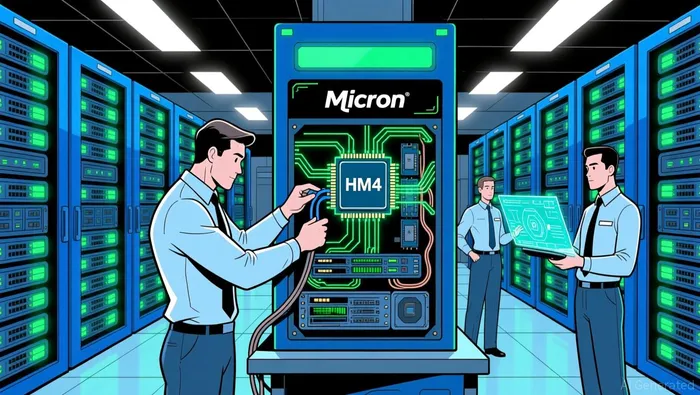 This demand is not a short-term blip but a structural shift: AI workloads are consuming memory at an unprecedented rate, and Micron's production for 2025 is already fully sold out, with visibility into 2026 supply secured.
The math is staggering. Analysts project that HBM demand will grow at a 50%+ annual rate through 2027, with MicronMU-- capturing a disproportionate share of this growth due to its technological edge and strategic partnerships with AI chipmakers. For context, the Zacks Consensus Estimate forecasts DRAM revenues of $45.49 billion for fiscal 2026, a 34% year-over-year increase, as AI-driven data center builds accelerate.
DRAM Dynamics: Pricing Power and Production Shifts
While HBM steals the spotlight, Micron's DRAM business is also experiencing a renaissance. In Q4 2025, DRAM revenues surged 68.7% year-over-year to $8.98 billion, fueled by tight supply and a reallocation of production toward high-capacity, high-margin products like AI-optimized DIMMs. This shift is not accidental-it's a calculated move to exit lower-margin consumer memory markets and focus on where the money is: data centers.
The pricing environment has turned sharply in Micron's favor. With global DRAM supply constrained by limited capacity expansions (Micron, Samsung, and SK Hynix collectively account for ~90% of HBM production), pricing power has returned. Analysts note that Micron's gross margins could expand to 45-50% in 2026, a dramatic improvement from the 25-30% range seen in 2023.
Wall Street's Bullish Bet: Price Targets and Strategic Moves
Wall Street analysts have taken notice. Firms like Morgan Stanley, UBS, and Needham have raised price targets for Micron, with estimates now ranging from $175 to $338 per share. Needham's Quinn Bolton, for instance, hiked his target to $300 from $200, citing "industry supply constraints and limited capacity" that will sustain pricing power through 2026.
This optimism is underpinned by Micron's capital allocation discipline. The company's investment in a Japan-based chip plant underscores its commitment to securing long-term supply chain resilience and technological leadership. Meanwhile, its exit from consumer memory markets has streamlined operations, allowing it to double down on AI and data center opportunities.
The Verdict: Buy Ahead of Earnings?
With earnings on December 17, 2025, investors have a clear window to assess whether Micron's execution matches its ambition. The company's Q4 results are expected to show record data center revenue, with HBM and DRAM margins expanding in tandem. Given the structural tailwinds from AI, supply constraints, and a fortress balance sheet, the case for Micron remains compelling-even at a 170% rally from its 2023 lows.
For those skeptical of the valuation, consider this: Micron's current price-to-earnings ratio of ~25x is in line with its historical average during growth cycles. With AI demand showing no signs of slowing, and Wall Street's price targets reflecting a future where Micron dominates the high-margin memory market, the risk-reward equation tilts decisively toward a "buy" ahead of earnings.





Comentarios
Aún no hay comentarios