
Micron's AI-Driven Earnings Durability and Strategic Position in the Memory Market
The semiconductor industry is undergoing a seismic shift as artificial intelligence (AI) transforms memory demand from a cyclical commodity into a strategic enabler of technological progress. At the forefront of this transition is Micron TechnologyMU--, a company that has redefined its trajectory through aggressive investments in high-bandwidth memory (HBM) and a strategic pivot toward AI infrastructure. With its financial performance, partnerships, and market positioning aligning with the AI memory supercycle, MicronMU-- is no longer a victim of industry cycles but a driver of long-term growth.
From Commodity to Strategic Enabler: Micron's Financial Transformation
Micron's transition from a cyclical commodity player to an AI enabler is evident in its fiscal 2026 performance. For Q1 FY2026, the company reported revenue of $13.64 billion, with gross margins surging to over 50%-a stark contrast to the 22% margins in FY2024. This profitability is anchored in its data center business, which now accounts for 56% of total revenue. The shift is driven by AI's insatiable demand for HBM, a memory type critical for training large language models and high-performance computing.
Micron's cloud memory business, a key segment of its AI-driven strategy, generated record revenue of $5.2 billion in Q1 FY2026, with a 66% profit margin. This performance underscores the company's ability to capture pricing power in a market experiencing supply shortages. By securing long-term contracts with key customers and locking in pricing through 2026, Micron has achieved revenue visibility that insulates it from traditional semiconductor volatility.
Strategic Partnerships and Supply Chain Resilience
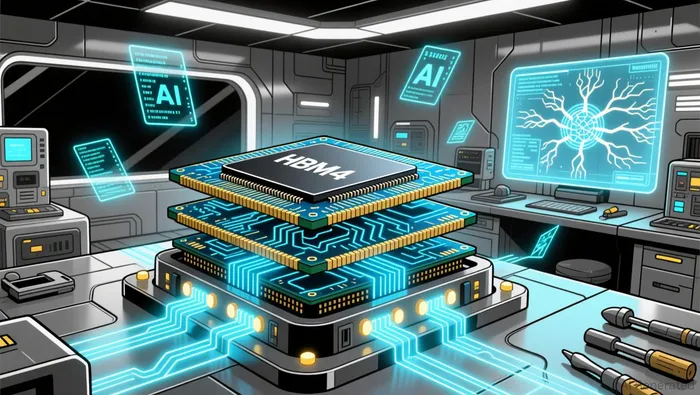
Micron's strategic partnerships are central to its AI-driven growth. The company has deepened collaborations with industry leaders like Nvidia, whose Blackwell platform relies on Micron's HBM3E and upcoming HBM4 technologies. These partnerships are not just transactional but foundational to the AI ecosystem, ensuring Micron's HBM remains the standard for next-generation AI hardware.
To meet surging demand, Micron has accelerated capital expenditures to $20 billion in FY2026, including fast-tracking its Boise, Idaho, fabrication plant. Additionally, the company has invested in a Singapore-based packaging facility to strengthen supply chain resilience. These moves reflect a proactive approach to scaling production while mitigating geopolitical risks. Micron's Supplier Day further emphasized collaboration with partners to sustain growth, highlighting its commitment to a vertically integrated, AI-focused supply chain.
Competitive Advantages in the AI Memory Sector
Micron's leadership in HBM is a cornerstone of its competitive advantage. The company reported that its HBM supply for calendar 2025 sold out earlier in the year, contributing to $37 billion in fiscal 2025 revenue-a 49% year-over-year increase. This demand is fueled by AI's need for high-speed, high-capacity memory, a space where Micron's HBM4 development solidifies its dominance.
The exit from its Crucial consumer business further illustrates Micron's focus on high-margin AI and data center products. By reallocating resources to advanced nodes and HBM production, the company has improved gross margins and positioned itself to benefit from multi-year growth. Analysts have upgraded Micron's stock with raised price targets, citing its role in the AI memory supercycle and the structural shift in demand.
Extended Earnings Visibility and Market Confidence
Micron's earnings durability is underpinned by its ability to convert AI-driven demand into long-term revenue. With HBM shipments up 50% year-over-year and pricing locked in through 2026, the company has a clear line of sight to profitability. This visibility has translated into investor confidence: Micron's stock has more than tripled in 2025, reflecting its transition from a cyclical player to a strategic enabler of AI innovation.
The broader market dynamics also favor Micron. As AI adoption accelerates, the shortage of HBM and other memory solutions has created pricing power and supply constraints. Micron's ability to scale production while maintaining technological leadership positions it to outperform peers in this environment.
Conclusion
Micron Technology's strategic pivot to AI has transformed its financial profile, partnerships, and market positioning. By leveraging HBM leadership, securing long-term contracts, and investing in supply chain resilience, the company has moved beyond cyclical volatility to become a cornerstone of the AI infrastructure. With extended earnings visibility and a clear roadmap for innovation, Micron is not just adapting to the AI era-it is defining it.







Comentarios
Aún no hay comentarios