
Micro-X's Strategic Expansion in U.S. Homeland Security: A Catalyst for Growth
In an era where global security threats are evolving at an unprecedented pace, the U.S. homeland security market has emerged as a critical arena for technological innovation. Micro-X, an Australian high-tech company, is positioning itself at the forefront of this transformation through a series of strategic contracts and cutting-edge advancements. With a recent $6.0 million contract extension from the U.S. Department of Homeland Security (DHS), the company is not only solidifying its foothold in the American market but also demonstrating the scalability of its cold cathode X-ray technology. This development, coupled with a projected 4.7% compound annual growth rate (CAGR) for the homeland security sector through 2035[3], underscores Micro-X's potential as a key player in a rapidly expanding industry.
A Deepening Partnership with the U.S. Homeland Security
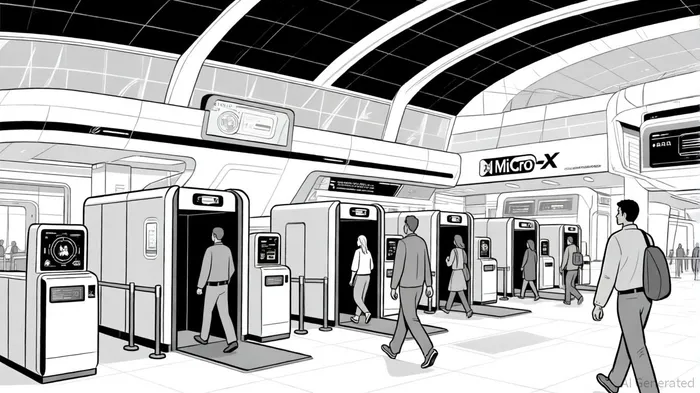
Micro-X's collaboration with the DHS has been a cornerstone of its U.S. strategy. The recent $6.0 million contract extension builds on an initial $5.6 million agreement, with the total project value potentially reaching $14.1 million if all options are exercised[1]. This funding will accelerate the deployment of self-screening airport security checkpoints, including the creation of two additional units and the testing of three over 16 months. The technology at the heart of this initiative—cold cathode X-ray systems—enables compact, energy-efficient screening solutions that outperform traditional systems in both size and performance[2].
The DHS's continued investment in Micro-X is a vote of confidence in the company's ability to address modern security challenges. During a recent visit to Micro-X's Adelaide headquarters, Dr. Dimitri Kusnezov, head of the DHS Science and Technology Directorate, emphasized the agency's interest in the firm's integration of artificial intelligence (AI) with computed tomography (CT) and its novel scatter-CT imaging methods[1]. These innovations align with the DHS's broader mission to enhance threat detection while streamlining passenger flow, a critical need for airports grappling with post-pandemic travel surges.
Technological Differentiation and Market Versatility
What sets Micro-X apart is its ability to adapt its core technology across diverse applications. While the DHS contracts focus on airport security, the company's recent $16.4 million award from the U.S. Advanced Research Projects Agency for Health (ARPA-H) highlights its versatility. This project aims to develop a 225-kilogram mobile full-body CT scanner, a stark contrast to conventional CT machines that weigh over 2000 kilograms[2]. By repurposing its cold cathode X-ray platform for healthcare, Micro-X is tapping into rural medical access challenges, a strategic move that diversifies its revenue streams while reinforcing its reputation as a technology leader.
The company's dual focus on security and healthcare also mitigates sector-specific risks. For instance, while airport security demand may fluctuate with geopolitical tensions, the ARPA-H project is driven by long-term healthcare infrastructure needs. This balance positions Micro-X to sustain growth even in uncertain economic climates.
Strategic Positioning in a High-Growth Market
The U.S. homeland security market is projected to expand to $343.3 million by 2035, driven by heightened concerns over terrorism, cyber threats, and supply chain vulnerabilities[3]. Micro-X's partnerships with federal agencies like the DHS and ARPA-H place it at the intersection of these trends. The company's technology not only meets current regulatory demands but also anticipates future needs, such as AI-driven threat detection and portable imaging solutions.
Moreover, the U.S. government's emphasis on domestic supply chain resilience has created a favorable environment for foreign firms that can offer innovative, non-traditional solutions. Micro-X's ability to deliver compact, high-performance systems aligns with this agenda, reducing reliance on bulkier, legacy technologies.
Risks and Considerations
While Micro-X's trajectory is promising, investors should remain cognizant of potential risks. The company's reliance on U.S. government contracts means its revenue could be sensitive to budgetary shifts or policy changes. Additionally, the development of next-generation technologies like mobile CT scanners involves technical uncertainties and regulatory hurdles. However, the phased nature of its contracts—such as the optional $7.5 million extension for expanding its airport security lanes—provides flexibility to navigate these challenges[2].
Conclusion: A Compelling Investment Thesis
Micro-X's strategic alignment with the U.S. homeland security market, combined with its technological agility, presents a compelling case for investors. The company's ability to secure multi-stage contracts, innovate across sectors, and address both immediate and long-term security needs positions it as a beneficiary of structural growth trends. As governments worldwide prioritize advanced threat detection and healthcare accessibility, Micro-X's dual expertise in cold cathode X-ray technology and AI integration offers a unique value proposition. For investors seeking exposure to a high-growth, innovation-driven sector, the company's expanding footprint in the U.S. market warrants close attention.







Comentarios
Aún no hay comentarios