
Michael Burry Shuts Down Scion Asset Management: What This Means for Value Investing and the Next Bull Market
The Post-QE Landscape: A Shift in Value Investing Paradigms
, , created an environment where growth stocks-particularly in AI and tech-soared on speculative momentum rather than fundamentals. According to analysis, central bank interventions flattened yield curves and reduced perceived risk in long-term assets, incentivizing investors to chase high-growth narratives. , traditionally rooted in undervalued equities and rigorous earnings analysis, struggled to gain traction as markets prioritized future potential over present profitability.
Burry's bearish bets on PalantirPLTR-- and NvidiaNVDA--, however, underscore a return to value investing's core tenets. By shorting these overvalued AI stocks, he challenges the assumption that growth is inherently justified. His Q3 2025 13F filing revealed , betting that the sector's earnings are inflated by underreported depreciation costs. This aligns with value investing's skepticism of overpriced assets, even as it diverges from the traditional focus on low-PE stocks.
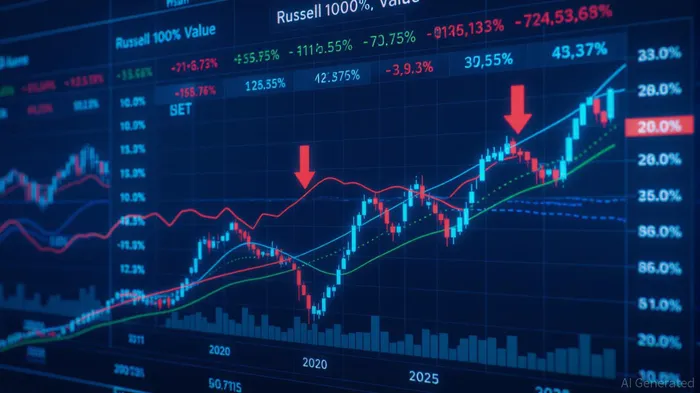
Market Sentiment Shifts: From Speculation to Skepticism
The post-QE era has seen a tug-of-war between speculative optimism and value-driven caution. , a prominent market strategist, argues that the AI boom is a "supercycle" driven by real demand for GPUs, not a bubble according to analysis. Yet Burry's actions suggest otherwise. His warnings about extended server depreciation schedules-which he claims mask elevated capital expenditures-have already triggered volatility in Nvidia's stock. This tension reflects a broader market sentiment shift: while investors remain bullish on AI's long-term potential, they are increasingly wary of short-term overvaluations.
Burry's shutdown of Scion as a registered fund may also signal a strategic pivot. Converting the firm into a family office allows him to operate with greater flexibility, avoiding SEC constraints while maintaining his contrarian edge. This move mirrors the evolution of value investing, which has adapted to post-QE dynamics by incorporating derivatives and concentrated bets to manage risk.
The Next Bull Market: Value Investing's Reemergence?
The implications for the next bull market are twofold. First, if the AI sector experiences a correction-as Burry anticipates-value strategies could thrive by capitalizing on mispriced assets. His focus on cyclical and defensive positions (e.g., Halliburton, Pfizer) alongside AI puts suggests a balanced approach, hedging against both overvaluation and macroeconomic shocks. Second, a sustained AI-driven bull market would challenge value investing's relevance, as growth stocks continue to dominate. However, Burry's history of identifying bubbles-most notably in 2008-implies that his bearish stance is not a rejection of growth but a demand for accountability.
Experts note that value investing's evolution in post-QE markets hinges on its ability to adapt to new valuation metrics. For instance, companies like Deere & Co. and Charles Schwab have shown resilience by leveraging competitive advantages in stable industries according to insights. Burry's pivot to AI and energy sectors reflects a similar logic: targeting long-duration compounders with asymmetric upside, even in speculative environments.
Conclusion: A New Era for Value Investing
Michael Burry's shutdown of Scion Asset Management is not an end but a transformation. By deregistering the fund and adopting a concentrated, derivatives-driven strategy, he has redefined value investing for a post-QE world. His bearish bets on AI stocks challenge the status quo, while his defensive positions underscore a disciplined, fundamentals-first approach. As market sentiment continues to shift between speculation and skepticism, the next bull market may hinge on whether investors embrace Burry's contrarian vision-or double down on the AI frenzy.





Comentarios
Aún no hay comentarios