
MiCAR-Compliant Crypto Platforms as Strategic Assets in the EU's Evolving Regulatory Ecosystem
The European Union's Markets in Crypto-Assets Regulation (MiCAR) has emerged as a cornerstone of global crypto governance, reshaping the competitive landscape for platforms operating in the region. As the EU's regulatory framework for crypto-asset service providers (CASPs) and token issuers, MiCAR aims to harmonize cross-border operations, enhance investor protection, and foster innovation within a structured legal environment. For crypto platforms, compliance with MiCAR is no longer optional but a strategic imperative. KuCoin EU's recent steps to align with these standards-particularly its application for a MiCAR license in Austria-offer a compelling case study in how regulatory alignment can unlock market access and operational resilience in the EU's evolving ecosystem.
MiCAR's Phased Implementation and Compliance Requirements
MiCAR entered into force in June 2023, with a phased implementation timeline. Stablecoins, including asset-referenced tokens (ARTs) and e-money tokens (EMTs), became applicable on June 30, 2024, while the full regime covering utility tokens and CASPs, and market abuse rules took effect on December 30, 2024. Compliance requires entities to obtain authorization from a national competent authority (NCA), granting them passporting rights to operate across the EU/EEA. This process involves adhering to stringent requirements, including capital adequacy, governance frameworks, and transparency standards outlined in regulatory technical standards (RTS) and implementing technical standards (ITS) developed by ESMA and the EBA.
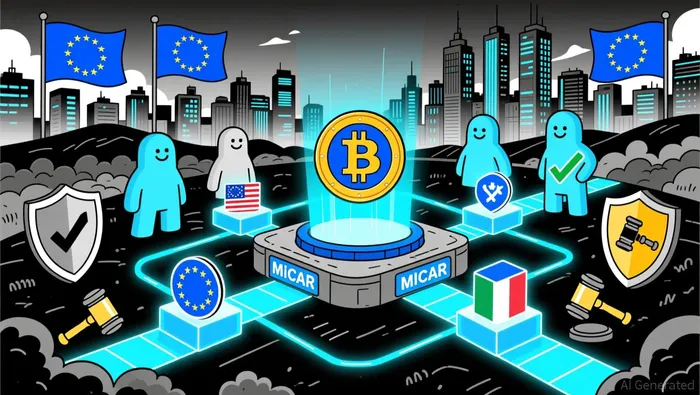
The EU's approach emphasizes a balance between innovation and risk mitigation. For instance, MiCAR excludes fully decentralized services and NFTs from its scope, recognizing the need to avoid stifling emerging technologies. However, for platforms like KuCoin EU, which operate centralized services, compliance is a non-negotiable prerequisite for legitimacy and scalability.
KuCoin EU's Strategic Alignment with MiCAR
KuCoin EU Exchange GmbH has positioned itself as a proactive actor in this regulatory transition. In Q3 2025, the platform submitted a MiCAR license application to Austria's Financial Market Authority (FMA), signaling its intent to operate as a fully compliant CASP across the EU/EEA. This move aligns with KuCoin's broader strategy to expand its services to all 30 EU/EEA member states under a single license, leveraging MiCAR's passporting mechanism.
The choice of Austria as a regulatory hub is strategic. Vienna's progressive financial ecosystem, combined with the FMA's structured authorisation process-including preliminary completeness assessments and formal application stages-provides KuCoin with a clear pathway to compliance. The platform has also appointed seasoned professionals like Oliver Stauber and Christian Niedermüller to oversee operations, ensuring alignment with European regulatory expectations.
Strategic Benefits of MiCAR Compliance
MiCAR compliance offers KuCoin EU-and by extension, its investors-several strategic advantages. First, the passporting rights granted under MiCAR eliminate the need for redundant licensing across multiple EU jurisdictions, significantly reducing operational costs and complexity. This cross-border access is critical for KuCoin's ambition to scale its user base and service offerings across the EU.
Second, compliance enhances investor trust. MiCAR's emphasis on transparency-such as machine-readable white papers, sustainability disclosures, and robust complaint-handling mechanisms-ensures that users have access to verifiable information about the platform's operations and risks. For KuCoin, this aligns with its public commitment to security and accountability, as evidenced by its July 2025 security report detailing enhanced safeguards.
Third, MiCAR compliance positions KuCoin to benefit from the EU's broader financial integration agenda. By adhering to the framework, the platform aligns with the EU's goals of fostering a unified digital finance market, which includes forthcoming measures like DAC8 (Digital Asset Reporting Standard) in 2026 for enhanced tax reporting transparency. This alignment reduces the risk of regulatory fragmentation and future-proofing KuCoin's operations against evolving standards.
Broader Implications for the EU Crypto Ecosystem
KuCoin's case underscores a broader trend: regulatory compliance is becoming a competitive differentiator in the EU's crypto sector. As NCAs enforce MiCAR's requirements, platforms that prioritize alignment-like KuCoin-will gain a first-mover advantage in accessing institutional investors and retail users seeking trusted, regulated services. Conversely, non-compliant platforms risk exclusion from the EU market, particularly as the transition period for national law operators expires in July 2026.
Moreover, MiCAR's focus on investor protection and market stability aligns with the EU's broader economic resilience goals. By setting a global benchmark for crypto regulation, the EU is attracting innovation while mitigating systemic risks-a balance that KuCoin's compliance strategy exemplifies.
Conclusion
MiCAR-compliant crypto platforms like KuCoin EU are not merely adapting to regulatory demands; they are strategically positioning themselves as foundational assets in the EU's digital financial infrastructure. Through proactive licensing, operational transparency, and cross-border scalability, KuCoin demonstrates how regulatory alignment can drive both market access and investor confidence. As the EU's crypto ecosystem matures, platforms that embrace MiCAR's framework will likely emerge as leaders in a space where compliance and innovation are increasingly intertwined.







Comentarios
Aún no hay comentarios