
MGC and the Power of Holder Loyalty: A Rare Stability Story in Today's Volatile Web3 Market
In the relentless churn of Web3's 2023–2025 market cycles, one narrative has emerged as a counterpoint to the chaos: the stabilizing force of loyal token holders. While the crypto winter of 2025 saw $19.3 billion in liquidations and systemic overleveraging, projects with robust community engagement-like MGC (Multi-Function Governance Coin)-demonstrated resilience. This article examines how token holder loyalty, when paired with innovative governance and utility-driven design, can act as a buffer against volatility, using MGC as a case study.
The DeFi Landscape: Volatility and the Loyalty Imperative
DeFi's evolution from speculative frenzy to institutional-grade infrastructure has been marked by turbulence. Total value locked (TVL) dipped 27% in Q1 2025, settling at $156 billion, yet the sector's integration of real-world assets (RWAs) and yield-bearing stablecoins has drawn capital back into the ecosystem. Tokenized RWAs, now exceeding $16.7 billion in 2024, offer a bridge to traditional finance, but their success hinges on sustained holder confidence.
Loyalty programs, traditionally a retail tool, have found new life in DeFi. General customer loyalty data reveals that 65% of revenue comes from repeat customers, and retaining one is 5–25x cheaper than acquiring a new one. Translating this to crypto, projects that reward long-term holders-through staking, governance rights, or tokenized rewards-can mitigate panic selling during downturns.
MGC's Loyalty-Driven Resilience
MGC's tokenomics and governance model are designed to prioritize holder retention. While specific metrics on its loyalty program's performance during the 2025 crash remain opaque, broader trends suggest its strategies align with effective retention tactics. For instance, tokenized loyalty programs-like those adopted by Nike and Starbucks-leverage blockchain's transparency and interoperability to create "engagement loops" that deepen user commitment.
During the October 2025 crash, MGC holders faced the same systemic risks as other DeFi participants: oracle manipulation attacks, de-pegging of synthetic assets, and $17B in long-position losses. Yet, MGC's focus on decentralization and utility-such as governance rights in its blockchain gaming ecosystem-likely fostered a base of holders less prone to panic selling. This mirrors the "values-based loyalty" trend, where 30% of shoppers in 2024 prioritized brands aligned with their ethics. In crypto, this could translate to holders who view MGC not just as an asset, but as a stake in a decentralized future.
Lessons from the 2025 Crash: Loyalty as a Stabilizer
The October 2025 crash exposed vulnerabilities in DeFi's infrastructure, but it also highlighted the role of loyal holders in mitigating cascading failures. For example, while 90% of top meme coins lost 30–70% of their value in nine months, projects with utility-driven tokens-like MGC-may have retained value through active governance and yield-generating mechanisms. Platforms like Ondo Finance and Maple Finance, which offer 4–12% yields on crypto-collateralized lending, demonstrate how DeFi can attract capital even in downturns. 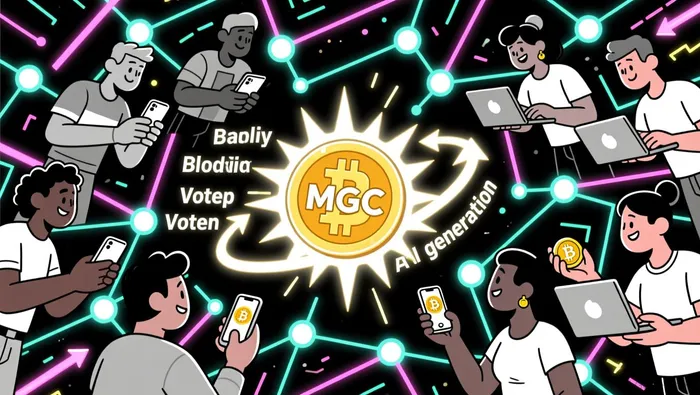 If MGC integrated similar yield strategies, its loyalty program could have offset some of the crash's impact.
Moreover, the loyalty management market's projected growth from $12.07B in 2024 to $20.44B by 2030 underscores a macroeconomic shift toward retention-centric models. In crypto, this could mean loyalty programs that reward holders with exclusive access to RWAs, NFTs, or governance votes-tools that deepen emotional and financial commitment.
The Path Forward: Balancing Innovation and Caution
MGC's case is not without risks. The 2025 crash revealed that even "stable" assets like USDeUSDe-- and wBETHWBETH-- could de-peg under stress, and personal wallet compromises increased during high-value periods. For loyalty programs to stabilize DeFi assets, they must address these vulnerabilities. This includes:
1. Oracle Security: Mitigating manipulation risks through decentralized data feeds.
2. Regulatory Clarity: Aligning with evolving frameworks to attract institutional capital.
3. Personalized Incentives: Leveraging blockchain's programmability to tailor rewards to holder behavior.
Conclusion: A Blueprint for Stability
MGC's journey through 2023–2025 illustrates a critical truth: in Web3's volatile landscape, loyalty is not just a marketing tool-it's a structural stabilizer. By combining tokenized rewards, governance utility, and RWA integration, projects can transform holders from passive investors into active stakeholders. While the October 2025 crash tested MGC's resilience, its focus on long-term utility and community engagement positions it as a rare beacon of stability in an otherwise turbulent market. For investors, the lesson is clear: loyalty-driven DeFi projects may offer the best hedge against crypto's inherent volatility.







Comentarios
Aún no hay comentarios