
Mexico's Stance on Tariffs: A Blow to Trump's Trade Strategy?
Generado por agente de IAEli Grant
jueves, 28 de noviembre de 2024, 10:11 am ET1 min de lectura
In his recent conversation with Mexican President Claudia Sheinbaum, President-elect Donald Trump was met with unexpected resistance regarding his plans for tariffs. Sheinbaum's refusal to engage in discussions about tariffs has raised questions about the future of U.S.-Mexico trade relations and the potential impact on both countries' economies.
Trump's proposed tariffs on Canada and Mexico, announced earlier this week, were intended to curb illegal immigration and drug trafficking. However, Sheinbaum's unwillingness to discuss these tariffs during their call suggests that Mexico may not be as compliant as Trump had hoped. This stance could be a sign of Mexico's determination to protect its trade interests and maintain its position as the U.S.'s largest trading partner.
The implications of Sheinbaum's refusal to discuss tariffs are far-reaching. If the U.S. proceeds with its tariff plans, Mexico could retaliate with its own tariffs, as it did in response to Trump's 2017 threat. This could lead to higher prices and slower economic growth, potentially disrupting the U.S.-Mexico-Canada trade agreement (USMCA). Moreover, U.S. consumers and businesses could face higher costs for Mexican imports, while Mexican consumers and businesses may experience reduced sales and increased production costs.
Mexico's refusal to discuss tariffs also raises questions about alternative strategies to address U.S. immigration concerns. One approach could be enhanced cooperation on security issues and migrant processing, as suggested by Sheinbaum. Another strategy could be increased investment in economic development and job creation in southern Mexico to reduce push factors driving migration north. Additionally, Mexico could explore regional cooperation with Central American countries to address root causes of migration.
In conclusion, Mexico's refusal to engage in discussions about tariffs with President-elect Trump has significant implications for U.S.-Mexico trade relations and the potential impact on both countries' economies. As negotiations continue, it will be crucial for investors to monitor the situation closely and assess the potential risks and opportunities that may arise. A balanced and analytical approach to investing, considering multiple perspectives and factors, will be essential for navigating the complex geopolitical landscape and making informed investment decisions.
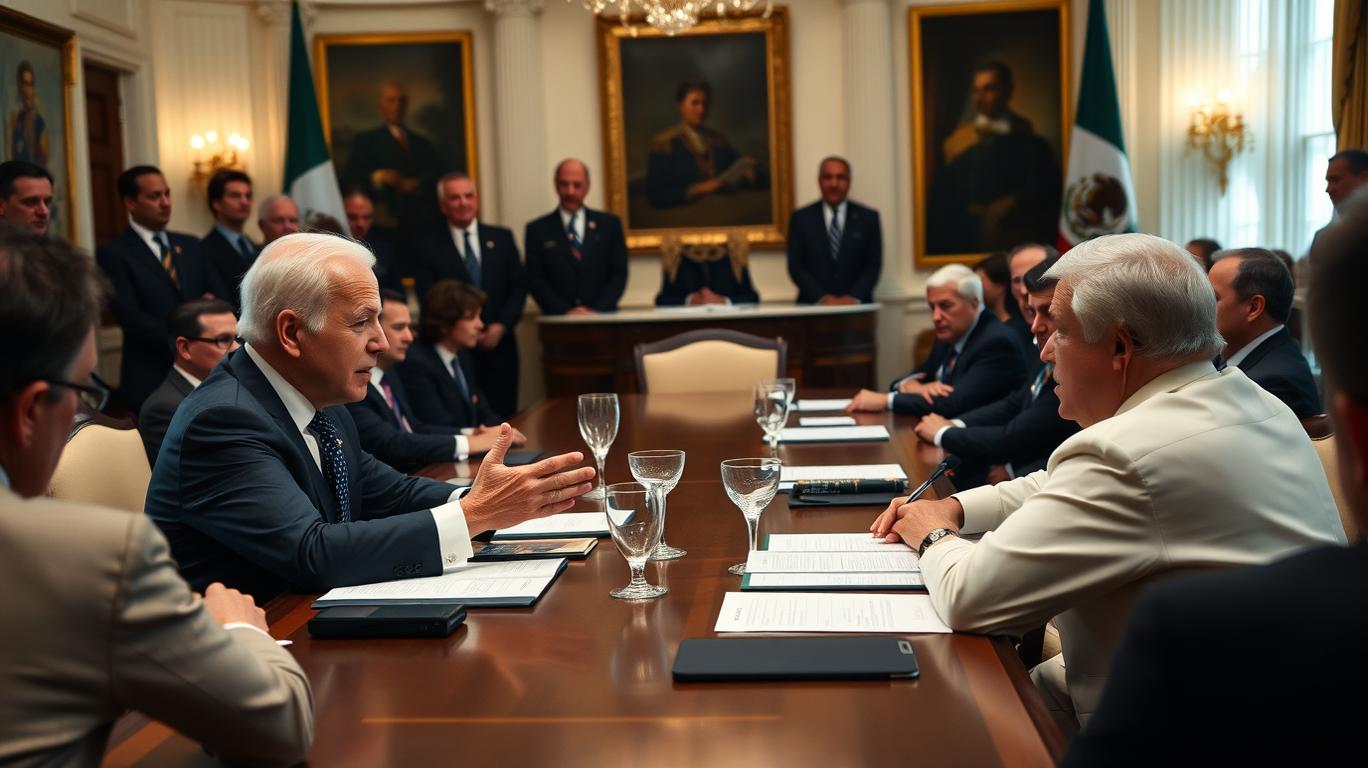
Trump's proposed tariffs on Canada and Mexico, announced earlier this week, were intended to curb illegal immigration and drug trafficking. However, Sheinbaum's unwillingness to discuss these tariffs during their call suggests that Mexico may not be as compliant as Trump had hoped. This stance could be a sign of Mexico's determination to protect its trade interests and maintain its position as the U.S.'s largest trading partner.
The implications of Sheinbaum's refusal to discuss tariffs are far-reaching. If the U.S. proceeds with its tariff plans, Mexico could retaliate with its own tariffs, as it did in response to Trump's 2017 threat. This could lead to higher prices and slower economic growth, potentially disrupting the U.S.-Mexico-Canada trade agreement (USMCA). Moreover, U.S. consumers and businesses could face higher costs for Mexican imports, while Mexican consumers and businesses may experience reduced sales and increased production costs.
Mexico's refusal to discuss tariffs also raises questions about alternative strategies to address U.S. immigration concerns. One approach could be enhanced cooperation on security issues and migrant processing, as suggested by Sheinbaum. Another strategy could be increased investment in economic development and job creation in southern Mexico to reduce push factors driving migration north. Additionally, Mexico could explore regional cooperation with Central American countries to address root causes of migration.
In conclusion, Mexico's refusal to engage in discussions about tariffs with President-elect Trump has significant implications for U.S.-Mexico trade relations and the potential impact on both countries' economies. As negotiations continue, it will be crucial for investors to monitor the situation closely and assess the potential risks and opportunities that may arise. A balanced and analytical approach to investing, considering multiple perspectives and factors, will be essential for navigating the complex geopolitical landscape and making informed investment decisions.



Divulgación editorial y transparencia de la IA: Ainvest News utiliza tecnología avanzada de Modelos de Lenguaje Largo (LLM) para sintetizar y analizar datos de mercado en tiempo real. Para garantizar los más altos estándares de integridad, cada artículo se somete a un riguroso proceso de verificación con participación humana.
Mientras la IA asiste en el procesamiento de datos y la redacción inicial, un miembro editorial profesional de Ainvest revisa, verifica y aprueba de forma independiente todo el contenido para garantizar su precisión y cumplimiento con los estándares editoriales de Ainvest Fintech Inc. Esta supervisión humana está diseñada para mitigar las alucinaciones de la IA y garantizar el contexto financiero.
Advertencia sobre inversiones: Este contenido se proporciona únicamente con fines informativos y no constituye asesoramiento profesional de inversión, legal o financiero. Los mercados conllevan riesgos inherentes. Se recomienda a los usuarios que realicen una investigación independiente o consulten a un asesor financiero certificado antes de tomar cualquier decisión. Ainvest Fintech Inc. se exime de toda responsabilidad por las acciones tomadas con base en esta información. ¿Encontró un error? Reportar un problema


SOBRE NOSOTROS
Nuestra historiaAutores de noticiasBase de conocimientosPolítica de privacidadTérmino de usoDescargo de responsabilidad de corretaje de tercerosTérminos de uso de AIMEDivulgaciones de riesgos de AInvest AICarrerasCONTÁCTENOS
Email: support@ainvest.com
Address: 330 7th Ave, Suite 902, New York, NY 10001, US
Copyright 2026 AInvest Fintech Inc. All rights reserved.


Comentarios
Aún no hay comentarios