
Mexico's Rate Cut and Its Impact on Emerging Market Equity Exposure
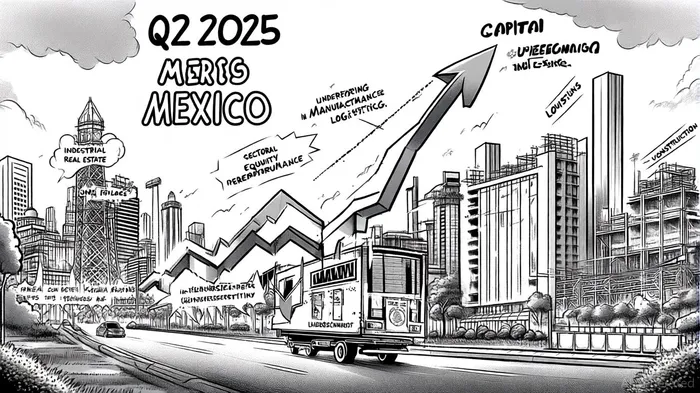
Mexico's Central Bank (Banxico) has embarked on an aggressive rate-cutting cycle in 2025, reducing its benchmark interest rate to 7.75% by August—a three-year low—amid easing inflation and a slowing economy[1]. These cuts, part of a broader strategy to stimulate domestic demand and offset U.S. trade pressures, have had cascading effects on capital flows and equity markets across emerging markets. The interplay between monetary easing, sectoral dynamics, and global macroeconomic shifts offers critical insights for investors navigating the evolving landscape.
Capital Flow Dynamics: A Mixed Bag
Banxico's rate cuts have created a dual narrative for capital flows. On one hand, the peso's depreciation in anticipation of further easing has made Mexican assets more attractive to foreign investors seeking yield. In the first half of 2025, Mexico attracted $55.6 billion in foreign direct investment (FDI), a 8.2% increase year-on-year, driven by manufacturing and nearshoring opportunities[4]. This inflow reflects confidence in Mexico's role as a North American supply-chain hub, particularly in automotive and aerospace sectors.
However, the broader emerging market context complicates this picture. While Mexico's rate cuts have spurred domestic investment, global capital flows to emerging markets (EMs) remain constrained by U.S. trade uncertainties and fiscal consolidation efforts. The OECD projects that Mexico's economy will grow by only 0.4% in 2025, with growth in 2026 expected to reach 1.1%—a modest recovery amid persistent headwinds[2]. Meanwhile, the International Institute of Finance (IIF) notes that global capital flows to EMs are forecast to decline to $71 billion in 2025, reflecting macroeconomic fragmentation and geopolitical risks[5].
Sectoral Outperformance: Manufacturing and Industrial Real Estate Lead
The equity performance of Mexico's sectors post-rate cuts has been uneven. Manufacturing and industrial real estate have emerged as clear beneficiaries. The industrial real estate market, for instance, saw a surge in demand for logistics and distribution centers, driven by nearshoring trends and e-commerce growth. Key regions like Monterrey and Guadalajara experienced significant absorption of industrial space in 2024, with rents rising despite a slowdown in leasing activity from Chinese firms[4].
The manufacturing sector, particularly in automotive and electronics, has also thrived. Mexico's compliance with USMCA rules has allowed many exports to enter the U.S. duty-free, shielding them from some tariff impacts. This has attracted FDI from U.S. and Asian firms seeking to diversify supply chains away from China[4]. Vanguard's economic outlook highlights Mexico's positioning as a key supply-chain hub, with growth constrained only by energy shortages and regulatory bottlenecks[3].
In contrast, sectors like tourism and construction have lagged. The construction sector slowed after the completion of major infrastructure projects, while tourism faced headwinds from U.S. immigration policy uncertainties affecting remittances[1]. Financials also underperformed, with Mexican banks like Grupo Financiero Banorte and Alfa, S.A.B. De C.V. declining by 4.00% and 3.26%, respectively, in August 2025 amid investor concerns over economic stability[4].
Cross-Market Comparisons: Mexico's Relative Resilience
Mexico's equity performance in 2025 contrasts with other emerging markets. The MSCIMSCI-- Emerging Markets IMI Index surged 12.7% in Q2 2025, outperforming the S&P 500 (10.9%) and MSCI World (11.5%)[6]. This growth was fueled by rate cuts in India and Brazil, with the MSCI India Index rising 9.2% and the MSCI Brazil Index gaining 13.3% in the same period[6]. Mexico, while not the focal point, benefited from the broader EM rally, particularly in sectors aligned with nearshoring and industrial expansion.
However, Mexico's equity market diverged from U.S. indices in sector composition. The S&P BMV IPC Index, Mexico's benchmark, has higher weights in consumer staples and materials compared to the S&P 500's emphasis on consumer discretionary and technology[7]. This structural difference has contributed to a lower correlation with U.S. equities, offering diversification benefits for global portfolios.
The Road Ahead: Balancing Risks and Opportunities
Banxico's rate-cutting cycle is far from over. The central bank has signaled openness to larger cuts if inflation continues to ease, with the policy rate potentially reaching 7% by year-end[1]. However, the effectiveness of these cuts hinges on external factors. U.S. trade policy remains a wildcard, with tariffs on steel, aluminum, and automobiles posing risks to Mexico's export-dependent economy[4]. Additionally, fiscal consolidation and political uncertainties could dampen investor sentiment.
For investors, the key lies in sectoral selectivity. Manufacturing, industrial real estate, and logistics remain attractive, while sectors like tourism and construction require caution. Cross-border comparisons suggest that Mexico's strategic positioning in North American supply chains offers a unique edge, but its performance will ultimately depend on the resolution of U.S.-Mexico trade tensions and the pace of domestic reforms.
In the broader EM context, Mexico's rate cuts have acted as a catalyst for capital flows, but the sustainability of this trend will depend on global macroeconomic conditions. As the Fed's rate-cutting trajectory unfolds, the U.S. dollar's weakness could further bolster EM equities, including Mexico's. Yet, the path is fraught with risks—geopolitical tensions, energy insecurity, and fiscal constraints will test the resilience of Mexico's economic recovery.







Comentarios
Aún no hay comentarios