
Mexico's Nearshoring Boom Faces Trade Risks
Mexico's manufacturing sector has become a magnet for foreign direct investment (FDI), with nearshoring surging as companies shift production closer to the U.S. market. In Q1 2025 alone, Mexico recorded a record $21.4 billion in FDI, with 43%—or $9.2 billion—flowing into manufacturing, according to a Mexico News Daily report. This boom, driven by U.S. tariffs on China and Mexico's geographic proximity, has transformed the country into a critical hub for automotive, electronics, and electric transport industries, as noted in a Forbes analysis. However, beneath the optimism lies a web of vulnerabilities tied to geopolitical tensions, trade policy shifts, and domestic governance challenges that could undermine long-term investment stability.
Geopolitical Drivers and Trade Policy Risks
The U.S.-China trade rivalry has been a double-edged sword for Mexico. While U.S. tariffs on Chinese goods have incentivized firms to nearshore operations to Mexico, the same geopolitical friction introduces volatility. For instance, U.S. threats to impose 25% tariffs on non-U.S. content in auto imports from Mexico—framed as part of a reshoring agenda—have created uncertainty for automakers reliant on cross-border supply chains, a Brookings report warns. According to the Brookings report, such measures could erode confidence in Mexico's economic model and deter future investment.
The United States-Mexico-Canada Agreement (USMCA), which replaced NAFTA, initially boosted North American FDI by 16% by 2024, Mexico News Daily reported. Yet, its enforcement has been inconsistent. The Trump administration's aggressive tariff policies and retaliatory measures from Canada have disrupted supply chains in key sectors like automotive and agriculture, as noted in the Forbes analysis. Meanwhile, Mexico's delicate balancing act between the U.S. and China—serving as both a supplier of raw materials to China and a nearshoring destination for U.S. firms—risks alienating either partner if trade dynamics shift further, the Mexico News Daily report suggests.
Domestic Challenges: Judicial Reforms and Infrastructure Gaps
Beyond external risks, Mexico's internal governance issues pose significant hurdles. In September 2024, the government enacted a controversial judicial reform that replaced merit-based judicial appointments with popular elections for judges, according to a Mayer Brown analysis. Critics, including the U.S. and Canada, argue this undermines judicial independence and violates USMCA obligations, the Mayer Brown analysis adds. The reform triggered a judicial strike in August 2024, disrupting legal proceedings and prompting Morgan Stanley to downgrade Mexico to “underweight” status. Foreign firms have reportedly held back $35 billion in investment projects due to heightened legal uncertainty, the Mayer Brown analysis notes.
Infrastructure constraints further amplify vulnerability. Despite industrial parks near the U.S. border reaching maximum occupancy, outdated transportation systems and insufficient energy infrastructure hinder Mexico's ability to scale production efficiently, the Forbes analysis warned. Moody's Ratings and Oxford Economics have likewise cautioned that these structural weaknesses could offset nearshoring gains unless addressed.
Navigating the Path Forward
Mexico's nearshoring success hinges on its ability to mitigate these risks. The government's “Plan México” initiative aims to improve the business environment, but progress remains uneven. For example, while new investment (a key indicator of long-term FDI health) rose 165% in Q1 2025 compared to 2024, it still accounted for just 7.4% of total FDI, underscoring reliance on reinvestment by existing firms, the Mexico News Daily report observed.
To sustain momentum, Mexico must prioritize infrastructure upgrades, streamline regulatory processes, and restore investor confidence in its judiciary. Alternative nearshoring models, such as shelter companies under the IMMEX program, offer short-term solutions but may not fully capture the scale of traditional FDI, the Mayer Brown analysis concludes. 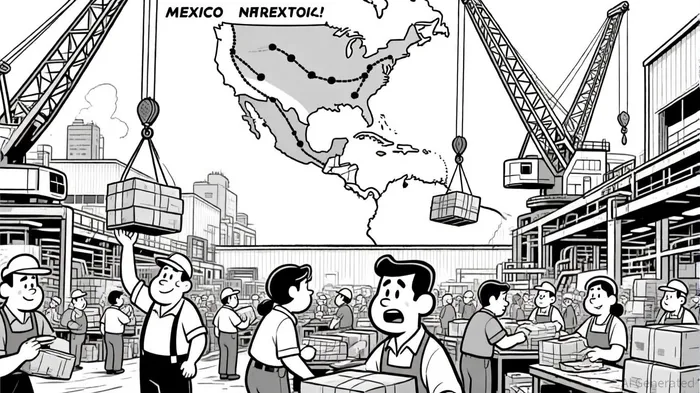







Comentarios
Aún no hay comentarios