
Mexico's Economic Resilience Amid Global Uncertainty: Strategic Exposure to Undervalued Sectors as a Hedge Against U.S. Inflation and Supply Chain Fragility
In an era of geopolitical tensions, inflationary pressures, and supply chain disruptions, Mexico's manufacturing and energy sectors have emerged as critical pillars of economic resilience. Despite a 2025 GDP growth forecast of 0.1%—a sharp decline driven by U.S. tariff threats and energy sector headwinds—the country's strategic advantages position it as a compelling investment opportunity. For investors seeking to hedge against U.S. inflation and supply chain fragility, Mexico's undervalued equities, industrial real estate, and renewable energy projects offer a unique combination of yield, growth potential, and diversification benefits.
Manufacturing: A Nearshoring Powerhouse
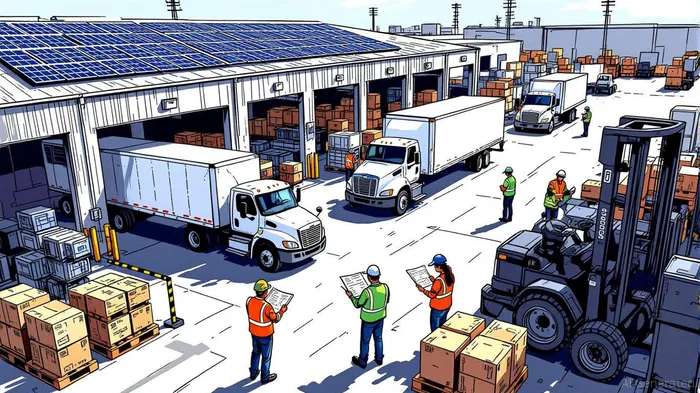
Mexico's manufacturing sector has become a linchpin of U.S. supply chain resilience. Proximity to the U.S., preferential trade terms under the USMCA, and nearshoring trends have driven a 15% annual rent growth in U.S.-Mexico border industrial real estate markets. Key hubs like El Paso and Laredo now boast cap rates 200 basis points above U.S. averages, compensating for geopolitical risks while offering robust returns.
The sector's appeal lies in its cost advantages over China. Labor costs in Mexico average $4.90 per hour versus $6.50 in China, and shipping times from Mexico to the U.S. are 1–4 days compared to three weeks from China. Tariff structures further tilt the balance: USMCA allows duty-free access for compliant goods, while U.S. tariffs on Chinese imports can reach 25%. This dynamic has spurred investments from global giants like AmazonAMZN-- and DHL, which are expanding logistics hubs in Mexico to capitalize on shorter lead times and lower inventory costs.
Energy: Navigating Challenges, Embracing Renewables
Mexico's energy sector, while a drag on growth in 2025, is undergoing a strategic transformation. The government's Energy Transition Law and National Energy Strategy aim to boost renewable energy capacity, with solar, wind, and hydroelectric projects projected to grow at a 10% CAGR through 2033. Despite policy uncertainty and grid integration challenges, Mexico's renewable energy sector is attracting attention for its long-term potential.
The sector's current struggles—exacerbated by U.S. tariff pressures on copper and global commodity surpluses—mask its structural strengths. For instance, Tesla's delayed EV plant in Nuevo León underscores the need for reliable energy infrastructure, while Amazon's $5 billion data center investment in Querétaro highlights the demand for clean energy to meet ESG goals. Mexico's energy mix, with 31% from renewables in 2023, is expected to expand as private sector participation increases.
Hedging Against U.S. Inflation and Supply Chain Risks
Mexico's manufacturing and energy sectors offer natural hedges against U.S. inflation and supply chain volatility. Industrial real estate along the border provides inflation-linked cash flows through U.S. dollar-denominated rents, while Mexico's inflation-linked government bonds (UDIBONOS) yield ~9.44%, outpacing U.S. Treasuries. Additionally, reinvestment in existing operations accounts for 80% of Mexico's FDI, signaling confidence in long-term value creation.
The IPC's defensive tilt—weighted toward consumer staples and communication services—further supports its appeal. MorningstarMORN-- notes Mexican equities are undervalued relative to U.S. counterparts, with a price-to-earnings ratio 30% lower. This undervaluation, combined with nearshoring-driven demand, makes the sector attractive for long-term investors.
Strategic Investment Recommendations
- Diversify Across Asset Classes: Allocate to Mexican industrial real estate and renewable energy projects to balance growth and yield.
- Hedge Currency Risks: Use U.S. dollar-denominated bonds or forward contracts to mitigate peso depreciation.
- Target Nearshoring-Ready Sectors: Focus on automotive, electronics, and logistics hubs in border regions like Laredo and Guadalajara.
- Monitor Policy Shifts: Track U.S. tariff policies and Mexico's energy reforms to capitalize on regulatory changes.
Conclusion
Mexico's economic resilience in 2025 is a testament to its adaptability in a volatile global landscape. While challenges persist—energy infrastructure bottlenecks, U.S. policy uncertainties—the country's strategic advantages in manufacturing and renewable energy present compelling opportunities. For investors, a diversified approach that leverages Mexico's undervalued sectors offers a robust hedge against U.S. inflation and supply chain fragility, positioning portfolios for long-term growth in an uncertain world.







Comentarios
Aún no hay comentarios