
Metaverse ETF Performance and Distribution Trends: Evaluating the Strategic Value of Quarterly Distributions in Metaverse Exposure
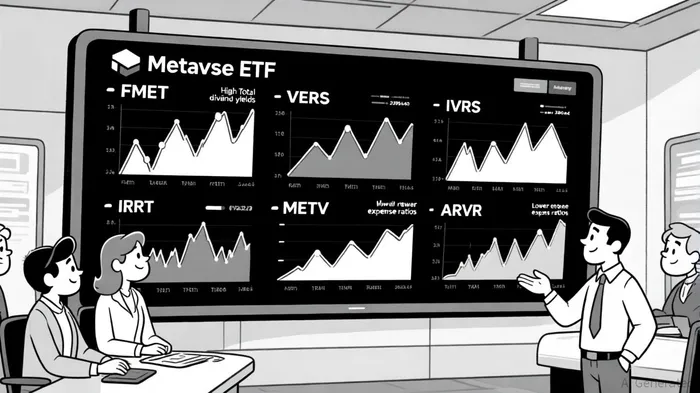
The metaverse sector, a convergence of virtual reality, augmented reality, and blockchain technologies, has emerged as a high-growth investment theme. Exchange-traded funds (ETFs) focused on this space offer investors diversified exposure to companies shaping the digital frontier. However, the strategic value of these ETFs extends beyond capital appreciation; their dividend distribution strategies play a critical role in attracting income-focused investors and signaling financial stability. This analysis evaluates the performance and distribution trends of leading Metaverse ETFs, including the Fidelity Metaverse ETF (FMET), ProShares Metaverse ETF (VERS), and others, to assess how quarterly distributions contribute to their strategic appeal.
Performance Metrics: Growth vs. Income Prioritization
The metaverse sector's volatility necessitates a nuanced understanding of ETF performance. Over the past 12 months, the Fidelity Metaverse ETF (FMET) has delivered a total return of 29.49%, outpacing the 15.41% return of the ProShares Metaverse ETF (VERS) [2]. FMET's 3-year compound annual growth rate (CAGR) of 21.14% further underscores its growth-oriented strategy [2]. In contrast, VERS has demonstrated a higher 30-day SEC yield of 0.27% in Q1 2025, reflecting a stronger emphasis on income generation [5].
Meanwhile, the iShares Future Metaverse Tech and Communications ETF (IVRS) has attracted attention with a 5.16% yield, though its year-to-date (YTD) performance of 28.92% lags behind FMET's 27.81% [2]. The Roundhill Ball Metaverse ETF (METV), despite a YTD gain of 44.23%, maintains a negligible 0.13% yield, highlighting its focus on capital appreciation over income [2]. These divergent strategies illustrate how ETF providers tailor their offerings to different investor priorities.
Distribution Strategies: Frequency and Yield Variability
Quarterly distributions are a hallmark of many Metaverse ETFs, but their magnitude and consistency vary significantly. FMETFMET--, for instance, has distributed $0.0270 per share in its most recent payout (July 2025) and $0.0770 in June 2025, reflecting a gradual increase in yield [3]. VERS, on the other hand, has maintained a higher quarterly payout of $0.109 per share as of July 2025 [4]. These patterns suggest that VERS prioritizes income stability, while FMET balances growth and modest yield.
The First Trust Indxx Metaverse ETF (ARVR) presents a contrasting approach. Historically, ARVR has distributed dividends semiannually, with a trailing twelve-month (TTM) yield of 0.567% as of December 2024 [4]. However, its distribution history reveals volatility, including a sharp decline from $0.0654 in December 2022 to $0.0134 in June 2023 [2]. This inconsistency raises questions about the sustainability of its dividend strategy in a sector prone to rapid technological shifts.
Strategic Value of Quarterly Distributions
The strategic value of quarterly distributions lies in their ability to enhance investor returns and signal financial health. For income-focused investors, consistent dividends provide a predictable cash flow, which is particularly valuable in a high-growth sector like the metaverse. FMET's and VERS's quarterly payouts, for example, offer regular income streams that complement their capital gains.
Moreover, dividend yields can serve as a proxy for an ETF's financial stability. A higher yield, such as IVRS's 5.16%, may indicate strong underlying company performance or a more conservative portfolio composition [2]. Conversely, METV's annual dividend of $0.0190 (as of December 2023) and its 0% trailing yield suggest a focus on reinvesting gains into growth opportunities rather than distributing them [2]. This aligns with the metaverse sector's long-term innovation cycle but may deter investors seeking immediate income.
Expense ratios also play a role in evaluating distribution strategies. FMET's 0.40% expense ratio is competitive, while VERS and ARVR charge similar fees, reflecting the sector's standard cost structure [2]. Lower expense ratios can amplify net returns, particularly for ETFs with modest yields.
Conclusion: Balancing Growth and Income in a Dynamic Sector
The metaverse ETF landscape is characterized by a spectrum of strategies, from high-growth, low-yield options like METVMETV-- to income-focused products like VERS. Quarterly distributions add strategic value by providing income, signaling stability, and catering to diverse investor preferences. However, the sector's inherent volatility necessitates caution. Investors should weigh an ETF's yield, expense ratio, and underlying holdings against their risk tolerance and financial goals.
As the metaverse continues to evolve, the strategic value of quarterly distributions will likely remain a key differentiator among ETFs. Those that balance consistent income with exposure to high-growth companies—such as FMET and VERS—may offer the most compelling value for investors navigating this transformative sector.







Comentarios
Aún no hay comentarios