
MetaMask Token Launch: Catalyzing Institutional Adoption and DeFi Innovation in 2025
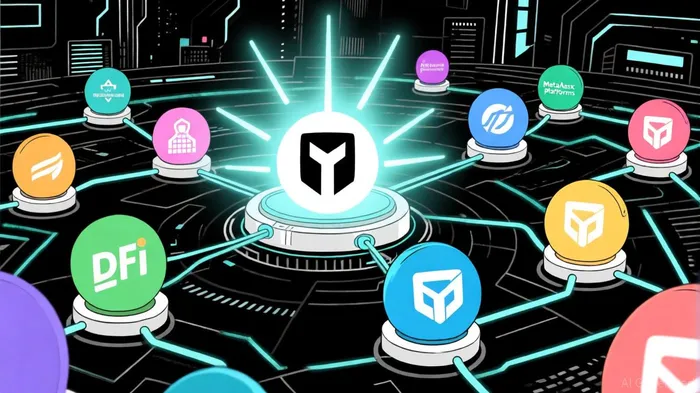
The crypto ecosystem is on the cusp of a pivotal shift as MetaMask, the leading crypto wallet with over 100 million users[1], inches closer to launching its native token. While no official announcement has been made as of September 2025, the implications of such a move—rooted in MetaMask's foundational role in DeFi and its potential to attract institutional capital—are profound. This analysis explores how a MetaMask token could redefine the boundaries of institutional adoption and user-driven DeFi innovation, reshaping the crypto landscape for years to come.
MetaMask's Current Role: A Gateway to Web3
MetaMask has long served as the on-ramp to decentralized finance, enabling users to interact with EthereumETH-- and other blockchains while managing digital assets[2]. Its user base spans retail investors, developers, and enterprises, making it a critical infrastructure layer for Web3. By abstracting the complexity of blockchain interactions, MetaMask has democratized access to DeFi protocols, NFT marketplaces, and decentralized apps (dApps). However, its current model—reliant on network fees and ecosystem partnerships—lacks a native economic mechanism to align incentives between users, developers, and the platform itself.
A token launch could address this gap by introducing governance rights, staking mechanisms, or revenue-sharing models. For instance, token holders might vote on protocol upgrades, prioritize transaction fees, or allocate funds to developer grants. Such features could transform MetaMask from a passive utility tool into an active participant in shaping the DeFi ecosystem.
Institutional Adoption: From Skepticism to Strategic Integration
Institutional adoption has historically been a bellwether for crypto's legitimacy. The entry of entities like Fidelity, BlackRock, and Grayscale into DeFi and tokenized assets has been driven by three factors: liquidity, regulatory clarity, and economic alignment. A MetaMask token could address all three.
- Liquidity and Utility: Tokens with clear use cases (e.g., governance, staking) attract institutional interest by creating tradable value. For example, Uniswap's $UNI token enabled institutions to participate in protocol governance while providing liquidity for traders[3]. A MetaMask token could similarly incentivize institutions to lock capital in DeFi protocols accessible via the wallet.
- Regulatory Frameworks: A tokenized model could facilitate compliance by enabling programmable rules for transaction validation, anti-money laundering (AML) checks, and know-your-customer (KYC) protocols. Institutions, which prioritize regulatory adherence, would find such features appealing.
- Economic Alignment: By distributing tokens to users and developers, MetaMask could create a decentralized autonomous organization (DAO) that mirrors institutional governance structures. This would allow institutions to invest in a community-driven ecosystem while mitigating risks associated with centralized control.
User-Driven DeFi Innovation: Scaling the Ecosystem
MetaMask's user base is notNOT-- just a numbers game—it's a testament to its role in fostering innovation. Over 100 million users interacting with DeFi platforms via MetaMask[1] represent a vast, active network of liquidity providers, borrowers, and traders. A token could amplify this network effect by:
- Incentivizing Participation: Token rewards for staking, liquidity provision, or protocol usage could drive deeper engagement. For example, a MetaMask token might reward users for securing the network or contributing to developer tooling.
- Cross-Chain Synergies: MetaMask's support for multiple blockchains (Ethereum, Polygon, SolanaSOL--, etc.) could be enhanced with a token that acts as a bridge between ecosystems. Institutions seeking diversified exposure to DeFi could leverage the token to allocate capital across chains efficiently.
- Developer Ecosystem Growth: A token-based funding model could subsidize open-source development, accelerating the creation of next-generation dApps. This mirrors the success of platforms like GitcoinGTC--, where quadratic funding has enabled community-driven innovation.
Risks and Considerations
While the potential is vast, challenges remain. Regulatory scrutiny of tokenized assets—particularly in the U.S.—could delay or complicate a launch. Additionally, MetaMask's transition from a centralized wallet to a tokenized DAO would require robust community governance to avoid centralization pitfalls.
Conclusion: A Catalyst for the Next Phase of Web3
MetaMask's token launch, if executed, would mark a watershed moment for crypto. By aligning institutional incentives with user-driven innovation, it could accelerate the transition from speculative markets to utility-driven ecosystems. For investors, the token represents not just a financial asset but a stake in the infrastructure underpinning the next iteration of the internet.
As the crypto winter of 2022 demonstrated, survival hinges on adaptability and utility. MetaMask's token, if designed to address these challenges, could emerge as a cornerstone of a more inclusive, institutional-grade DeFi landscape.






Comentarios
Aún no hay comentarios