
Meta's WhatsApp and Threads: A $25 Billion Ad Goldmine Driven by Engagement and Scalability
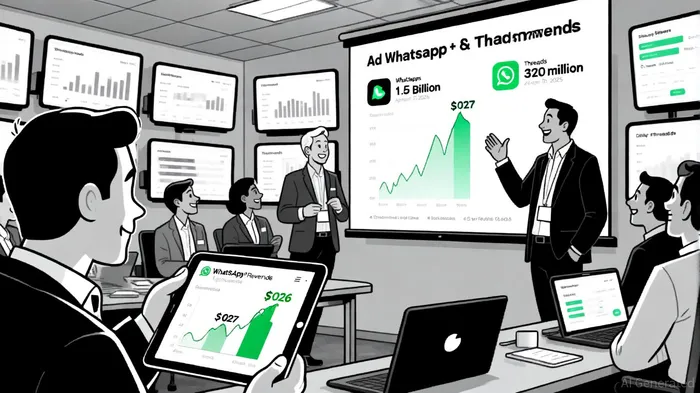
Meta is on the cusp of a monumental shift in its advertising revenue model, with WhatsApp and Threads poised to become two of its most lucrative platforms. According to a report by Barclays[1], . This isn't just a numbers game—it's a strategic masterstroke that leverages user engagement, AI-driven ad optimization, and a non-intrusive monetization approach to scale revenue without alienating users.
WhatsApp: The 1.5 Billion DAU Engine
WhatsApp's monetization strategy is a textbook example of balancing user trust with commercial ambition. By introducing ads in the Status feature and the Updates tab, . These ads are designed to be non-intrusive, avoiding personal chats and calls, and are targeted using limited data such as location, language preferences, and channel-following behavior[2]. This approach mirrors the success of Instagram Stories, where ads blend seamlessly with user-generated content.
The platform's scalability is further amplified by paid channel subscriptions, which allow businesses and creators to monetize exclusive content. . With payment integrations via Stripe and PayPal, WhatsApp is transforming from a messaging app into a commerce hub. , a figure that could rise as international markets mature.
Threads: The High-Monetization Text-Based Powerhouse
While WhatsApp's strength lies in its massive user base, Threads is the underdog with higher per-user monetization potential. Launched in July 2023, , . Its ad rollout, which began in early 2025, features image-based “sponsored” posts in the home feed, accessible via Meta's Ads Manager[5]. The platform's AI-powered inventory filter (with “Expanded,” “Moderate,” and “Limited” tiers) ensures brand safety, while user controls like skipping or hiding ads enhance the experience[5].
Threads' competitive edge lies in its geographic mix. Unlike WhatsApp, which dominates emerging markets with lower CPMs (cost per thousand impressions), Threads' user base skews toward higher-per-capita ad revenue regions. , making it a more lucrative platform than even Facebook and Instagram in some markets. With CEO Mark Zuckerberg envisioning 1 billion users[5], .
The AI-Driven Ad Infrastructure: A Game Changer
Meta's ad scalability isn't just about user numbers—it's powered by cutting-edge AI systems like Andromeda (ad retrieval) and GEM/Lattice (ad ranking). These tools optimize ad delivery by predicting user engagement and dynamically adjusting inventory[1]. For instance, WhatsApp's Status ads use Andromeda to serve ads between user-generated stories, maximizing visibility without disrupting the flow. Similarly, Threads' AI-driven relevance scoring ensures ads align with user interests, boosting click-through rates.
The results are already showing up in Meta's financials. In Q2 2025, , . , MetaMETA-- is uniquely positioned to scale WhatsApp and Threads without cannibalizing existing platforms.
Risks and Rewards
Critics may argue that ad saturation could harm user experience, but Meta's approach—limiting ads to non-core features and maintaining ad-free personal chats—mitigates this risk[2]. Additionally, the integration of payment systems and commerce tools (e.g., WhatsApp Business API) creates a flywheel effect, where ads drive subscriptions, which in turn drive more ad spending.
For investors, the key takeaway is clear: Meta's WhatsApp and Threads are not just incremental ad surfaces—they're strategic pillars for long-term growth. , these platforms could redefine Meta's role in the digital economy, turning messaging and microblogging into billion-dollar businesses.





Comentarios
Aún no hay comentarios