
Meta Unveils New Smart Glasses, Wristband Controller, and AI-Powered Ray-Ban Metas at Meta Connect 2025
PorAinvest
viernes, 19 de septiembre de 2025, 10:43 am ET1 min de lectura
META--
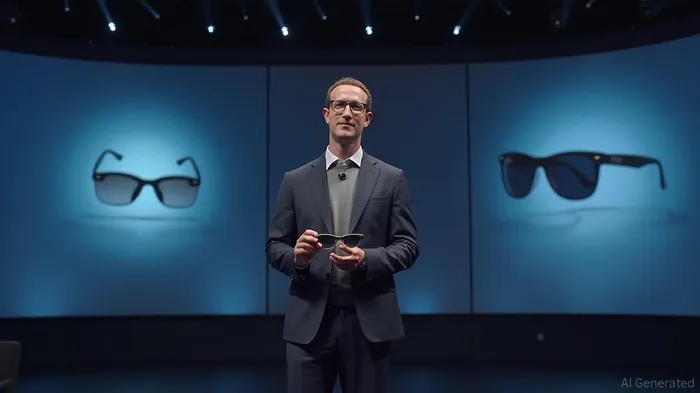
The second-generation Ray-Ban Meta smart glasses were introduced as an updated version of the first-generation model, which has sold two million units. Mark Zuckerberg demonstrated AI capabilities on the Ray-Ban Metas, but the demo failed, drawing attention to the challenges in integrating AI with wearables.
The Meta Ray-Ban Display, a new addition to the Ray-Ban line, features a built-in high-resolution display and a wrist-worn controller called the Meta Neural Band. The display is designed to deliver visual feedback without obstructing natural vision, making it suitable for brief interactions such as reading messages, previews, and captions. The glasses also come with a 12-megapixel camera and support for gesture control via the Neural Band. The device is priced at US$799 and is scheduled for release in the United States on September 30, 2025, with international rollout planned for early 2026 [1].
The Oakley Meta Vanguard, another new product, is positioned as a more advanced augmented reality (AR) system compared to the Ray-Ban Display. It is designed to provide immersive overlays, combining AI, display technology, and vision capabilities. The Oakley Meta Vanguard is expected to be more expensive and is aimed at early adopters and tech enthusiasts.
The event underscored Meta's commitment to AI wearables and its strategy to integrate AI into everyday devices. The company has been investing heavily in AI research and development, with the Neural Band's technology trained using data from nearly 200,000 participants [1]. The market for AI wearables is expected to grow significantly, with Statista projecting the global wearable devices market to reach $62 billion by 2025, driven by AI integrations [2].
Meta's efforts to regain its footing in the AI race are evident in the new smart glasses unveiled at Meta Connect 2025. The company is positioning itself as a leader in AI wearables, with a focus on integrating AI into everyday devices and providing seamless user experiences.
At Meta Connect 2025, the company unveiled three new smart glasses: the second-generation Ray-Ban Meta, the Meta Ray-Ban Display, and the Oakley Meta Vanguard. Meta has sold two million of the first-generation Ray-Ban Meta smart glasses. Mark Zuckerberg demonstrated AI capabilities on the Ray-Ban Metas, but the demo failed. The event highlighted Meta's focus on AI wearables and its efforts to regain its footing in the AI race.
Meta, the parent company of Facebook, revealed three new smart glasses at the Meta Connect 2025 event. The event highlighted Meta's focus on AI wearables and its efforts to regain its footing in the AI race. The new products include the second-generation Ray-Ban Meta, the Meta Ray-Ban Display, and the Oakley Meta Vanguard.The second-generation Ray-Ban Meta smart glasses were introduced as an updated version of the first-generation model, which has sold two million units. Mark Zuckerberg demonstrated AI capabilities on the Ray-Ban Metas, but the demo failed, drawing attention to the challenges in integrating AI with wearables.
The Meta Ray-Ban Display, a new addition to the Ray-Ban line, features a built-in high-resolution display and a wrist-worn controller called the Meta Neural Band. The display is designed to deliver visual feedback without obstructing natural vision, making it suitable for brief interactions such as reading messages, previews, and captions. The glasses also come with a 12-megapixel camera and support for gesture control via the Neural Band. The device is priced at US$799 and is scheduled for release in the United States on September 30, 2025, with international rollout planned for early 2026 [1].
The Oakley Meta Vanguard, another new product, is positioned as a more advanced augmented reality (AR) system compared to the Ray-Ban Display. It is designed to provide immersive overlays, combining AI, display technology, and vision capabilities. The Oakley Meta Vanguard is expected to be more expensive and is aimed at early adopters and tech enthusiasts.
The event underscored Meta's commitment to AI wearables and its strategy to integrate AI into everyday devices. The company has been investing heavily in AI research and development, with the Neural Band's technology trained using data from nearly 200,000 participants [1]. The market for AI wearables is expected to grow significantly, with Statista projecting the global wearable devices market to reach $62 billion by 2025, driven by AI integrations [2].
Meta's efforts to regain its footing in the AI race are evident in the new smart glasses unveiled at Meta Connect 2025. The company is positioning itself as a leader in AI wearables, with a focus on integrating AI into everyday devices and providing seamless user experiences.


Divulgación editorial y transparencia de la IA: Ainvest News utiliza tecnología avanzada de Modelos de Lenguaje Largo (LLM) para sintetizar y analizar datos de mercado en tiempo real. Para garantizar los más altos estándares de integridad, cada artículo se somete a un riguroso proceso de verificación con participación humana.
Mientras la IA asiste en el procesamiento de datos y la redacción inicial, un miembro editorial profesional de Ainvest revisa, verifica y aprueba de forma independiente todo el contenido para garantizar su precisión y cumplimiento con los estándares editoriales de Ainvest Fintech Inc. Esta supervisión humana está diseñada para mitigar las alucinaciones de la IA y garantizar el contexto financiero.
Advertencia sobre inversiones: Este contenido se proporciona únicamente con fines informativos y no constituye asesoramiento profesional de inversión, legal o financiero. Los mercados conllevan riesgos inherentes. Se recomienda a los usuarios que realicen una investigación independiente o consulten a un asesor financiero certificado antes de tomar cualquier decisión. Ainvest Fintech Inc. se exime de toda responsabilidad por las acciones tomadas con base en esta información. ¿Encontró un error? Reportar un problema


SOBRE NOSOTROS
Nuestra historiaAutores de noticiasBase de conocimientosPolítica de privacidadTérmino de usoDescargo de responsabilidad de corretaje de tercerosTérminos de uso de AIMEDivulgaciones de riesgos de AInvest AICarrerasCONTÁCTENOS
Email: support@ainvest.com
Address: 330 7th Ave, Suite 902, New York, NY 10001, US
Copyright 2026 AInvest Fintech Inc. All rights reserved.


Comentarios
Aún no hay comentarios