
Meta's Strategic Shift: Leveraging Google's Gemini for AI-Driven Advertising
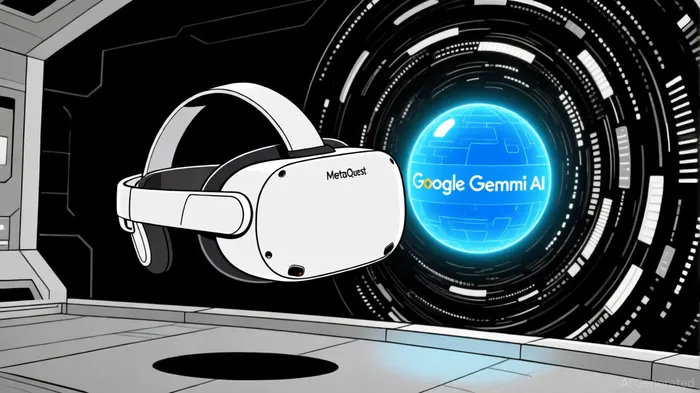
The digital advertising landscape is on the brink of a seismic shift as MetaMETA--, the parent company of Facebook and Instagram, explores a potential partnership with GoogleGOOGL-- to integrate the latter's Gemini AI models into its ad-targeting systems. This strategic pivot, if realized, could redefine the efficiency of AI-driven advertising while reshaping investor perceptions of the sector. According to a report by Reuters, Meta employees have proposed fine-tuning Google's Gemini and open-source Gemma models using Meta's ad data to enhance personalization and real-time optimization[1]. Such a collaboration would mark a rare convergence between two tech giants often positioned as rivals in the advertising ecosystem.
The Strategic Rationale: Efficiency Gains and Competitive Pressure
Meta's interest in Gemini stems from persistent challenges in scaling its proprietary AI systems for advertising. Despite significant investments in AI infrastructure and talent, the company has struggled to match the multimodal capabilities of models like Gemini, which excel at processing diverse data types—including text, images, and video—into actionable insights[2]. By leveraging Gemini's advanced capabilities, Meta aims to boost ad targeting accuracy by up to 50%, a critical advantage in an industry where precision directly correlates with revenue[5].
This move also reflects broader industry trends. The global AI advertising market, valued at USD 35.54 billion in 2025, is projected to grow at a compound annual rate of 27.7% through 2030, driven by demand for real-time analytics and hyper-personalization[4]. Google's Gemini models, already powering 40% of programmatic ad placements with a 30% reduction in customer acquisition costs for major brands[2], represent a proven solution for Meta to close its efficiency gap.
Investor Implications: A New Era of Cross-Company AI Collaborations
For investors, this potential partnership underscores a paradigm shift in how tech firms approach AI development. Historically, companies like Meta and Google have prioritized in-house AI innovation. However, the complexity of building best-in-class models—coupled with the urgency to outperform competitors—has led to a growing openness to cross-collaborations.
Data from Grand View Research indicates that AI-driven advertising will account for 72.7% of global digital ad spend by 2025, with programmatic ad spending exceeding USD 650 billion[4]. If Meta successfully integrates Gemini, it could solidify its position in this high-growth segment, potentially outpacing rivals like AlphabetGOOGL-- (Google's parent company) and Microsoft, which are also vying for dominance in AI-powered ad tech.
Moreover, the partnership aligns with surging investor confidence in AI-driven ad technologies. Venture capital funding for AI startups hit $67.2 billion in 2024, with infrastructure and application-specific solutions attracting particular interest[5]. For instance, AI ad platforms like EliseAI and LayerX recently secured hundreds of millions in funding, signaling a market eager to reward innovation[5]. Meta's pivot to Gemini could thus be interpreted as a strategic move to align with investor priorities, emphasizing scalability and measurable ROI.
Risks and Regulatory Hurdles
Despite its promise, the collaboration faces significant challenges. Regulatory scrutiny remains a critical risk, given both companies' dominant roles in digital advertising. The European Union's AI Act and evolving data privacy laws could complicate the integration of Gemini into Meta's ad systems, particularly if regulators perceive the partnership as anticompetitive[6]. Additionally, Meta has publicly denied the reports, stating that Gemini models are only used for benchmarking[3], adding uncertainty about the partnership's timeline and scope.
Conclusion: A Transformative Bet on AI's Future
Meta's exploration of Gemini AI represents more than a technical upgrade—it signals a broader acceptance of cross-industry collaboration to harness AI's full potential. For investors, the partnership highlights the accelerating convergence of AI and advertising, with winners likely to emerge from companies that balance innovation with regulatory agility. As the AI advertising market races toward USD 82 billion by 2030, Meta's ability to integrate Gemini could determine whether it remains a leader or cedes ground to rivals.





Comentarios
Aún no hay comentarios