
Meta's Strategic Nuclear Energy Play and Its Implications for the AI-Powered Energy Transition
The energy demands of artificial intelligence (AI) are reshaping global infrastructure, and Meta's bold foray into nuclear energy underscores a seismic shift in how tech giants are securing power for the future. With AI training facilities requiring continuous, high-capacity electricity-often in the gigawatt range-traditional grids and renewables alone cannot meet these needs. Nuclear energy, with its unparalleled capacity factor and baseload reliability, is emerging as the linchpin of the AI-powered energy transition. Meta's recent partnerships with VistraVST--, OkloOKLO--, and TerraPower to secure up to 6.6 gigawatts (GW) of nuclear power by 2035 are not just a strategic move for the company but a harbinger of broader investment opportunities in next-gen nuclear infrastructure and grid resilience.
Meta's Nuclear Partnerships: A Blueprint for the Future
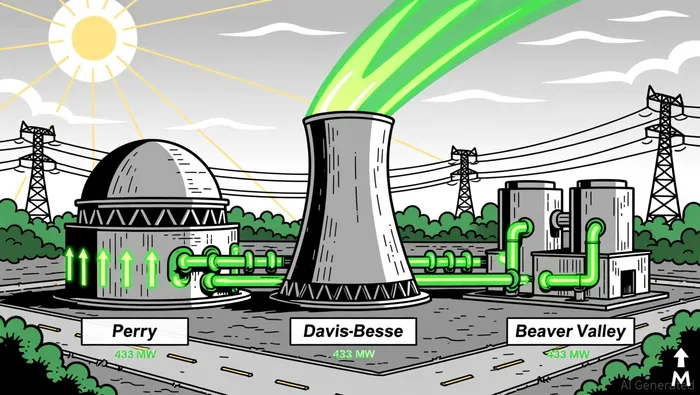
Meta's agreements span both conventional and advanced nuclear technologies, reflecting a dual strategy to stabilize existing infrastructure while accelerating innovation. With Vistra, MetaMETA-- has locked in 2.6 GW of capacity from uprated reactors at Perry, Davis-Besse, and Beaver Valley plants, with 433 MW of uprated output expected to come online in the early 2030s. These long-term power purchase agreements (PPAs) are among the largest by a corporate customer in the U.S., extending the life of aging nuclear plants and reinforcing the domestic supply chain.
For next-gen solutions, Meta is backing Oklo's Aurora Powerhouse reactors, which aim to deliver 1.2 GW of capacity at a Pike County, Ohio, campus by 2030. Oklo's small modular reactors (SMRs) exemplify the scalability and flexibility needed for decentralized AI infrastructure. Meanwhile, TerraPower's Natrium sodium fast reactors-funded by Meta for two 345-MW units- leverage integrated molten salt storage to provide 690 MW of firm power by 2032. These projects highlight Meta's focus on diversifying nuclear technologies to mitigate grid strain and ensure reliability.
The AI-Nuclear Synergy: A Two-Way Street
The convergence of AI and nuclear energy is not one-sided. While AI infrastructure demands robust power, nuclear operations are increasingly adopting AI for predictive maintenance, safety optimization, and reactor design. This synergy accelerates innovation cycles, reducing costs and risks for next-gen projects. For instance, AI-driven simulations can optimize reactor configurations, while machine learning models predict equipment failures before they occur.
Meta's investments also align with broader industry trends. As AI-driven data centers proliferate globally, nuclear energy is becoming a critical enabler of grid resilience. According to a report, AI's energy consumption is projected to rival that of entire countries by the late 2020s. Nuclear's ability to provide continuous, carbon-free power makes it indispensable for meeting these demands while adhering to climate goals.
Investment Opportunities in Next-Gen Nuclear Infrastructure
Meta's partnerships illuminate several high-conviction investment areas:
Advanced Reactor Developers: Companies like Oklo and TerraPower are at the forefront of SMR and fast reactor deployment. Oklo's Aurora project, backed by Meta, offers a clear path to commercialization, while TerraPower's Natrium design-already in pre-construction- benefits from Meta's long-term energy rights. Investors should also monitor NuScale PowerSMR-- and X-energy, which are scaling similar technologies.
Nuclear Supply Chain: The resurgence of nuclear projects is revitalizing the supply chain, from uranium mining to reactor components. Firms like Cameco Corporation and Global Atomic Nuclear Energy (GAN) are positioned to benefit from increased demand for fuel and materials. Additionally, AI-driven supply chain optimization tools could enhance efficiency in reactor construction.
Grid Resilience Technologies: As AI infrastructure strains grids, investments in smart grid solutions, energy storage, and decentralized microgrids are critical. Companies like Stem Inc. and Enphase Energy are integrating AI to balance load demands, while nuclear projects with built-in storage (e.g., TerraPower's molten salt systems) set new benchmarks for reliability.
AI-Nuclear Integration: Startups and established firms leveraging AI for nuclear operations-such as predictive maintenance platforms or reactor design software-present niche but high-growth opportunities. The IAEA has highlighted AI's role in enhancing safety and reducing operational costs, making this a compelling area for venture capital and private equity.
The Bigger Picture: A New Energy Paradigm
Meta's nuclear bets are part of a larger narrative: the decoupling of AI innovation from grid limitations. By shifting capital and risk to large load customers, Meta and peers like Microsoft are catalyzing a private-sector-led nuclear renaissance. This model reduces reliance on public funding and accelerates deployment timelines, creating a virtuous cycle of investment and innovation.
For investors, the message is clear: the AI-powered energy transition is not a distant future but an unfolding reality. Nuclear energy, once sidelined by cost and regulatory hurdles, is now a strategic asset for tech-driven economies. As Meta's partnerships demonstrate, the intersection of AI and nuclear infrastructure is where the next wave of value creation will occur.





Comentarios
Aún no hay comentarios