
Meta's Strategic Move into AI-Optimized Chip Design: Assessing the Long-Term Investment Implications of Vertical Integration in AI Infrastructure
Meta's aggressive pivot toward AI-optimized chip design and vertical integration in AI infrastructure marks a pivotal moment in the tech giant's evolution. By developing custom Application-Specific Integrated Circuits (ASICs) like the MetaMETA-- Training and Inference Accelerator (MTIA), the company aims to reduce dependency on third-party suppliers such as NVIDIANVDA-- while optimizing performance for its unique AI workloads. This strategic shift, coupled with a record $66–72 billion capital expenditure plan for 2025, underscores Meta's ambition to dominate the AI landscape through self-sufficiency in hardware, software, and data infrastructure, according to TechCrunch.
The Vertical Integration Playbook
Meta's vertical integration strategy is rooted in addressing the limitations of general-purpose GPUs, which are inefficient for large-scale AI training and inference tasks. The MTIA chips, engineered using TSMC's 5nm process and CoWoS technology, are designed to scale with Meta's evolving AI demands, according to TrendForce. By co-designing hardware and software-open-source tools like PyTorch and Grand Teton server designs-Meta ensures performance tailored to its needs, such as recommendation systems and generative AI, as detailed by VamsiTalksTech.
This approach extends beyond silicon. Meta is constructing "titan clusters" like Prometheus (Ohio) and Hyperion (Louisiana), which could scale to 5 gigawatts of compute power, enabling the training of models like Llama 3, per RCR Wireless. The company has also built in-house data pipelines, reducing reliance on third-party data partners like Scale AI and leveraging synthetic data to cut costs, as reported by AI-Buzz. Such end-to-end control positions Meta to mitigate supply chain risks and secure long-term access to compute resources, according to FourWeekMBA.
Financial Rewards and Risks
The potential rewards of this strategy are substantial. Meta's AI-driven ad tools have already driven a 16% year-over-year revenue increase in Q1 2025, per Fortune, and its AI assistant now boasts nearly one billion monthly active users, according to Here and Now AI. By reducing infrastructure costs through custom silicon and data optimization, Meta could enhance profit margins while accelerating innovation cycles. Analysts project revenue growth from $70.70 billion in 2019 to $313.05 billion by 2028, supported by a 43.07% net margin and 12.0% return on equity as of December 2024, according to Nasdaq.
However, the risks are equally significant. The $72 billion capex plan-up 30% from 2024-exposes Meta to execution challenges, including talent integration and infrastructure scaling, as noted by CNBC. Regulatory scrutiny in Europe and environmental concerns, such as the $2.6 billion public health costs linked to data center emissions, have been highlighted by Sustainability Magazine. Additionally, overcapacity in the AI infrastructure sector may lead to underutilized assets if monetization lags behind investment, per Yahoo Finance.
Competitive Landscape and Strategic Positioning
Meta's approach contrasts with those of Google and OpenAI. Google's $75 billion 2025 AI investment emphasizes sustainability, pairing data center expansion with clean energy procurement, according to TechTarget. OpenAI, meanwhile, relies on Microsoft's $13 billion funding and partnerships like its $100 billion Nvidia deal to maintain computational capacity, as covered by TechCrunch. While these strategies offer flexibility, Meta's vertical integration provides tighter control over its AI stack, potentially enabling faster iteration and cost efficiency.
Yet, Meta's open-source focus-exemplified by the Llama series-poses monetization challenges compared to Google's enterprise AI traction or OpenAI's proprietary models, as discussed in The JOAI. The company's ESG performance also lags industry benchmarks, raising concerns about regulatory and reputational risks, according to Nasduck.
Conclusion: A High-Stakes Bet on AI Supremacy
Meta's vertical integration strategy represents a high-stakes bet on AI supremacy. While the company's financial strength and innovation pipeline position it to reap long-term rewards, investors must weigh the execution risks and environmental costs. Success hinges on Meta's ability to scale its infrastructure efficiently, mitigate regulatory pressures, and monetize AI-driven services effectively. As the AI arms race intensifies, Meta's approach could redefine the industry-or serve as a cautionary tale of overambition.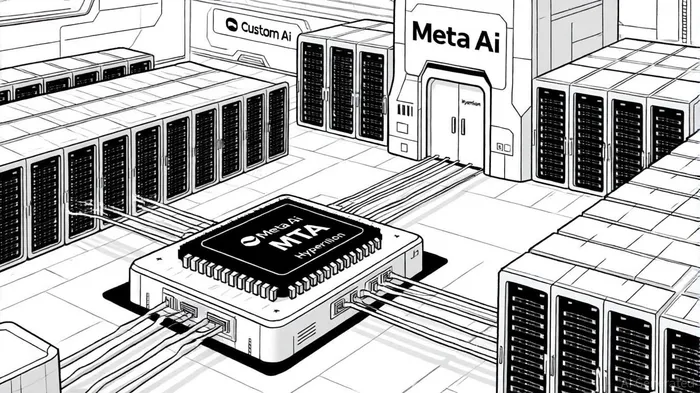





Comentarios
Aún no hay comentarios