
Meta's Stock Decline: Is the AI Infrastructure Cost Burden a Buy-the-Dip Opportunity?
The Cost Burden: A Short-Term Pain for Long-Term Gain
Meta's Q3 2025 results highlight the immediate financial strain of its AI infrastructure investments. Revenue hit a record $51.2 billion, up 26% year-on-year, but costs and expenses surged 32% to $30.7 billion. This has compressed operating margins to 40%, down from 43% in the prior year. CFO Susan Li has explicitly tied these costs to Meta's "aggressive AI infrastructure investments", which include building data centers, acquiring high-performance servers, and developing custom silicon.
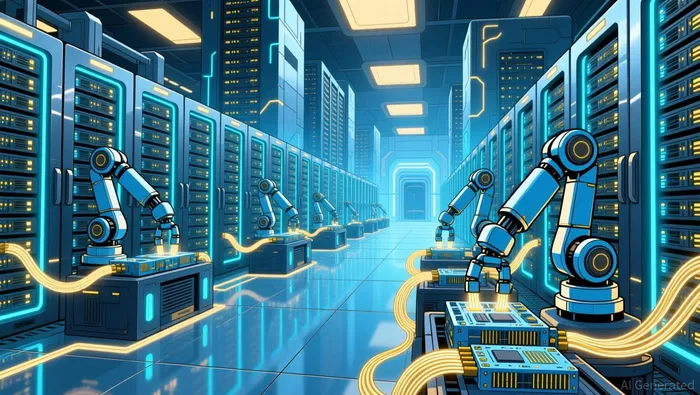
However, MetaMETA-- is not alone in this spending spree. Google (Alphabet) and Amazon are projected to invest $75–$125 billion in AI infrastructure for 2025, while Microsoft has committed $15 billion to AI-related projects between 2023 and 2029. The difference lies in Meta's strategic focus: unlike competitors leveraging AI for cloud services, Meta is building infrastructure to power its own AI-driven platforms, from advertising to "personal superintelligence". This distinction could pay off if Meta's AI innovations drive user engagement and monetization at scale.
Strategic Positioning: A $600 Billion Bet on AI Dominance
Meta's 2025 capex plan is part of a broader 2025–2028 $600 billion U.S. infrastructure commitment. This includes partnerships like the Hyperion AI data center in Louisiana, co-developed with Blue Owl Capital, and rumored collaborations with AMD to enhance performance-per-watt efficiency. The company's CEO, Mark Zuckerberg, has framed these investments as "necessary" to secure "industry-leading computing power," a stance echoed by Wedbush analyst Scott Devitt, who calls Meta's AI roadmap "compelling" despite near-term costs according to market analysis.
Analysts argue that Meta's approach mirrors Amazon's early AWS strategy: investing ahead of demand to capture long-term dominance. By 2030, Goldman Sachs estimates global AI infrastructure spending could reach $3–$4 trillion, with Meta positioned to benefit from its early-mover advantage in building energy-efficient, scalable systems according to industry forecasts. Moreover, Meta's open-source Llama model family and ecosystem partnerships could create a "flywheel" effect, accelerating innovation while reducing reliance on third-party cloud providers according to analysts.
Risk vs. Reward: Is the Dip a Buy Signal?
The current stock dip reflects investor skepticism about Meta's ability to balance AI spending with profitability. Reality Labs, Meta's AI hardware division, remains a long-term bet with no immediate revenue, and the company's net income decline has raised questions about short-term financial discipline according to financial analysts. However, third-party forecasts suggest the pain is temporary.
Analysts at Barclays, Morgan Stanley, and Bank of America have raised META's price targets to $810–$955, citing confidence in its AI-driven growth potential. Projections for 2030 indicate revenue could range from $369 billion (bear case) to $610 billion (stretch case), with net margins expanding to 32–39% according to market research. These figures hinge on Meta's ability to monetize AI advancements-such as AI-enhanced advertising, commerce tools, and enterprise services-while maintaining cost efficiency.
Conclusion: A Calculated Bet for Patient Investors
Meta's AI infrastructure costs are undeniably heavy, but they align with a strategic vision that prioritizes long-term dominance over short-term profits. While the stock's recent decline reflects near-term risks, the company's aggressive capex plans, competitive positioning, and analyst optimism suggest this could be a "buy-the-dip" opportunity for investors with a multi-year horizon.
As with any high-stakes bet, risks remain: delays in AI ROI, intensifying competition, and energy constraints could test Meta's resolve. Yet, in an AI arms race where compute power is the new oil, Meta's $600 billion commitment may prove to be the difference between leadership and obsolescence. For those willing to stomach the volatility, the current dip offers a chance to invest in a company betting its future on the next digital revolution.





Comentarios
Aún no hay comentarios