
Meta's Nuclear Infrastructure Bet: Securing the AI Power S-Curve
The rise of artificial intelligence is not just changing software; it is fundamentally reshaping the physical world, starting with the power grid. For the first time in two decades, AI-driven data centers are fueling a surge in US electricity demand. This is not a gradual uptick but the start of an exponential adoption curve, and it is creating an unprecedented infrastructure need.
The numbers illustrate the scale of this shift. According to the latest forecast, utility power provided to data centers across the US is expected to rise by 22% in 2025 alone, adding roughly 11.3 gigawatts to the grid. More striking is the trajectory ahead: data center power demand is projected to nearly triple by 2030, reaching a staggering 134.4 gigawatts. This isn't just growth; it's a paradigm shift in how we think about energy consumption, with a single technological sector poised to consume power at a rate that rivals entire nations.
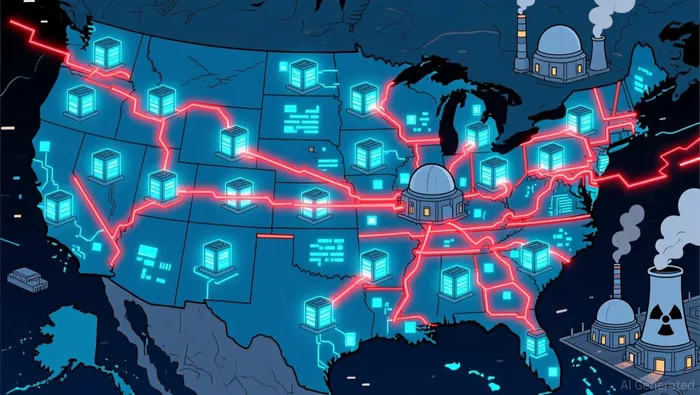
This exponential demand justifies the kind of massive, long-term infrastructure bets we are now seeing. The cost of power is rapidly becoming a critical variable in the economics of AI compute. Companies like MetaMETA-- are acting as first-movers, securing their fuel source decades in advance. Their recent agreements to purchase power from nuclear plants and develop small modular reactors are not speculative ventures but strategic plays to anchor their operations on a stable, low-carbon energy supply. The thesis is clear: in the race to build the infrastructure of the next technological paradigm, control over the fundamental energy rails is a decisive competitive advantage.
The Dual-Track Infrastructure Play: Securing the Near-Term Rail and Betting on the Future
Meta's new energy strategy is a masterclass in dual-track infrastructure planning. It's not just about buying power; it's about building the rails for two distinct phases of the AI power S-curve. The company is simultaneously securing the immediate fuel for its current expansion while placing a high-conviction bet on the next generation of technology for the long-term exponential ramp.
The near-term foundation is concrete and immediate. Meta has struck 20-year power purchase agreements with Vistra for three existing nuclear plants. This provides a reliable, low-carbon energy stream to power its first major supercluster, Prometheus, which is set to come online in 2026. The deal does more than just supply power; it helps finance upgrades and extends the operational life of these facilities, effectively securing a critical input for Meta's current compute build-out. This is a hedge against the near-term volatility and scarcity that is already bottlenecks AI development. While data centers can be built quickly, the grid cannot, and locking in supply now is a strategic necessity.
On the future-facing track, Meta is moving beyond procurement to become a foundational customer for next-generation infrastructure. The company is actively funding the development of small modular reactors (SMRs) from Oklo and TerraPower. This isn't a speculative side project; it's a direct investment in the technology that could solve the scaling problem for nuclear power. By prepaying for fuel to help Oklo, Meta is providing crucial early capital to a nascent industry, positioning itself as a key anchor customer. The goal is clear: to bet on the paradigm shift in nuclear economics where factory-built SMRs promise lower costs and faster deployment than traditional plants, which is essential for meeting the tripling demand by 2030.
This balanced approach is the hallmark of a deep infrastructure play. It hedges against the decade-long lead time for new nuclear projects by securing proven capacity today. At the same time, it funds the innovation that could make the future power supply not just sufficient, but exponentially more efficient. Meta is not just consuming the next energy paradigm; it is helping to build it.
Financial Impact and Exponential Growth Assumptions
The financial math here hinges on a simple but powerful equation: securing power today to enable exponential compute growth tomorrow. Meta's deals with Vistra are a classic infrastructure play, where the upfront commitment lowers the effective cost of fuel for its AI workloads. By helping finance expansions at the Ohio plants, the agreements directly support the build-out of the Prometheus supercluster. This is a hedge against the extreme volatility and scarcity that is already bottlenecks AI development. While data centers can be built quickly, the grid cannot, and locking in supply now is a strategic necessity that translates into a more predictable cost structure for its core operations.
The true value of this long-term commitment, however, rests entirely on the exponential adoption curve of AI. The deals are justified only if data center power demand continues to climb at the projected pace, with US usage expected to climb at least 30% by 2030. The agreements provide up to 6.6 gigawatts of nuclear power by 2035, a massive block of capacity that aligns with the tripling of demand forecast for that year. In other words, the financial payoff is not in the near-term power purchase price, but in the ability to scale its compute infrastructure without being held back by energy constraints. This is a bet on the paradigm shift itself, where control over the energy rails becomes a direct lever for competitive advantage in the AI race.
The more speculative half of the bet-the SMR investments-carries significant execution risk. These are not off-the-shelf purchases but prepayments to fund the development of technology that is years from deployment and faces a complex regulatory hurdle from the U.S. Nuclear Regulatory Commission (NRC). The process for certifying new reactor designs is thorough and can be lengthy, introducing uncertainty into the timeline and cost. While backers tout the promise of factory-built SMRs to save costs and speed deployment, critics question their ability to achieve the same economies of scale as traditional plants. For Meta, this is a high-conviction, long-dated investment in the future of nuclear economics. It's a bet that the regulatory and technical challenges can be overcome, and that the resulting technology will be essential for meeting the tripling demand by 2030. The risk is that the innovation fails to materialize on schedule, leaving Meta with a costly commitment to a technology that never reaches commercial scale.
Catalysts, Risks, and What to Watch
The thesis for Meta's nuclear bet rests on a future that is still being built. The path forward is defined by a series of high-stakes milestones that will validate the company's dual-track strategy or expose its vulnerabilities. The key catalysts are regulatory approvals, the delivery of promised power, and the relentless pace of AI adoption itself.
First and foremost, watch for the NRC approvals for Oklo and TerraPower SMR designs. This is the critical first step for the future-generation component of the deal. The NRC's review process is thorough and can be lengthy, as it must ensure these novel reactor designs meet stringent safety standards. Success here would de-risk the long-term SMR investments and signal that the next paradigm in nuclear economics is on track. Failure or significant delay would challenge the entire future-facing track of Meta's strategy, potentially leaving it with a costly commitment to technology that never reaches commercial scale.
On the near-term front, the effectiveness of the Vistra agreements must be monitored through actual power delivery and cost. The deals are meant to secure 6.6 gigawatts of nuclear power by 2035 and finance expansions at existing plants. The proof will be in the pudding: does the power arrive on schedule and at the projected cost? This directly impacts the economics of Meta's own compute build-out. If the power is delayed or proves more expensive than modeled, it could undermine the strategic hedge against grid bottlenecks. Conversely, smooth delivery would validate the infrastructure play and provide a stable fuel source for its AI growth.
The ultimate arbiter of the entire thesis is the rate of AI adoption. The financial math assumes data center power demand will continue its exponential climb, with US usage expected to climb at least 30% by 2030. Any slowdown in this adoption curve would drastically reduce the urgency and payoff of securing such massive nuclear capacity decades in advance. The key risk is that a breakthrough in alternative energy sources-whether in grid-scale storage, fusion, or more efficient compute architectures-could reduce the need for this massive nuclear bet. While nuclear offers a clean, round-the-clock supply, if other solutions emerge that are faster to deploy or cheaper, Meta's multi-billion dollar commitment could be seen as a premature lock-in.
The bottom line is that Meta is playing a long game on the AI power S-curve. The company is not just a consumer but a builder of the rails. The coming years will be defined by watching whether the regulatory, physical, and adoption curves align with its bold projections.







Comentarios
Aún no hay comentarios