
Meta's Nuclear Bet: Assessing the Infrastructure Play for AI's Energy S-Curve
The exponential growth of AI is creating a fundamental infrastructure bottleneck. The industry's power needs are not just rising; they are following a classic S-curve, where adoption accelerates from a small base to a dominant share of total demand. According to the International Energy Agency, data centres have already seen around 12% annual growth in electricity consumption since 2017. More critically, AI's share of data center power could rise to 35-50% by 2030. This isn't a marginal increase. It's a paradigm shift that will rewire the energy landscape, turning data centres from a niche consumer into a primary driver of grid demand.
Meta is placing a massive, first-mover bet on securing the energy rails for this new paradigm. Its recent deals with VistraVST--, TerraPower, and Oklo are designed to lock in up to 6.6 GW of new and existing nuclear capacity by 2035. This scale is unprecedented for a tech company. Together, these agreements make MetaMETA-- one of the most significant corporate purchasers of nuclear energy in US history. The strategic framing is clear: this is not about meeting today's needs, but about preempting tomorrow's grid constraints.
By funding the development of next-generation reactors and extending the life of existing plants, Meta is positioning itself as a critical infrastructure layer player. The company is essentially building its own power supply chain, a move driven by the harsh reality that the electric grid cannot scale as fast as data centers. While some hyperscalers resort to temporary onsite generators, Meta is investing in firm, carbon-free power that will be available precisely when its massive AI projects-like the 1GW Prometheus and 5GW Hyperion data centres-come online. This is a foundational play on the exponential adoption curve, ensuring the company's AI ambitions aren't capped by a lack of reliable, clean energy.
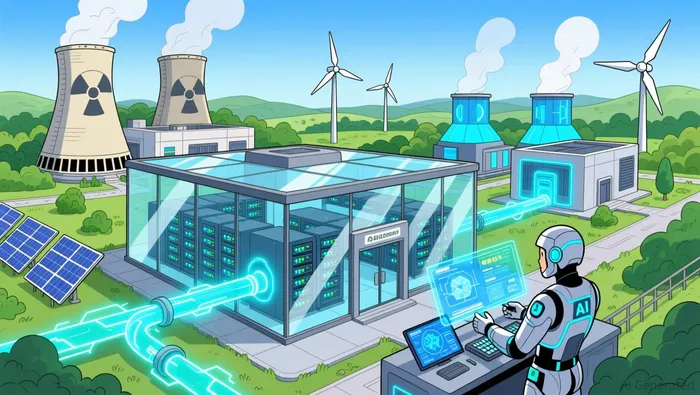
Analyzing the Infrastructure Stack: Existing vs. Advanced Nuclear
Meta's nuclear stack is a deliberate blend of near-term reliability and long-term technological risk. The company is not betting on a single horse; it's building a portfolio across the nuclear S-curve, from proven existing plants to unproven next-generation reactors. This layered approach manages the immediate energy crunch while funding the future.
The near-term contribution is substantial and concrete. The 20-year power purchase agreements for 2,176 MW from Vistra's operating Perry, Davis-Besse, and Beaver Valley plants provide immediate, firm power. This is critical for Meta's Prometheus AI data center, which is slated to come online this year. These plants, which had been "on a path to retirement" as recently as 2020, are being extended and expanded. The deals give Vistra the certainty to pursue further 20-year license renewals, locking in carbon-free power for decades. This segment is the essential baseline, ensuring Meta's current AI infrastructure has the juice it needs without relying on a stressed regional grid.
The more speculative, high-risk component is the advanced technology bet. Meta's funding for up to eight Natrium sodium fast reactors represents a pre-emptive investment in a technology that is still in development. The first units are targeted for delivery as early as 2032, with the full potential of 2.8 GW coming online by 2035. This is a classic first-mover play on the exponential adoption curve. By funding development now, Meta aims to secure a future supply of advanced reactors that could be more efficient and safer than traditional designs. The risk is high-these projects face regulatory hurdles, cost overruns, and technical challenges common to new nuclear. But the potential payoff is a proprietary, scalable energy source that could decouple Meta's growth from grid constraints for the next generation.
Finally, the prepayment for future capacity with Oklo adds another layer of strategic foresight. By supporting a 1.2 GW power campus in Ohio, Meta is effectively placing a bet on advanced small modular reactor (SMR) deployment. This is a prepayment that provides funding to advance project certainty for Oklo's Aurora powerhouse. It's a way to de-risk and accelerate a promising but unproven technology, ensuring Meta has a seat at the table when SMRs become commercially viable. This move complements the TerraPower investment, covering different advanced reactor pathways.
The bottom line is that Meta is constructing its energy infrastructure in phases. The existing Vistra plants are the operational fuel for today's AI boom. The TerraPower and Oklo investments are the R&D and future capacity for the next phase of exponential growth. This stack mitigates risk by balancing proven assets with high-potential bets, all while securing the foundational power needed for its AI paradigm shift.
Financial and Execution Risks: The Cost of Being First
Meta's infrastructure bet is a masterstroke of strategic foresight, but it comes with steep financial and execution costs. The company is paying a premium to be first, taking on significant upfront risk for technology that is still years from deployment.
The most direct cost is the capital outlay for securing future power. By prepaying for capacity with Oklo and funding the development of advanced reactors with TerraPower, Meta is front-loading billions of dollars into projects that are not yet operational. These are not simple power purchase agreements; they are investments in the development and deployment of unproven technology. The 2.1 gigawatts of energy from two operating Vistra plants provide immediate, tangible power, but the 2.8 GW from TerraPower's Natrium units and the 1.2 GW from Oklo's SMR campus are speculative assets on a balance sheet today. This prepayment and development funding carry high technology risk, as these advanced reactors face regulatory hurdles, potential cost overruns, and the inherent uncertainty of scaling new nuclear designs.
The timeline dependency is the core execution risk. The success of this entire strategy hinges on the 2030s deployment of gigawatts of advanced nuclear. The first Natrium units are targeted for delivery as early as 2032, with the full 2.8 GW coming online by 2035. Oklo's projects are similarly years away. This timeline is entirely dependent on a complex chain of events: regulatory approvals from the NRC, the scaling of specialized supply chains for advanced reactor components, and the successful construction of these first-of-a-kind plants. Any delay in this chain would leave Meta with a massive, underutilized asset on its books and could jeopardize the power supply for its Hyperion data centre, which is expected to begin operation by 2028.
Finally, this strategy forces a major operational shift. Meta is no longer just a data centre operator; it is becoming a de facto energy developer. The company must now manage relationships with nuclear plant operators, navigate federal licensing processes, and oversee the construction of power plants. This adds a layer of complexity and regulatory scrutiny far beyond its core business. While the deals provide Vistra with the certainty to pursue license renewals, Meta itself is now embedded in the high-stakes, slow-moving world of nuclear project development. The operational burden and potential for project missteps are real.
The bottom line is that Meta is paying for the privilege of control. It is betting that the exponential growth of AI will make its energy infrastructure a critical asset, justifying the upfront cost and long timeline. But the company is also betting that it can successfully manage the technological and regulatory hurdles of building a nuclear power plant portfolio-a new and demanding role.
Catalysts and Watchpoints: The Next Phase of the S-Curve
The investment thesis now enters a critical validation phase. Meta's multi-year bet will be tested by a series of milestones that will confirm whether its nuclear infrastructure stack can deliver on the exponential AI growth curve.
The near-term test arrives in 2028 with the startup of the 5 GW Hyperion data center in Louisiana. This project is the ultimate stress test for the delivered capacity from the new agreements. The company's entire 6.6 GW portfolio is designed to support its AI ambitions, but Hyperion's scale means it will require a massive, reliable power influx. Success here would prove the operational model works, demonstrating that the Vistra uprates and the first TerraPower units can be integrated to meet a hyperscaler's peak demand. Failure or delay would signal a fundamental flaw in the supply chain and raise serious questions about the company's ability to manage such a complex, multi-year energy build-out.
The advanced nuclear bellwether is regulatory progress and construction timelines for the first TerraPower Natrium units. The company has targeted delivery as early as 2032, with the full 2.8 GW from up to eight units coming online by 2035. The first Natrium unit is a critical first-of-a-kind project. Its on-time, on-budget construction will be a major bellwether for the entire advanced nuclear deployment curve. It will demonstrate whether the technology can be scaled, whether the NRC can maintain a predictable licensing path, and whether the specialized supply chains can be built. Any significant delay or cost overrun here would not only jeopardize Meta's own future power supply but could also dampen investor confidence in the entire next-generation nuclear sector, making it harder for all AI companies to secure similar deals.
Finally, the broader policy shift is a key external factor that could alter the cost economics for the entire AI infrastructure sector. The current investment case assumes a favorable regulatory and subsidy environment for nuclear. However, the Levelized Cost of Electricity (LCOE) for advanced nuclear power was estimated at $110/MWh in 2023, which is more than double that of solar PV. If government policies shift-either through the expansion of subsidies for renewables or the introduction of new carbon pricing mechanisms that favor low-cost solar and wind-the economic calculus for nuclear could change. A policy tilt toward cheaper renewables could make Meta's massive, long-term nuclear prepayments look less strategic and more costly, potentially pressuring the company's capital allocation and its argument for being a first-mover in energy infrastructure.
The bottom line is that Meta's strategy is now in a watch-and-see phase. The 2028 Hyperion startup is the first concrete milestone. The 2032 TerraPower unit is the technological bellwether. And the evolving policy landscape is the external variable that could make or break the entire nuclear-versus-renewables debate for AI's energy future.





Comentarios
Aún no hay comentarios